What should you look for when buying?
Shiny coins can reflect lamps, while ambient light can create a colour cast. PCGS describes both as things to consider when photographing coins. So assess the camera alongside the space and lighting in your own setup.
| What to consider |
What should you check? |
Who should give this more consideration? |
| Reflections and colour |
Check how much room the camera and lens leave for movable lamps or reflectors. Test how the image looks with your own coin and lighting. |
If you photograph shiny coins, you’ll want to adjust the light without unwanted reflections or colour casts. Around 33% of consumers give controlling reflections and colour top priority. |
| Small details |
Compare the dimensions of your smallest subject with the framing you want, and check the magnification offered by the exact lens or close-up mode. |
If you want to capture small coin features clearly, the framing achieved by the complete camera-and-lens combination matters. Around 27% of consumers prioritise magnification for detail. |
| Sharpness across the relief and edge |
Check the focusing features of the camera body and lens, and whether images are combined in-camera or later. |
If you want both the relief and the edge of a coin in focus, a series of shots taken at different focus distances may be useful. Around 20% of consumers prioritise this sharpness and the process involved. |
| Keeping the setup simple |
Check which lens is included, which macro lens is compatible with the camera body and whether you need stable support for your setup. |
If you want a straightforward setup for whole coins and a few close-ups, it’s important to know which parts you actually need. Around 20% of consumers prioritise keeping the complete setup simple. |
Joybuy product selection
A camera with additional lighting for photography; check whether it can capture the coin close-ups you need.
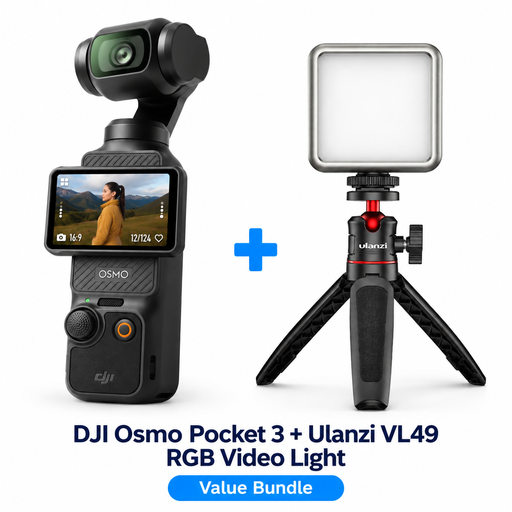 Image unavailable
DJI Osmo Pocket 3 with Ulanzi VL49 RGB LED light bundle
The bundle combines the DJI Osmo Pocket 3 with a Ulanzi VL49 RGB LED light. Check whether the camera can capture the close-ups you want of your coins, and whether you can position the light to keep reflections under control.
View at Joybuy
Frequently asked questions
Do I need to buy a new camera with a macro lens straight away for coin photography?
Not necessarily. First, check whether your current equipment can achieve the framing and sharpness you want, and test how the light falls on the coin. With a new mirrorless camera, macro magnification depends on the exact lens, not just the camera body.
How do I get started with a stable setup and focus stacking?
Keep the coin still and use a sturdy tripod to keep the camera in the same position. If you want to combine several focus points, check whether your specific camera can take the series and whether the images are combined in-camera or need to be combined later.
What should I check when buying a camera body?
Check which lens is included with the kit and whether it can achieve the close-up you need. Also allow for a possible separate macro lens and stable support; compare complete setups rather than camera bodies on their own. The Dutch government distinguishes between statutory guarantees and any manufacturer’s guarantee.
What rights apply when buying online in the Netherlands?
For online purchases from a business, you usually have a 14-day cooling-off period, according to the Dutch government. There are exceptions, and buying from a private individual is different. If a product is faulty, contact the seller about your statutory rights. There is no fixed statutory guarantee period in the Netherlands.


