
Photographer looking for detail
You want to capture the fine textures of seed heads clearly, so you’ll be looking at magnification, focusing distance and your choice of lens.


Choose a camera with a close-up mode if you want to travel light on a coastal walk and keep things simple. Choose a mirrorless camera with a suitable macro lens if magnification and control matter more to you. With a mirrorless camera, check the magnification of the specific lens, the weight of the complete setup, and the protection offered by both the camera body and lens. Stabilisation alone won’t freeze a moving seed head.
You want to capture the fine textures of seed heads clearly, so you’ll be looking at magnification, focusing distance and your choice of lens.
You want to take close-ups on the go and factor in protection from dust and rain, without planning your walk around your camera.
You want a camera that’s easy to carry, and are comparing a compact camera with a fixed lens against a mirrorless camera with a separate macro lens.
A good fit if: you want to take quick close-ups on a coastal walk without changing lenses. OM SYSTEM lists a Super Macro mode and dust- and waterproofing to 15 m for the TG-7.
The trade-off: you can’t replace the fixed lens with a different macro lens.
A good fit if: you want to use an interchangeable macro lens and are happy to carry the extra equipment. OM SYSTEM lists the OM-5 Mark II at 418 g with IP53 protection; the M.Zuiko Digital ED 60mm F2.8 Macro is a separate lens option.
The trade-off: check the protection rating of the body and lens separately, and include the lens when working out the weight of your setup.
A good fit if: a lightweight body and close-ups are important to you. Canon lists the EOS R50 at approximately 375 g, including battery and card; the RF 35mm F1.8 MACRO IS STM is a separate lens.
The trade-off: Canon specifies a maximum magnification of 1:2 for this lens and no sensor-shift stabilisation for the R50. The stated body protection doesn’t automatically tell you how well the complete setup is protected.
| What to consider | What should you check? | Who should consider this? |
|---|---|---|
| Magnification and detail | Compare the maximum magnification of the lens you’ll actually use, and assess images based on the framing you want. | I want to capture the fine textures of a seed head clearly. Around 33% of consumers put detail reproduction first. |
| Sand and changeable weather | Check the protection rating and usage instructions for the exact camera and, with a mirrorless camera, for the lens too. | When I take photos on the coast, I want to account for dust and rain without changing lenses unnecessarily. Around 27% of consumers put protection from coastal conditions first. |
| Weight on the go | Compare the combined weight of the body and the lens you need, not just the body on its own. | I want a camera that’s easy to carry on a walk. Around 20% of consumers name portability as their top priority. |
| Complete setup | Check which lens and accessories come with your chosen setup and which parts you’ll need to buy separately. | I want to know in advance what equipment I’ll need for close-ups. Around 20% of consumers look at the complete setup first. |
Maximum magnification varies from lens to lens. Canon Europe specifies a maximum of 1:2 for the RF 35mm F1.8 MACRO IS STM; Nikon Netherlands lists 1:1 magnification for the NIKKOR Z MC 50mm f/2.8.
Compare the maximum magnification of a lens compatible with your camera, and think about how large you want the seed head to appear in the frame.
The OM-5 Mark II’s IP53 rating applies to the body. It doesn’t automatically cover the attached lens or open ports.
Check the specifications and usage instructions for both parts. Avoid changing lenses somewhere the wind could blow sand around.
For the EOS R50 close-up combination discussed here, the RF 35mm lens is a separate product; the TG-7 has a fixed lens with a Super Macro mode.
Check which body, lens and accessories are actually included in your chosen setup before comparing models.
Worth considering if you’re looking at a compact camera with a fixed lens or a mirrorless camera with a separate macro lens.
Worth considering if you want to pair the lightweight EOS R50 body with a separate RF close-up lens.
Worth considering if you already have a compatible Nikon Z camera or are looking at a Z setup with a separate macro lens.
The Joybuy selection below features portable cameras for taking photos and videos on the go. For seed heads, check specifically whether the close-up capabilities and focusing distance suit the image you want to capture.
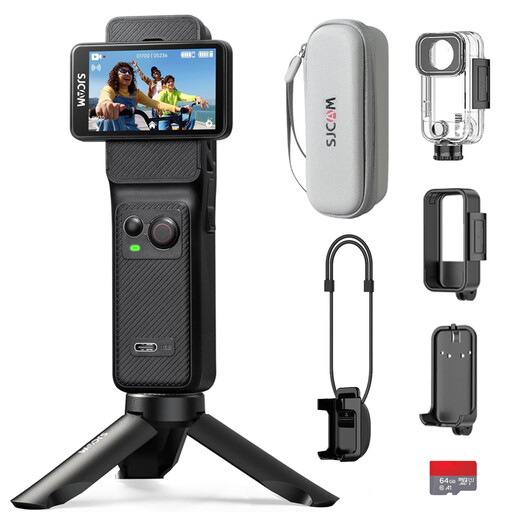 No image available
For taking photos and videos on the go; check whether its close-up capabilities are suitable for photographing seed heads.
The product description mentions a 154° lens, photos up to 16 MP and 6-axis gyro stabilisation. The product title lists 4K video and a 7-hour battery life. For use in or near water, you’ll need to use the included waterproof housing; the camera body itself isn’t waterproof.
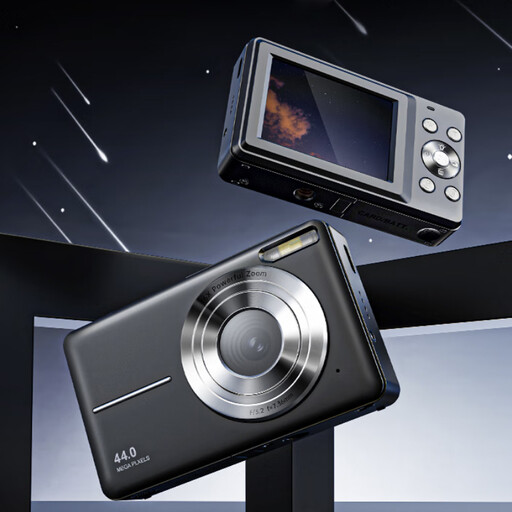 No image available
A pocket camera for general photography and video on the go; check whether its focusing distance and close-up capabilities suit your subject.
The product title lists autofocus and 16× digital zoom.
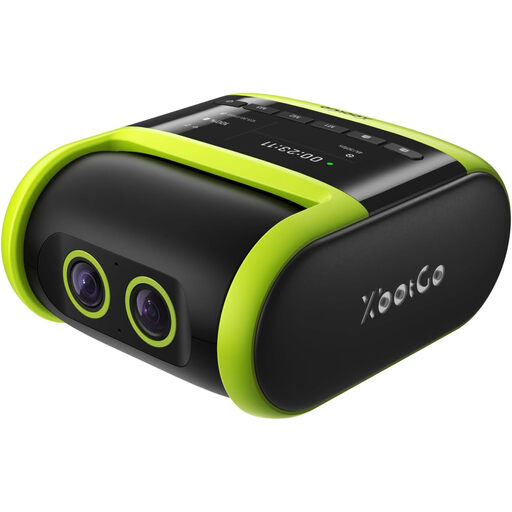 No image available
The tracking feature described is designed for team sports videos and doesn’t in itself indicate suitability for macro photography. Check its close-up capabilities separately for photographing seed heads.
The product title lists 4K video, automatic tracking and a dual-lens system.
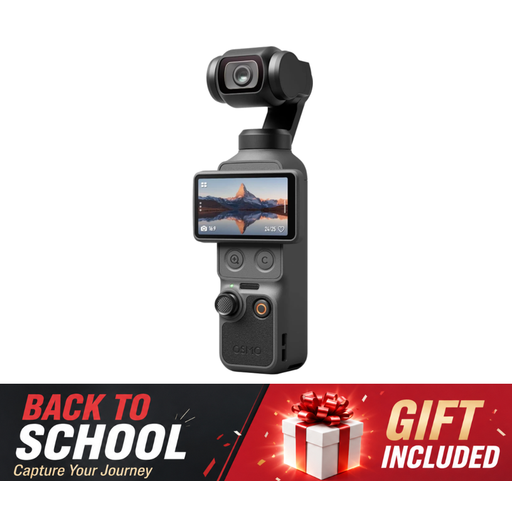 No image available
A pocket gimbal camera for taking photos and videos on the go; check whether its close-up capabilities are suitable for seed heads.
The product title lists a 1″ CMOS sensor, 4K/240fps, 3-axis stabilisation, 2× lossless zoom and 107GB of built-in storage.
No. Also compare the lens’s maximum magnification: Canon Europe lists a maximum of 1:2 for the RF 35mm F1.8 MACRO IS STM; Nikon Netherlands lists 1:1 for the NIKKOR Z MC 50mm f/2.8.
The area in focus is often small in close-up photography, so accurate focusing is important. Take several shots and check the focus; camera stabilisation won’t correct movement of the seed head itself.
Follow the instructions for your model. In the relevant care instructions, Nikon recommends wiping off sand or salt after use by the sea with a cloth lightly dampened with distilled water, then drying the camera thoroughly. First check whether those instructions apply to your camera.
Check the visitor rules and signs for the specific area. Natuurmonumenten directs visitors to the information and rules for each site; these can vary by location. This isn’t a general statement about nationwide permits for ordinary photography.
According to the Dutch government, you’re entitled to a product that meets reasonable expectations, and the seller must provide a solution if a product is faulty. The Netherlands has no fixed statutory warranty period that applies to all products; damage caused by use isn’t automatically covered by free repairs.