
Pond and landscape photographer
You want to capture the bank, water and cloudy sky in a single shot, and assess how the light and dark areas are rendered. Canon Netherlands describes the histogram as a tool for assessing exposure.


Choose based on your main subject: for a wide view of the pond, a useful wide-angle lens is important, while photographing distant birds calls for telephoto reach and an appropriate shutter speed. A bridge camera offers different angles of view without changing lenses; a mirrorless camera lets you choose from a range of lenses, but check carefully which ones are included in the kit. When the sky is bright and the bank is dark, the histogram can help you assess the exposure. Image stabilisation compensates for camera shake, not a bird’s movement. Panasonic describes the DC-FZ82D’s range as 20–1200 mm in 35 mm equivalent; Canon Netherlands describes the histogram as a tool for assessing exposure.
You want to capture the bank, water and cloudy sky in a single shot, and assess how the light and dark areas are rendered. Canon Netherlands describes the histogram as a tool for assessing exposure.
You want to get birds on the far bank large enough in the frame while taking their movement into account. Zoom range and shutter speed are separate considerations.
You want to take your camera gear with you without it weighing you down unnecessarily. If you plan to keep taking photos in light drizzle, the camera and lens combination matters too.
First decide whether the pond and its surroundings or distant birds will be your main subject. The Consumers’ Association lists subject, size, controls and zoom range as factors to consider when choosing a camera.
| What to consider | What should you check? | Who is this important for? |
|---|---|---|
| Pond and exposure | Check the wide-angle coverage of the supplied lens and whether your camera can display a histogram. Canon Netherlands describes the histogram as a tool for spotting when highlight detail is at risk of being lost. | If you mainly want to include water, the bank and sky in one shot, consider both the framing and the exposure. Around 36% of consumers prioritise a wide view of the pond and exposure. |
| Distant birds | Check the range of the exact camera or kit, and whether you can set the shutter speed. Image stabilisation helps reduce camera shake, but it won’t freeze a moving bird; EOS magazine explains the difference. | If you want to photograph birds on the far bank, consider their movement as well as magnification. Around 29% of consumers prioritise distant birds. |
| Taking it on a walk | Compare the weight of the gear you’ll actually carry and how easy it is to use with the lens or lenses you want to use. | If you want to carry your camera on a walk, the weight of your complete set-up matters. Around 21% of consumers give portability top priority. |
| Taking photos in light drizzle | Check the stated weather protection and conditions of use for both the camera body and the lens; cloudy weather alone doesn’t mean you need weather protection. | If you want to keep taking photos in a possible shower, assess the protection offered by the combination. Around 14% of consumers prioritise protection from possible rainfall. |
Zoom range determines how tightly you can frame a subject. Stabilisation helps reduce camera shake, while a moving bird also calls for an appropriate shutter speed.
Compare the range and the available shutter speed settings. Assess sample images taken in conditions similar to those you expect to encounter, and don’t treat a manufacturer’s claim as a guarantee of the results you’ll get.
The Nikon Z50II kit assessed includes two lenses; the Canon EOS R50 and Fujifilm X-T30 III kits mentioned each include a standard zoom lens. The supplied lens helps determine the framing you can achieve straight away.
Check the full kit contents and the range of the supplied lens. If it doesn’t suit the distances at which you photograph birds, you may need a different kit or an additional telephoto lens.
An additional telephoto lens or a different kit may need more space in your bag and could mean changing lenses.
A weather protection rating for the camera body doesn’t automatically confirm that any lens fitted to it is protected too.
If rain is possible, check the specifications and conditions of use for both the body and the lens you plan to use.
The Z50II kit with 16–50 mm VR and 50–250 mm VR is an example of a mirrorless camera kit with separate lenses for wide views and telephoto reach.
The LUMIX DC-FZ82D is a bridge camera with a fixed lens, for anyone who wants to switch from a wide view to a distant subject without changing lenses.
The EOS R50 with RF-S 18–45 mm IS STM is a standard zoom kit for anyone mainly looking to capture the pond, bank and surrounding area.
The Dutch X-T30 III kit with XC13–33mmF3.5–6.3 OIS is designed to be carried around and used with a standard zoom lens.
The OM-5 Mark II is worth comparing if you want to keep taking photos in possible rain and choose a suitable lens.
These cameras are worth comparing if you’re looking for optical zoom to photograph distant subjects. Check each model to make sure the listed specifications and range suit your subject and shooting distance.
 No image available
The listed optical zoom makes this model worth comparing if you want to frame distant subjects; check whether the range suits your shooting distance.
The product name lists 18× optical zoom and 80MP.
 No image available
The listed optical zoom makes this model worth comparing if you want to frame distant subjects; check whether the range suits your shooting distance.
The product name lists 12× optical zoom, 4K and 64MP.
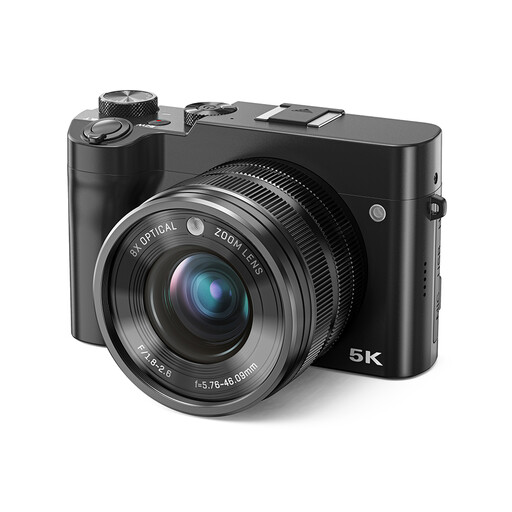 No image available
The listed optical zoom makes this model worth comparing if you want to frame distant subjects; check whether the range suits your shooting distance.
The product name lists 8× optical zoom, 5K and 64MP.
 No image available
The listed optical zoom makes this model worth comparing if you want to frame distant subjects; check whether the range suits your shooting distance.
The product name lists 10× optical zoom and 56MP.
Check the histogram after taking a test shot. If the graph is abruptly cut off on the right, highlight detail has been lost in that shot. Adjust the exposure and check again. Canon Netherlands describes the histogram as a tool for assessing exposure.
Not on its own: image stabilisation helps reduce camera shake, but the shutter speed also needs to suit the bird’s movement. EOS magazine explains this distinction when discussing image stabilisation.
Check the protection and conditions of use for both the camera body and the attached lens. OM SYSTEM lists IP53 for the OM-5 Mark II body and describes its weather-resistant lenses separately.
No. According to ACM ConsuWijzer, the statutory guarantee applies alongside any manufacturer’s or retailer’s guarantee. If a product breaks sooner than you could reasonably expect under normal use, the retailer is responsible for providing an appropriate solution free of charge.
Not automatically. The Dutch Data Protection Authority distinguishes between private use within a limited circle and public sharing; the household exemption doesn’t apply to the latter. Before sharing images of identifiable people, consider which GDPR legal basis applies. According to the regulator, consent is needed in many cases.