
Photographers looking to capture reflections
You want to see a building, the sky or the square reflected recognisably in water or glass. Your camera position and use of filters are then deliberate choices that shape the composition.


If you want to capture the reflection itself, start without a polarising filter. Cambridge in Colour explains that a filter like this can reduce reflections, and that the effect depends on your viewing angle and how you rotate the filter. Then choose based on the lens and the complete kit: a mirrorless camera lets you use a different lens later, while a compact camera with a fixed zoom means you won’t need to change lenses.
You want to see a building, the sky or the square reflected recognisably in water or glass. Your camera position and use of filters are then deliberate choices that shape the composition.
You want to assess bright reflections and shadowy areas of the square in the same photo, and adjust or vary the exposure if needed.
You take photos as you explore and weigh up the angle of view and available settings against carrying a camera, lens and any filters you might need.
A good fit if: you want to choose your angle of view and might want to use a different lens later.
Bear in mind: a body without a lens isn’t a complete kit. Check the lens version and filter size too.
A good fit if: you want to take photos without changing lenses and the fixed angle of view suits your composition.
Bear in mind: the lens isn’t interchangeable. Sony lists the RX100 VII as having a fixed 24–200 mm zoom (35 mm equivalent).
| What to consider | What to check before buying | Who this matters to |
|---|---|---|
| Reflections and filters | Decide whether you want to keep the reflection or reduce glare; check the filter size for the lens you choose. | If I want to keep the reflection, I want to see how a filter affects it. If glare is distracting, I want to assess the effect from my position. Around 31% of consumers in this city-square photography scenario prioritise keeping reflections or managing glare. |
| Light and dark areas | Compare the available exposure settings and check whether the exact model supports RAW or exposure bracketing. | When I want to capture bright reflections and dark façades together, I want to assess the exposure and vary it if needed. Exposure control is the top priority for around 25% of consumers in this scenario. |
| Angle of view and framing | Compare the angle of view of the included lens, not just the camera body; consider how much room you have to change your position. | If I want to frame both the square and its reflection from a fixed position, the lens determines the composition. Getting the right composition of the square is the top priority for around 25% of consumers in this scenario. |
| Complete kit and portability | Check which lens and accessories are actually included; treat a filter as a separate choice. | When I’m out and about, I want to know what I need to carry and whether I can use the camera straight away with the lens I want. Around 19% of consumers in this city-square photography scenario prioritise a compact, complete kit. |
A polarising filter can actually reduce the reflection you want to photograph. It also lets less light through.
First decide whether the reflection is your subject or a distraction. Before buying, check that the filter fits your lens and assess its effect from your own position.
The lens partly determines how much of the square appears in the frame. A body-only offer isn’t a ready-to-shoot kit.
Check everything included in the kit and the exact lens version before comparing models.
Stabilisation can help compensate for camera movement, but it won’t tell you whether a passer-by or moving reflection will be captured sharply.
Also consider the shutter speed you’ll need and whether the scene is still enough if you want to take multiple exposures.
The EOS R50 with RF-S 18-45mm lens is a mirrorless camera kit with a standard zoom lens, suitable for your first composition of a square.
The Z50II kit with NIKKOR Z DX 16-50mm VR is a mirrorless camera with a standard zoom lens.
Sony offers two different types of camera here: the E-mount α6400 and the RX100 VII compact camera with a fixed zoom.
The X-S20 is a mirrorless camera body, so you choose the lens separately.
The selection below includes compact pocket cameras and an instant camera. Check that each model’s features and camera type suit the way you like to take photos in a square.
 No image available
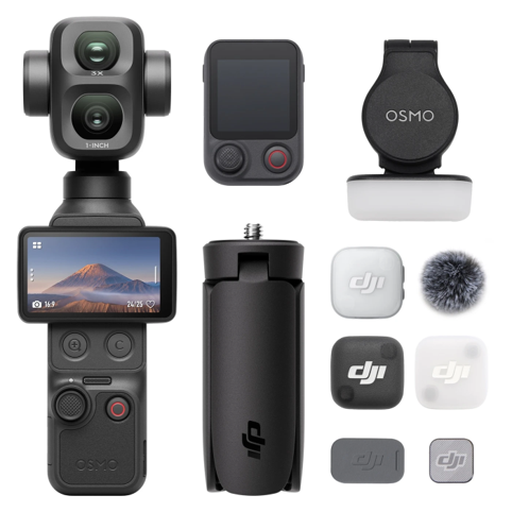
A compact pocket vlog camera with a specified 20 mm f/2.0 wide-angle lens.
The product information lists 4K video; according to the description, 4K/240 fps is only available in slow-motion mode.
 No image available
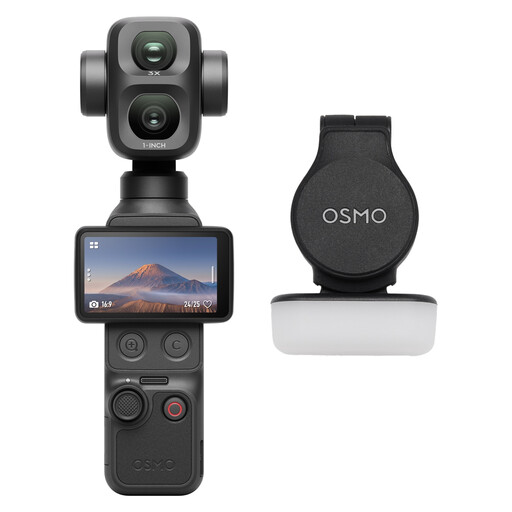
A compact pocket camera with a specified 20 mm f/2.0 wide-angle lens.
The product information lists 4K video; according to the description, 4K/240 fps is only available in slow-motion mode.
 No image available
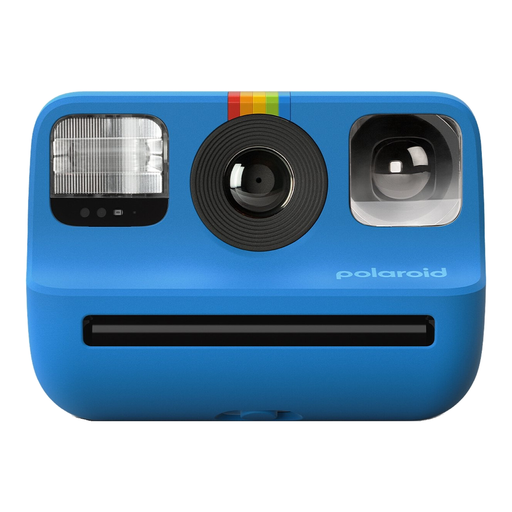
An instant camera for anyone who wants to print photos straight away.
Listed features include a light sensor, exposure settings and double exposure. The camera uses Polaroid Go film.
 No image available
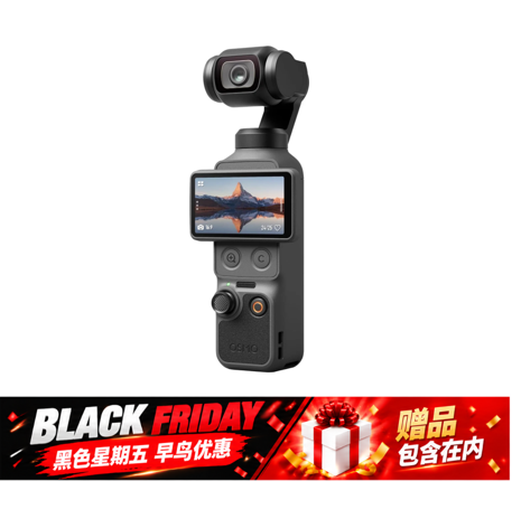
A pocket vlog camera with 3-axis stabilisation and 2× lossless zoom, according to the product title.
The title lists a 1-inch CMOS sensor, 4K/240 fps, 107 GB of built-in storage and a rotatable 2-inch screen.
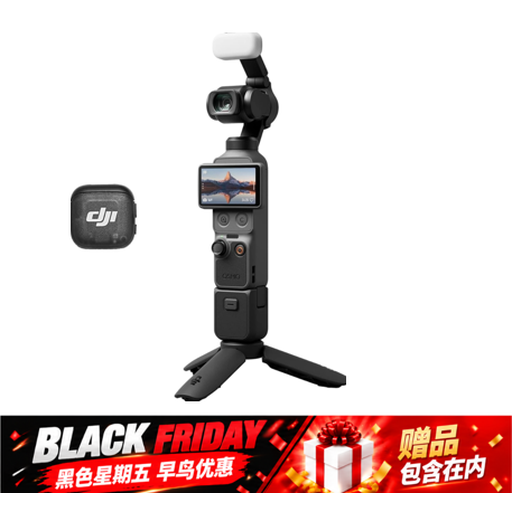 No image available
A pocket gimbal camera for anyone looking for a compact camera setup.
The product title lists 3-axis stabilisation, 2× lossless zoom, 107 GB of built-in storage and a handle with a 1/4-inch thread. The description lists 14-stop dynamic range.
No. If you want to keep the reflection, first compare a shot taken without a filter. A polarising filter can reduce glare on water or glass. Rotate the filter and assess the effect from your own position. It also lets less light through.
Try different camera heights to change how the reflection appears in the frame; Canon Europe explains how a higher or lower viewpoint changes the image. If the contrast is challenging, you can take alternative exposures if your camera model offers that setting. Moving people can make it harder to combine shots later.
Check the exact kit contents and who the seller is. According to ACM ConsuWijzer, for most distance sales to consumers, you have a statutory cooling-off period of up to 14 days after delivery, with some exceptions. If a product is faulty, the seller is responsible for the statutory guarantee; this is separate from any manufacturer’s warranty.
This depends in part on how you use the photo and the circumstances. The Dutch Data Protection Authority distinguishes between personal or household use and sharing more widely with the public. The exception doesn’t apply when publishing outside personal or household use. Before publishing, consider which GDPR legal basis applies to your situation.