Start with the framing you want. You don’t automatically need a macro lens to photograph a whole chess set, but for close-up details, the lens needs to focus at a short distance and offer the magnification you need. Then compare the exposure settings and consider how stable and repeatable you can make your setup. With a mirrorless camera, choose the body and compatible lens as a combination.
Who is this guide for?
Photographing individual pieces in detail
You want to capture a knight, king or engraving in close-up, so you’re looking at focusing distance, magnification and room for lighting. Sony Netherlands and Canon Netherlands describe lens features that are useful for close-ups.
Creating consistent product photos
You photograph several pieces on a white background and want consistent framing, colour and exposure from one image to the next. Canon Netherlands and Zoom.nl cover stable setups and the effect of lighting on product photography.
Getting started with limited equipment
You want to see what you can achieve with your existing camera, a stable setup and simple lighting before investing in a camera body and separate lens. The Consumers’ Association outlines what to consider when choosing a camera and lens.
What should you look for when buying?
Existing camera or simple setup
Choose this if: you mainly photograph the whole chess set or larger groups of pieces. First, test whether your current camera can focus at the distance you want.
Bear in mind: your existing lens may not be suitable if you want a single small piece to fill the frame.
Compact camera with fixed lens
Choose this if: you want to use a single device without changing lenses. Check its close-up capabilities at the distance you’ll be shooting from.
Bear in mind: you won’t be able to replace the fixed lens with a separate macro lens later.
Mirrorless camera with a close-up lens
Choose this if: you want to capture individual pieces, engravings or textures in detail, and choose a lens that suits your tabletop setup.
Bear in mind: the lens needs to be compatible with the camera body. A short working distance can leave less room for lighting.
| What to consider |
What should you check? |
Who should pay particular attention? |
| Small details |
Compare the lens’s maximum magnification, focusing distance and working distance. Also check that the lens mount is compatible with the camera body. |
If you want to photograph a single chess piece or engraving in close-up and in sharp focus, close-up capability is your top priority. Around 31% of consumers put detailed shots first. |
| Shape and colour on white |
Check whether you can adjust the exposure and white balance. Test the lighting on both a white and a dark piece, and look out for reflections. |
If you want white outlines and dark surfaces to remain clearly visible, pay particular attention to lighting and colour reproduction. Around 25% of consumers give this their top priority. |
| A consistent series |
Check whether you can position the camera securely and easily repeat the composition. A self-timer can make it easier to operate the camera on a tripod. |
If you’re photographing several pieces with the same framing, you’ll want a fixed camera and lighting setup. Around 25% of consumers put consistency first. |
| Getting started simply |
Compare complete, ready-to-use setups and check what’s included with a camera or kit. Don’t assume a separate close-up lens is included unless it’s listed. |
If you want to start by seeing what you can do with your existing camera or a simple setup, ease of getting started matters. Around 19% of consumers give this their top priority. |
Common mistakes
-
Choosing a camera body without considering the lens
The lens affects how close you can focus and how large a piece appears in the frame. A camera body or standard zoom lens won’t necessarily make a small detail fill the frame.
Compare the body with the lens you need for your chosen framing, and check exactly which lens is included in the kit.
A suitable close-up lens may need to be bought separately.
-
Confusing focusing distance with working distance
The distance at which the camera focuses isn’t the same as the clear space in front of the lens. Sony Netherlands gives the SEL30M35 a working distance of around 2 cm. That leaves very little room to position lighting around a piece.
Check both distances for your chosen lens, and think about where you can place lamps or reflectors.
-
Focusing only on a completely white background
If your lighting removes all the shadows, a piece’s shape may be harder to see. A mix of daylight and artificial light can also lead to colour differences between photos.
Take test shots of different pieces and check that their edges, materials and reflections remain clear.
A series of shots may require extra test photos and adjustments to the lighting.
Camera brands to consider
Canon
EOS R mirrorless cameras are worth considering if you want to pair a compact body with an interchangeable RF or RF-S lens for close-ups.
- Canon lists the EOS R50 as having a 24.2-megapixel APS-C sensor and an RF mount. Canon says the RF 35mm F1.8 MACRO IS STM lens is compatible with the R50.
- The lens offers up to 1:2 magnification, not 1:1. Factor the lens into your choice, alongside the camera body.
Nikon
The Z50II is a Z-system camera body worth comparing if you want to choose an interchangeable lens for both your setup and close-ups.
- Nikon specifies that the Z50II has a DX sensor and Z mount.
- Nikon recommends a suitable macro lens and a stable setup for close-up photos of small subjects. The camera body or standard zoom lens won’t automatically capture details that fill the frame.
Sony
The APS-C ILCE-6400 camera with E mount is an option to pair with a compatible E-mount macro lens.
- Sony specifies that the ILCE-6400 has an APS-C sensor, E mount and RAW shooting. The SEL30M35 offers a 1:1 magnification ratio, according to Sony.
- Sony gives this lens a working distance of around 2 cm. This can leave little room for lighting around a chess piece, and a standard zoom kit doesn’t automatically include the macro lens mentioned above.
Cameras at Joybuy
These cameras from Joybuy are options to consider for photographing chess pieces. Check that each model’s lens and close-up capabilities suit the framing you want.
 No image available
Komery W6 64MP 4K camera with 12X optical zoom
Worth considering if you want to adjust your framing. Zoom alone doesn’t show that a lens can focus close enough to capture small details.
The product name lists 64MP, 4K, 12X optical zoom and WiFi.
View at Joybuy
 No image available
DJI Osmo Pocket 3 camera
A compact camera to consider if you’re looking for a small device. Check whether the lens is suitable for the close-up distance you need to photograph chess pieces.
The product name lists a 1-inch CMOS sensor, 4K/120fps video, stabilisation and a rotating 2-inch touchscreen.
The product description mentions focusing on still subjects.
View at Joybuy
 No image available
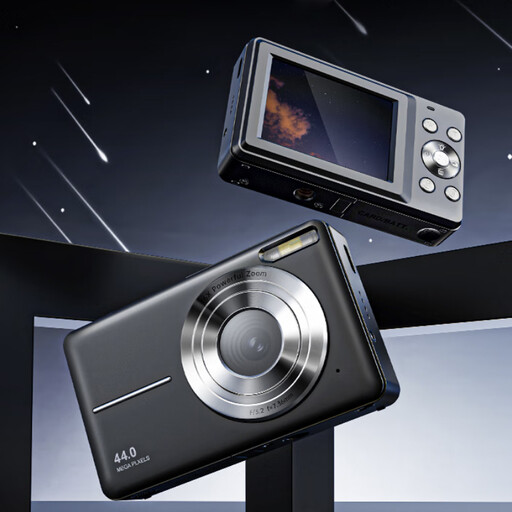
Songdian Pocket Camera 4K 44MP with 16X digital zoom, black
A pocket camera to consider if you want a compact device. The listed zoom is digital and, by itself, tells you nothing about close-focusing performance.
The product name lists 4K and 44MP. The product description mentions autofocus and specifies that the 16X zoom is digital.
View at Joybuy
 No image available
Sony ZV-E10 with 16–50mm power zoom lens, black
The kit described includes a zoom lens for adjusting the framing. Check whether it can focus at the distance you need to capture small details.
The product description lists a 24.2 MP APS-C sensor and an included 16–50mm power zoom lens.
The description mentions a setting that shifts focus from a face to an object.
View at Joybuy
 No image available
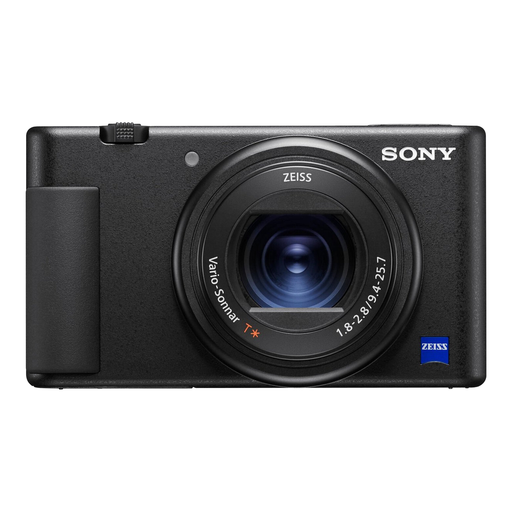
Sony ZV-1 compact camera
A compact camera with a fixed lens to consider if you don’t want to change lenses. Check that its close-up capabilities suit the framing you want.
The product description lists a 20 MP resolution, 1-inch sensor, 2.7× optical zoom and JPEG and RAW photo formats.
The description mentions a tilting touchscreen.
View at Joybuy
Frequently asked questions
Do I always need a 1:1 macro lens to photograph a single chess piece?
No, it depends on how large you want the piece to appear in the final photo. Magnification describes how large the subject appears on the sensor. A lower magnification may be enough if the piece appears smaller, while details that fill the frame require greater close-up capability.
How can I stop white pieces disappearing against a white background?
Set up the lighting so that the edges and material remain visible. Take test shots of both white and dark pieces, move the piece in relation to the background if needed, and avoid mixing light sources with different colour temperatures where possible.
How can I keep a whole series of photos consistent?
Keep the camera in a fixed position, maintain consistent lighting and mark where the pieces should go. Canon Netherlands recommends using a tripod to help keep the background consistent; Nikon Netherlands advises using a tripod to keep the camera steady when photographing small subjects.
What rights do I have when buying a camera online in the Netherlands as a consumer?
For online purchases, you generally have up to 14 days after delivery to change your mind, subject to legal exceptions, according to ACM ConsuWijzer. The seller is also responsible for the statutory guarantee if the product doesn’t perform as you could reasonably expect under normal use. A manufacturer’s guarantee doesn’t replace this right.


