First, take a test shot with the phone you already have. Only buy a separate camera if the result falls short of what you want or you need more control over shooting and editing. For repeatable reproductions, the right lens, keeping the camera as parallel to the paper as possible and carefully controlled lighting are at least as important as your choice of camera. DT Heritage describes a copy stand as a way to help keep the camera level and the lighting consistent.
Who is this for?
Artists who need accurate records of their work
If you want to capture charcoal marks, paper and tonal transitions clearly, or edit them later, consider the lighting, shooting angle and file formats. The Metropolitan Museum of Art explains how charcoal can produce a variety of marks and a rich range of tones.
Artists with limited table space
If you want to capture the whole drawing from above without the camera or mount taking over your workspace, first check the available shooting height and framing. DT Heritage describes keeping the camera level as part of a copy-stand setup.
Artists taking quick progress photos
If you want to take a simple photo from time to time, try the phone you already have first and only buy a separate camera if the test shot doesn’t meet your needs. Apple Support describes a document-scanning feature for iPhone and iPad; this doesn’t guarantee a faithful reproduction of a charcoal drawing.
What should you look for?
Your existing smartphone
Choose this if: you mainly want the occasional progress photo and a test shot shows enough detail, suitable greyscale tones and straight edges.
Bear in mind: automatic cropping, flash or filters can alter the colour of the paper and tonal transitions.
Compact camera with a fixed lens
Choose this if: you want a camera without a separate lens and the fixed lens can frame the whole drawing from your shooting height.
Bear in mind: you can’t easily replace the lens later to change the field of view or close-up capabilities.
Mirrorless camera with a suitable kit zoom lens
Choose this if: you photograph drawings regularly and want to adjust shooting settings or use RAW files for editing.
Bear in mind: the camera body, lens and mount all need to work together; a kit zoom lens won’t automatically suit every distance from the table.
Charcoal can create both fine marks and a wide range of dark tones. Decide which aspect matters most for your work, then check it with a test shot.
| What to consider |
What should you check? |
Who is this important for? |
| Details and greyscale tones |
Compare a test image of the whole sheet of paper with a close-up. If you want to adjust exposure and white balance later, check that the exact model supports RAW. |
I want to capture fine charcoal marks and tonal differences clearly. Around 33% of consumers prioritise detail and greyscale tones. |
| Framing the whole drawing |
Measure the paper, available space and achievable shooting height. Check the field of view and focus with the exact lens. |
I want to fit the whole piece into the frame on a small table without angling the camera. Around 25% of consumers prioritise framing within the available space. |
| A repeatable setup |
Check that the camera and mount can be positioned securely above the work surface and that you can control the lighting evenly. |
If I photograph drawings regularly, I want straight, comparable shots. Around 25% of consumers prioritise having a dedicated setup for documenting their work. |
| Simplicity and cost |
First try taking a test shot with the equipment you already have. If you’re buying a new camera, check whether the required lens is included and whether you’ll need a mount or memory card. |
I want a simple solution and don’t want to buy a separate camera if my phone is good enough. Around 17% of consumers prioritise simplicity and making use of equipment they already own. |
A zoom lens can help you adjust the framing, but the focal length alone doesn’t tell you whether the whole drawing will fit in the frame from your table. Sony lists a focal length of 16–50 mm and a minimum focusing distance of 0.25–0.3 m for the E PZ 16–50mm F3.5–5.6 OSS. These specifications apply to that specific lens and don’t confirm whether you’ll be able to achieve the framing you want.
Common buying mistakes
-
Expecting megapixels to fix skewed or unevenly lit photos
A copy-stand setup can help keep the camera level and the lighting consistent; a higher camera specification can’t replace that setup.
First, try adjusting the shooting angle and lighting on your own table, then choose a camera type.
You may also need a stable mount and suitable lighting.
-
Confusing the minimum focusing distance with the required field of view
A lens may focus at close range without fitting the whole drawing in the frame from your available shooting height.
Measure the artwork and your setup, then check both the field of view and focus with the exact lens.
-
Treating different Sony models or lens versions as the same kit
The ZV-E10 and ZV-E10 II are different camera models; also check whether the kit includes the specified OSS or OSS II lens.
Compare the full camera and lens names in the kit listing with the manufacturer’s specifications.
Brands to consider
Canon
Canon offers both the EOS R50 mirrorless camera with an RF mount and the PowerShot V1 compact camera. The key difference here is an interchangeable versus a fixed lens.
- Canon specifies an APS-C sensor with 24.2 effective megapixels for the EOS R50, which is compatible with RF and RF-S lenses.
- Check that your chosen lens and bundle suit the distance from your table; the camera specifications don’t confirm this for every setup.
Sony
The Sony ZV-E10 is a mirrorless camera with an interchangeable lens and RAW shooting; don’t confuse it with the ZV-E10 II.
- Sony lists approximately 24.2 effective megapixels and RAW shooting for the ZV-E10.
- The stated focusing distance of 0.25–0.3 m applies to the separately specified E PZ 16–50mm F3.5–5.6 OSS lens, not automatically to every kit.
Panasonic
The Panasonic LUMIX G100D DC-G100DK is described as a Micro Four Thirds mirrorless camera kit with a 12–32mm lens.
- Panasonic lists the 12–32mm lens and transfer via Wi-Fi and Bluetooth for the DC-G100DK kit.
- These features aren’t an independent assessment of how suitable the camera is for your charcoal drawing; check the framing in your intended setup.
Nikon
The Nikon Z50II is a mirrorless camera with an interchangeable lens and a movable screen.
- Nikon describes the Z50II as having a tilting and rotating touchscreen.
- Check the specific Z-mount lens and whether you can achieve the framing you want from your table; the screen alone doesn’t determine image quality.
Fujifilm
The Fujifilm X-M5 is an APS-C mirrorless camera body with RAW shooting; choose a suitable lens separately to match your working distance.
- Fujifilm specifies 26.1 million effective pixels and 14-bit RAW for the X-M5.
- Check which lens is included with each offer and test whether it can frame the whole drawing.
Cameras on Joybuy for this purpose
These cameras on Joybuy are general options to consider for photographing a drawing. A listed zoom or video specification doesn’t confirm that the whole drawing will fit in the frame from your table; check this with the exact camera and lens.
 No image available
Komery W6 digital camera, 12× optical zoom
The product name describes a camera for photography; test it in your setup to see whether the lens can frame your whole drawing.
Listed features: 64 MP, 12× optical zoom, 4K and Wi-Fi.
View on Joybuy
 No image available
DJI Osmo Pocket 3 Creator Combo
The product name mentions photography and video; take a test shot to assess whether the camera setup is suitable for capturing your drawing straight on.
Listed features: 1-inch CMOS, 4K/120fps video, 3-axis stabilisation and microphone included.
View on Joybuy
 No image available
DJI Osmo Pocket 3
The product name mentions photography; take a test shot and check whether you can position the camera securely and parallel to the paper.
Listed features: 1-inch CMOS, 4K/120fps video, 3-axis stabilisation and a 2-inch rotating touchscreen.
View on Joybuy
 No image available
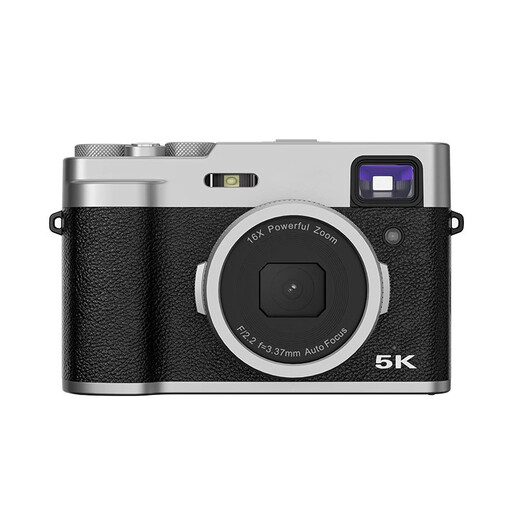
Songdian retro digital camera with autofocus
The product name describes a compact camera for photography; take a test shot to check that the framing and focus suit your working distance.
Listed features: 48 MP, 5K video, 2.8-inch LCD screen and optical viewfinder.
View on Joybuy
 No image available
Sony ZV-E10 + 16-50mm Zoom Black
The kit lists an interchangeable 16–50mm zoom lens; check the framing from your table. Sony lists RAW shooting for the ZV-E10, which is useful if you want to edit the files.
The Sony E PZ 16–50mm F3.5–5.6 OSS is a specific lens version; check that it’s included in the kit on offer. Sony lists a minimum focusing distance of 0.25–0.3 m for this lens.
View on Joybuy
Frequently asked questions
Do I need to buy a separate camera straight away?
No. First, use your existing phone to take a test shot of the whole drawing, then check the edges, dark areas and paper colour. Apple Support describes a document-scanning feature for iPhone and iPad, but it hasn’t been specifically validated for faithful reproductions of charcoal drawings.
How should I position the camera above the drawing?
Point the camera as parallel as possible to the flat paper, using a stable mount and carefully controlled, even lighting. Check for skewed edges and uneven lighting before taking a series of shots, and keep mounting equipment away from delicate charcoal marks. DT Heritage describes a copy stand as a way to help keep the camera level and the lighting consistent.
What other equipment should I check for?
Check that the lens is part of the exact kit and whether you’ll also need a mount or memory card. In the Netherlands, statutory consumer rights are separate from any manufacturer’s warranty; according to the Dutch government, the retailer is your point of contact if a product is faulty. When buying online from a business, you’ll usually have a 14-day cooling-off period.
Can I publish a photograph of someone else’s drawing online?
Not without more. According to the Dutch government, you may copy someone else’s copyright-protected work for personal use, but you may not share or publish it without permission. If the work belongs to someone else, establish the rights and get permission before publishing; this is separate from buying or using a camera at home.


