Choose your camera based on the distance you can actually maintain at your market stall. Check whether you can frame both the entire ceramic piece and the details you want from that spot. A compact camera needs less room to set up, while a mirrorless camera with a suitable lens gives you more ways to adjust your framing. With glossy glaze, you’ll also need to assess the lighting and reflections.
Who should consider this camera choice?
Market stallholder with limited set-up space
If you photograph pots or bowls at a market and can barely step back, check whether you can frame the whole piece from the space available. The Consumers’ Association highlights factors such as your subject, camera size and ease of use.
Maker of glazed ceramics
If you want to show off the shape and glaze colour, watch out for bright spots and reflections on glossy surfaces. MagicBOX highlights this as something to consider when photographing glass and ceramics.
Seller of work with fine details
If you need close-ups of texture, decoration or a maker’s mark as well as wider shots, consider both the focusing distance and the working distance in front of the lens. Sony points out that these are different things.
Which features should you prioritise?
Start by working out how much distance you can leave clear at your stall. Then decide whether you mainly need a full view, a close-up or a repeatable way of working.
| What to consider |
What to check before buying |
Who is this most important for? |
| Getting the whole piece in the frame |
Measure the usable shooting distance and test the framing, focus and perspective with your largest piece. |
If I can barely step back at my stall, I want to get the whole pot or bowl in the frame from my usual spot. Around 36% of consumers prioritise being able to frame the piece properly without needing extra distance. |
| Glaze and reflections |
Take a test shot using the lighting you use at the market, then check the reflections and colour on screen. |
If my glaze is glossy, I want to assess its colour without distracting bright spots in the frame. Around 29% of consumers give the appearance of glaze and reflections top priority. |
| Texture and maker’s mark |
Compare the maximum magnification and working distance with a real detail from your own work. |
For a maker’s mark or fine texture, I want to be able to focus and capture enough detail. Around 21% of consumers put close-ups like these above other buying priorities. |
| A quick, repeatable way of working |
Check that you can use the screen and controls, and that there’s room for a tripod if needed. |
If I’m photographing lots of pieces one after another, I want to repeat my framing quickly without blocking the stall. Around 14% of consumers prioritise a quick, repeatable workflow. |
Which buying mistakes can you avoid?
-
Focusing only on a short minimum focusing distance
A camera that can focus close up won’t necessarily be able to fit an entire pot in the frame from that spot. The distance also doesn’t tell you how much room you’ll have left for lighting.
Take separate test shots of a whole piece and a detail on your market table. Also compare the working distance and magnification.
-
Expecting a different camera to solve reflections
Glossy ceramics can show bright spots or a reflection of the camera, whatever camera body you choose.
Assess a test shot using the lighting and background you’ll actually have at the market.
-
Choosing a camera or kit without checking the whole set-up
A kit lens has limits when it comes to magnification, while a tripod or extra lighting takes up space on the table.
Check what’s in the box, the lens specifications and the dimensions of the complete set-up before making your choice.
Camera brands and models to compare
Canon
The EOS R50 with RF-S 18–45mm kit lens is a mirrorless camera option for anyone who wants to switch between a wider view and different framing.
- Canon lists a vari-angle screen and an 18–45 mm zoom range for the kit.
- The kit lens’s stated 0.25× magnification doesn’t show that very small decorations will be captured as large as they would be with a dedicated macro lens.
Sony
The ZV-1F is a compact camera with a fixed wide-angle lens. Sony also offers macro lenses for a different mirrorless camera set-up.
- Sony says the ZV-1F can focus from around 5 cm in front of the lens.
- The ZV-1F has a fixed lens. A short focusing distance and enough clear working distance are not the same thing.
Nikon
The NIKKOR Z DX MC 35mm f/1.7 lens is for anyone using a compatible Nikon Z camera who wants to focus on details.
- Nikon specifies a maximum reproduction ratio of 0.67× for this DX lens.
- This is a prime lens, not a complete camera. Check that it’s compatible with your camera body and that you can frame the whole pot in the space available.
OM SYSTEM
The TG-7 and micro adventure kit are a compact option for photographing very small details.
- OM SYSTEM lists focusing from 1 cm in microscope mode; the kit mentioned also includes an LG-1 light guide.
- This close-up feature alone doesn’t tell you whether you can frame an entire ceramic piece or how reflections on the glaze will look.
Panasonic
The LUMIX DC-TZ300 is a compact zoom camera for anyone who wants to try a wider or tighter frame on the spot.
- Panasonic specifies a zoom range equivalent to 24–360 mm.
- The stated AF macro distance of 3 cm applies at the wide-angle setting, not automatically at every zoom setting.
Cameras for photographing ceramics on Joybuy
This Joybuy selection focuses on compact cameras for ceramic photography when space on your market table is limited.
 No image available
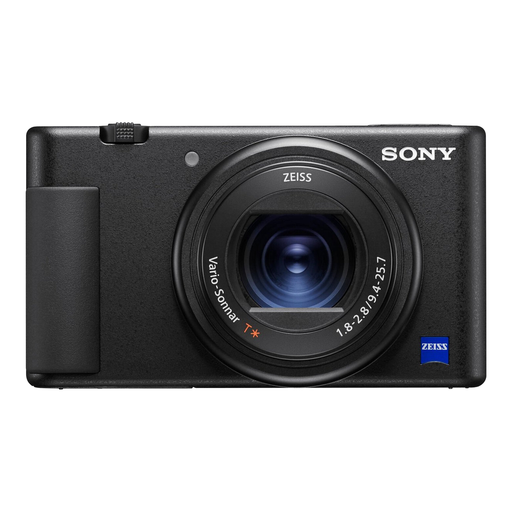
Sony ZV-1 compact camera
This compact model could be a good fit if you have little room on your stall table. Before buying, take a test shot of your largest piece from the distance available.
Joybuy
Frequently asked questions
Is a minimum focusing distance of 1 cm automatically better for photographing a whole vase?
No. A focusing distance of 1 cm tells you that a particular mode can focus close up; it doesn’t mean a whole vase will fit in the frame. Test your largest piece from the distance you actually have available at your market table.
How should I get started with photography on a busy market table?
First, decide where you’ll place the piece and take a test shot of your largest item. Only use a tripod if it fits in the space available; keeping the camera in a fixed position helps you maintain consistent framing and backgrounds.
Which extra accessories should I check before buying a camera?
Check what’s included with the camera and whether you’ll also need a suitable lens, memory card, battery or compact support. Also check the seller’s terms for the specific purchase.
Can I publish photos of identifiable visitors with my ceramics business?
Not without considering the rules. According to the Dutch Data Protection Authority, identifiable people are personal data; business photography and publishing images at an event require a valid legal basis under the GDPR. Where possible, frame the shot around the ceramics and keep identifiable visitors out of the picture.


