
Maker photographing a range of mugs
You want to photograph mugs against a white background with similar framing. A stable setup can help; Canon Netherlands recommends using a tripod to keep your composition consistent.


For photos of a whole mug, a mirrorless camera with a suitable standard zoom is a useful starting point. For repeatable product photos, a fixed setup and controllable lighting matter too. If you want to capture small decorations or glaze details close up, compare the lens magnification and check whether a separate macro lens is compatible with the camera. No camera body on its own will make a white background evenly lit or prevent unwanted reflections.
You want to photograph mugs against a white background with similar framing. A stable setup can help; Canon Netherlands recommends using a tripod to keep your composition consistent.
You want to capture small decorations or textures in close-up. Compare the magnification of the actual lens and check that it fits your chosen camera. Nikon Netherlands specifies 1:1 magnification for the separate NIKKOR Z MC 50mm f/2.8.
You want to assess the body, lens and any additional equipment together. Check the full kit contents: a camera body on its own doesn’t tell you which lens you’ll get or need.
Choose this option if: you mainly want to photograph the whole mug, its handle and different angles.
Bear in mind: a standard zoom isn’t automatically a macro lens. Canon specifies a maximum magnification of 0.16× at 45 mm with autofocus for the RF-S 18-45mm.
Choose this option if: small patterns or glaze details need to fill a large part of the frame.
Bear in mind: the macro lens is a separate lens; at high magnification, the depth of field becomes shallower.
Choose this option if: you already have a camera with a suitable lens, but want to improve the background, shadows or consistency.
Bear in mind: a fixed composition and controlled lighting take preparation and enough space to set up.
| What to consider | What should you look for? | Who is this important for? |
|---|---|---|
| Repeatable photos | Check whether you can position the camera securely and keep the composition and lighting consistent between shots. | If I want to show a range of mugs with the same framing, a fixed setup is a major consideration for me. Around 33% of consumers give repeatability top priority. |
| Colour and reflections | Check the white balance and test the lighting on your own mug; assess reflections separately from the background colour. | With glossy glaze, I want the ceramic’s colour to remain recognisable and highlights to be manageable. Around 27% of consumers prioritise colour and reflections. |
| Small details | Compare the maximum magnification of the exact lens and check the mount and kit contents. | If a small motif needs to fill the frame, I want to know what the lens can actually capture. Around 20% of consumers give close-ups top priority. |
| Complete equipment | Check which lens is included and whether you’ll also need a tripod or another lens. | When I want to get started with a complete kit, I look at both the body and the lens supplied with it. For around 20% of consumers, having all the equipment they need is the top priority. |
Magnification varies from lens to lens. Canon specifies a maximum magnification of 0.16× at 45 mm with autofocus for the RF-S 18-45mm; Nikon specifies 1:1 for the separate NIKKOR Z MC 50mm f/2.8.
Compare the magnification of the exact lens included in the kit. Choose a macro lens only if you need the close-up framing it offers.
Your choice of body alone doesn’t determine how the background is lit or how reflections appear on glaze. Canon Netherlands discusses using a tripod for a consistent composition; white balance affects colour reproduction.
Test your setup with your own mug and lighting before replacing the camera body.
Sony distinguishes between body-only models and versions that come with different lenses. So the name of the version you choose helps determine what you get.
For each option, check the full model details, the lens supplied and whether you’ll need an additional lens.
Worth considering if you want to assess an EOS R50 kit with standard zoom and look at the body and lens as a package.
Worth considering if you want to pair a Z camera with a separate macro lens for capturing small details.
Another APS-C option if you want to compare different versions of the Alpha 6400.
These Joybuy products are related to cameras and photography. For each version, check whether the camera and supplied lens are suitable for photographing stationary mugs as products.
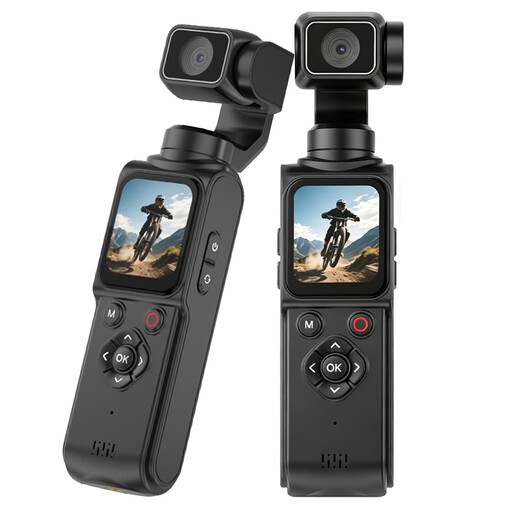 No image available
The tripod listed may be useful for a fixed setup; check whether the camera and lens are also suitable for the stationary product photos you want to take.
The product name lists 4K, 64 MP, a rotating lens, a 1.72-inch touchscreen and a supplied tripod.
 No image available
The optical zoom listed may be useful if you want to try different compositions; check whether the camera offers the framing you want for mug photos.
The product name lists 12× optical zoom, 4K, 64 MP and Wi-Fi. The product description mentions photography and close-ups.
 No image available
This version is described as the Creator Combo with microphone; check whether its controls suit your needs for stationary product photography.
The product name lists a 1-inch CMOS sensor, 4K/120fps video and 3-axis stabilisation. According to the product name, the Creator Combo includes a microphone.
 No image available
The rotating touchscreen may be useful if you want to check the framing from different positions; make sure this camera suits the way you take product photos.
The product name lists a 1-inch CMOS sensor, 4K/120fps video, 3-axis stabilisation and a 2-inch rotating touchscreen.
 No image available
This version lists a zoom lens alongside the camera; check the full kit contents and whether the lens can achieve the framing you want for your mug photos.
The product description lists a 24.2 MP APS-C sensor.
Not necessarily: start with the framing you need for the whole mug. Compare maximum magnification if a small motif or glaze detail doesn’t appear large enough in the frame. Canon lists a maximum magnification of 0.16× at 45 mm with autofocus for the RF-S 18-45mm; Nikon specifies 1:1 for the separate Z MC 50mm f/2.8.
Keep the camera setup and composition the same, and check the lighting and white balance if the lighting changes. Canon Netherlands recommends using a tripod for a consistent composition; Nikon Netherlands explains that white balance affects how white and other colours appear.
For a consumer purchase in the Netherlands, contact the seller if a product doesn’t meet the terms of the agreement. The Dutch government states that there is no single fixed statutory warranty period for all products. When buying online from a business, you’ll also generally have a 14-day cooling-off period; applicable terms and exceptions may vary.
An identifiable person in an image may count as personal data. According to the Dutch Data Protection Authority, the household exemption doesn’t apply to commercial publication, which requires a lawful basis under the GDPR. Avoid recognisable people in reflections, or establish your lawful basis before publishing. Based on this information, photos of mugs without identifiable people don’t in themselves require a GDPR basis.