What should you look for?
Start by considering the framing and working distance you need on your table. Then decide whether simplicity or the option to change lenses matters more to you.
Compact camera with a fixed lens
Best for: Anyone who wants to avoid changing lenses and can check the framing they need on their own table in advance.
Trade-off: You cannot replace the lens with a macro lens later. Sony Netherlands specifies a focusing distance of around 8 cm at the wide-angle end and around 100 cm at the telephoto end for the RX100 VII.
Mirrorless camera with a standard zoom
Best for: Anyone who wants to photograph full bowls and create different table-top compositions, with the option to use interchangeable lenses. The Canon EOS R50 kit we looked at includes an RF-S 18-45mm zoom; the Nikon Z50II kit includes a NIKKOR Z DX 16-50mm zoom.
Trade-off: The focusing distance can vary depending on the zoom setting. Canon Netherlands gives a maximum magnification of 0.16× with autofocus at 45 mm for the RF-S 18-45mm.
Mirrorless camera with a separate macro lens
Best for: Anyone who regularly photographs small glaze details or markings as the main subject. Nikon specifies 1:1 magnification for the separate NIKKOR Z MC 50mm f/2.8.
Trade-off: This lens is not included in the Z50II standard zoom kit we looked at. Nikon gives a distance of around 5 cm between the front of the lens and the subject at the closest focusing distance; remember to leave room for your lighting.
| What to consider |
What to look for when buying |
Who should pay extra attention? |
| Gloss and reflections |
Take a test shot with your bowl, background and lighting position before comparing camera features. |
If I photograph glossy bowls, I want to control reflections without making my small table-top set-up impractical. Around 27% of consumers put reflection control first. |
| Framing at working distance |
Measure the space available and check the focusing distance at the zoom setting you want to use. Canon Netherlands gives figures of 0.20 m at 18 mm and 0.35 m at 45 mm with autofocus for the RF-S 18-45mm. |
With limited space, I want to frame the whole bowl without moving the camera or lights outside the set-up. Around 20% of consumers prioritise working distance and framing. |
| Small details |
Compare the magnification of the lens actually included and check how much space is left in front of it. Nikon gives 1:1 magnification for the separate Z MC 50mm. |
If texture or small markings are my main subject, I want to know whether the lens can capture them at a large enough size. Around 20% of consumers put close-up detail shots first. |
| Colour and consistency |
Check whether RAW and adjustable white balance suit your workflow, and whether you can fit a tripod into your set-up. Canon Netherlands explains that changing light can affect colour reproduction. |
When photographing a series of bowls, I want to keep the colour and framing as consistent as possible. Around 20% of consumers prioritise consistent product photos. |
| Complete set |
Read the full kit contents and decide whether you want a fixed lens or the option to use a different lens later. |
If I want to get started without an unexpected extra lens purchase, I check exactly what comes with the camera. Around 13% of consumers put having a simple, complete set first. |
Cameras at Joybuy
Cameras at Joybuy for photographing bowls on a small table, with options for different types of framing and ways of working.
 No image available
KOMERY G7 5K digital camera, white
The stated 18× optical zoom gives you different framing options to assess from your camera position and in the space available on your table.
The product name lists an 80MP sensor and 18× optical zoom.
View at Joybuy
 No image available
KOMERY W6 digital camera
The stated zoom may be useful if you want to try different framings from a fixed set-up.
The product name lists 64MP and 12× optical zoom.
View at Joybuy
 No image available
DJI Osmo Pocket 3 Creator Combo
The product listing mentions photography; check whether the camera and framing suit still shots of bowls on your table.
The product name lists a 1-inch CMOS sensor.
View at Joybuy
 No image available
Sony ZV-E10 with 16-50mm zoom lens, black
This mirrorless camera kit may suit anyone who wants to create different framings with a zoom lens; check that the working distance and framing are right for you.
The product name lists a 16-50mm zoom lens.
View at Joybuy
 No image available
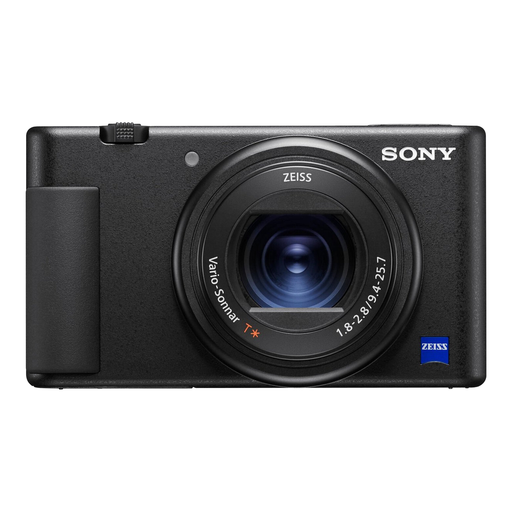
Sony ZV-1 compact camera
A compact camera may suit anyone looking for a simple set-up without interchangeable lenses; check that its lens can achieve the framing you want on your table.
View at Joybuy
Frequently asked questions
Is the minimum focusing distance the same as the space between the lens and the bowl?
No, those distances do not automatically mean the same thing. Sony gives the RX100 VII's focusing range measured from the front of the lens; for the Z MC 50mm, Nikon gives both a minimum focusing distance of 0.16 m and around 5 cm between the front of the lens and the subject. Check how the distance is defined before arranging your lighting.
How can I keep the colour and framing consistent across a series of bowls?
Keep the camera in a stable, fixed position and check the white balance under the lighting you plan to use. Canon Netherlands describes a tripod as a way to keep framing consistent, and notes that light can affect colour reproduction.
Will I need an extra lens for a mirrorless camera?
Only if the lens in your chosen kit cannot capture the framing or detail you want. The Canon and Nikon kits we looked at include the standard zooms listed; the Nikon Z MC 50mm is a separate lens. Check the full kit contents and what you need for your set-up.
In the Netherlands, am I always entitled to just a two-year legal guarantee?
No. ACM ConsuWijzer explains that your legal guarantee depends on what you could reasonably expect from the product under normal use; the seller is responsible for this. Any manufacturer's guarantee offered is a separate arrangement.
Can I return a camera bought online in the Netherlands after it arrives?
For online purchases by consumers, ACM ConsuWijzer says you generally have a statutory cooling-off period of up to 14 days after delivery, with some exceptions. Check who the seller is and which terms apply to your order before buying.


