
Detail photographer
You want to show grooves and patterns individually. The magnification of your chosen lens and the space left for lighting both matter. Nikon, Canon and Sony describe macro lenses with a range of magnification options.


First, decide how large you want the carved details to appear in the frame and how much space you’ll have in front of the lens for lighting. A compact camera with a close-up mode keeps your setup simple. A mirrorless camera with a suitable macro lens gives you more choice over magnification and shooting distance, but you’ll need a separate lens and possibly more room to set up. If you need the whole ornament to be in focus, also consider a stable setup and focus bracketing.
You want to show grooves and patterns individually. The magnification of your chosen lens and the space left for lighting both matter. Nikon, Canon and Sony describe macro lenses with a range of magnification options.
You want to capture shape, relief and colour consistently. So consider depth of field, a stable setup and control over the lighting too. Canon describes focus bracketing for taking shots at different focus points.
You want to take both wider shots and close-ups without lots of separate equipment. Check whether a fixed-lens camera can give you the framing you need while leaving enough room for lighting. OM SYSTEM describes macro modes for the Tough TG-7, which has a fixed lens.
Start with the framing you want and the space available for lighting. Then compare a fixed-lens camera, a mirrorless camera with a macro lens, or first try adjusting your existing setup.
| What to consider | What should you look for? | Who is this more relevant to? |
|---|---|---|
| Magnifying details | Compare the magnification of the exact lens or close-up mode, and check whether it gives you the framing you want for the ornament. | If I want to show fine grooves large in the frame, I first check whether my chosen lens can achieve that framing. Around 31% of consumers prioritise magnifying details. |
| Sharpness across the whole ornament | Check whether the exact camera body offers focus bracketing and whether you can take multiple shots without disturbing the setup. | If I want to capture a three-dimensional ornament in focus from front to back, I look at the focusing options and how stable the setup is. Around 25% of consumers prioritise getting everything in focus. |
| Lighting and colour | Assess how much space you’ll have in front of the lens for side lighting and whether you can adjust the white balance. | If my camera already gives me the framing I want, but the relief or colour doesn’t look right, I test the lighting and white balance first. Around 25% of consumers prioritise control over lighting and colour. |
| Room for the complete setup | Compare the fixed-lens camera with a complete mirrorless camera setup, and check that both wider shots and close-ups are possible. | With limited table and storage space, I want to know how many separate parts I’ll need and whether the setup can still handle both types of shot. Around 19% of consumers prioritise simplicity and saving space. |
Focusing distance is measured from the image sensor, so it isn’t the same as the clear space between the lens and your subject. Sony gives the SEL30M35 a minimum focusing distance of 9,5 cm and an approximate working distance of 2,4 cm in front of the lens at its closest focusing point.
When comparing lenses for the magnification you need, also check the working distance and make sure there’s room for lighting next to the ornament.
According to Canon, the RF-S 18-45mm kit lens offers a maximum magnification of 0,25× in manual focus mode; for the separate RF 100mm F2.8L Macro IS USM, Canon gives a maximum magnification of 1,4×. These are different lenses.
Check exactly what’s included in the kit and the magnification specification of the lens supplied.
For high magnification, you may need a separate macro lens, which means another item to carry and set up.
The direction of the light affects which textures are visible. The Canadian Conservation Institute explains that raking light can emphasise relief and surface texture; Canon notes that white balance affects colour reproduction when the lighting changes.
Before choosing a new camera body, take comparable test shots with the light coming from different directions and the white balance controlled.
A stable lighting setup can take extra time and equipment to put together.
The Tough TG-7 is a fixed-lens option with macro modes for anyone who would rather not change lenses.
The EOS R50 is an interchangeable-lens camera body that you can expand with other lenses. For high magnification, compare the body with the specific macro lens you plan to use.
The Z50II is a mirrorless camera body for which Nikon describes separate Z macro lenses.
Sony E-mount mirrorless cameras can be paired with a suitable separate E-mount macro lens, such as the SEL30M35, to consider for tabletop photography.
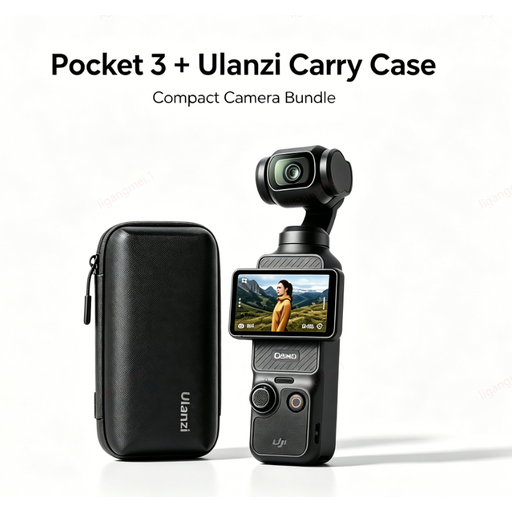
Joybuy product selection featuring cameras for photographing ornaments.
 No image available
This camera may be suitable only if your own setup can achieve the framing you want while leaving enough room for lighting.
The product title lists a DJI Pocket 3 camera and a Ulanzi Custom Storage Carry Case.
No, not if your current camera can already capture the details at the size you want. First try a stable setup, a different direction of light and a controlled white balance. If your lens can’t achieve the framing you need, compare the magnification and working distance of a suitable close-up or macro lens.
Start with even lighting for a wider view, then change the direction of the light to assess the texture. The Canadian Conservation Institute explains how low-angle raking light can make texture more visible; the right setup depends on what you want to capture.
No. Check what’s included in the exact kit and the specifications of the supplied lens. For example, Canon gives different maximum magnifications for the RF-S 18-45mm kit lens and the separate RF 100mm F2.8L Macro IS USM.
For online purchases, you’ll often have 14 days to change your mind, but exceptions and the circumstances of the purchase matter. The Dutch government explains that the statutory guarantee does not have a fixed two-year limit: the seller must offer a solution if a product does not meet what you could reasonably expect when used normally. Also check the terms of any additional manufacturer’s warranty.