First, choose a field of view and a weight you’re happy to carry for the complete camera and lens combination. Then compare the stabilisation and controls with the light you’ll be shooting in. Stabilisation helps reduce camera shake, but it won’t freeze moving water. A polarising filter can reduce the reflection you want to capture.
Who is this for?
Evening photographer without a tripod
Wants to shoot handheld as the light fades and needs to distinguish between camera shake and water movement. Canon Netherlands explains how still and flowing water create different reflections; Fujifilm describes image stabilisation for handheld shots.
Canal-side walker
Wants a portable complete kit and the flexibility to try different compositions while out and about. The Consumers’ Association highlights factors including camera size and ease of use; Fujifilm and OM SYSTEM publish body weights for their models.
Reflection photographer
Wants to preserve reflections or use them creatively, so pays attention to viewpoint, water movement and filter use. Canon Netherlands explains how water movement affects reflections and notes that a polarising filter reduces reflections from water.
What should you look for when choosing?
Start with the field of view and the weight of the camera with the lens you actually plan to carry. Then consider stabilisation and controls: they can help with camera movement, but they don’t determine how moving water will look.
| Priority |
What to look for |
Who this matters to |
| Sharp handheld shots in low light |
Compare stabilisation for your chosen camera and lens combination, and check the shutter speed with test shots. Stabilisation compensates for camera movement, not water movement. |
If I’m shooting at dusk without a tripod, I want to reduce camera shake without expecting stabilisation to freeze the water. Around 31% of consumers say sharp handheld shots in low light are their main buying concern. |
| Field of view and composition |
Check the field of view offered by your chosen lens from your usual viewpoint. A fixed field of view gives you less freedom to reframe from the same spot. |
If I want to capture both a wide canal view and details on the opposite bank, I look at the field of view and how easily I can reframe. Around 25% of consumers say flexibility in composition is their main buying concern. |
| Portability of the complete kit |
Compare the weight of the camera body and lens together. In changeable weather, check the weather protection of both the camera and the lens you’ve chosen. |
Before a long walk, I want to know how much the complete kit weighs and how many items I’ll be carrying. Around 25% of consumers give portability of the complete kit top priority. |
| Preserving or changing the look of reflections |
Try different viewpoints and decide first whether you need a filter. A polarising filter can reduce reflections from water; also check that it fits your lens. |
If the reflection itself is my subject, I want to be able to control how it appears in the image before choosing accessories. Around 19% of consumers say control over reflections is their main buying concern. |
Common buying pitfalls
-
Buying a polarising filter to make the reflection stronger
A polarising filter is designed to reduce reflections, including those from water. That can work against you if the reflection is your subject.
Take some shots without a filter first and decide what effect you want. Then check whether a filter fits your chosen lens and how it changes the image.
A filter that doesn’t suit the image you want adds an accessory you may never use.
-
Treating the number of stabilisation stops as a guaranteed shutter speed
Manufacturer figures are based on specific test conditions and sometimes on a particular lens. They don’t predict whether moving water will look sharp or still.
Compare the conditions behind the stated figure and assess test shots at the shutter speed you want to use for your reflections.
-
Comparing only the camera body’s weight and features
With a mirrorless camera, the lens adds to the body’s weight. A fixed lens means you won’t need to change lenses, but it limits your choice of field of view.
Compare complete combinations for weight and field of view. If it’s raining, check the weather protection of both the body and the lens.
-
Confusing a manufacturer’s warranty with your statutory rights
ACM ConsuWijzer explains that statutory rights apply alongside a manufacturer’s or retailer’s warranty, and that the retailer is responsible for faulty products.
Keep your proof of purchase and report any fault to the retailer. What you’re entitled to expect depends on the product and the circumstances.
Camera brands to compare
OM SYSTEM
The OM-5 Mark II is worth considering if you’re looking for a lightweight walking kit with protection for changeable weather.
- OM SYSTEM lists a body-only weight of 370 g, IP53 weather resistance for the body and features such as Live ND.
- Check the weight and weather protection of your chosen lens separately; body specifications don’t automatically apply to the complete kit.
Fujifilm
The X-S20 is an APS-C mirrorless camera for anyone who wants to choose their own X-mount lens.
- Fujifilm lists a body weight of 491 g and five-axis IBIS.
- The stated 7.0 stops are based on CIPA conditions with the XF35mmF1.4 R lens; don’t compare the figure without taking those conditions into account.
Ricoh
The GR IIIx HDF is a compact alternative if you’re happy with a fixed field of view and don’t want to change lenses.
- Ricoh lists a field of view equivalent to around 40 mm in 35 mm format and three-axis sensor stabilisation.
- The fixed field of view limits wide compositions from the same spot. According to Ricoh, the HDF filter replaces the ND filter found in the standard GR IIIx.
Sony
The α7C II is a compact full-frame mirrorless camera. Your choice of E-mount lens also helps determine the field of view.
- Sony lists 33.0 effective megapixels and five-axis image stabilisation.
- The body isn’t the complete kit. Sony offers a body-only version and a version with a 28–60mm zoom lens; check which one you’re looking at.
Canon
The EOS R6 Mark III is a full-frame mirrorless camera for anyone weighing up lens choice and controls alongside the size of the body.
- Canon lists 32.5 megapixels and a body-only weight of approximately 609 g.
- The stated stabilisation depends on the lens and position in the image. This specification isn’t a practical, head-to-head test against other cameras.
Cameras at Joybuy
The Joybuy picks below include a camera with an interchangeable lens and compact action cameras. For canal reflections, check that the field of view and controls suit still photography; video stabilisation on its own doesn’t tell you how moving water will look.
 No image available
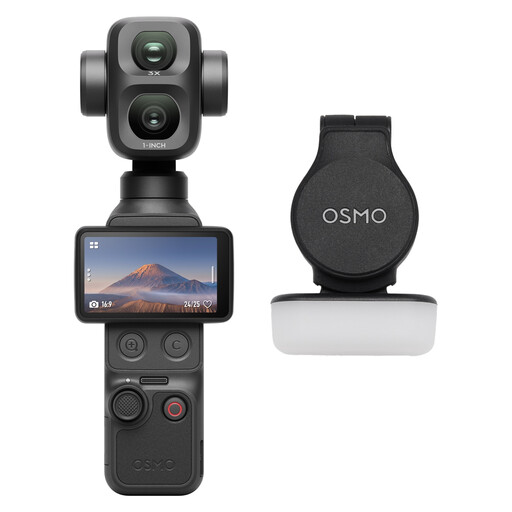
Osmo Pocket 4P Standard Combo, Black
The product title describes a pocket gimbal vlog camera that’s also positioned for photography; check that the controls suit the way you like to shoot.
The product information lists a 1-inch sensor, 2× zoom and 107 GB of built-in storage. The title mentions 3-axis stabilisation and 2× lossless zoom.
View product at Joybuy
 No image available
Sony ZV-E10 + 16-50mm Zoom Black
The included zoom lens could suit anyone who wants to try different compositions without changing lenses.
The product information lists a 24.2 MP APS-C sensor and a 16–50mm lens with OSS. Active Mode stabilisation is specified for handheld video. The product description warns against exposing the camera to moisture.
View product at Joybuy
 No image available
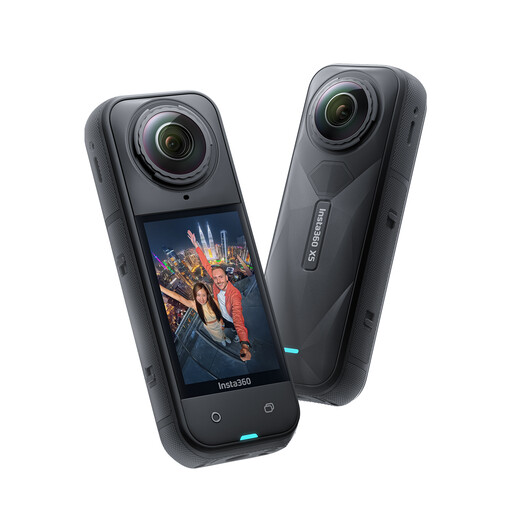
Insta360 X5 8K 360° Action Camera
This is a 360° action camera; check whether its video-focused format suits the still reflection shots you want to take.
The product information lists dual 1/1.28-inch sensors, a 157° lens and 360° video. It also mentions FlowState stabilisation, 360° Horizon Lock and water resistance to 15 metres.
View product at Joybuy
 No image available
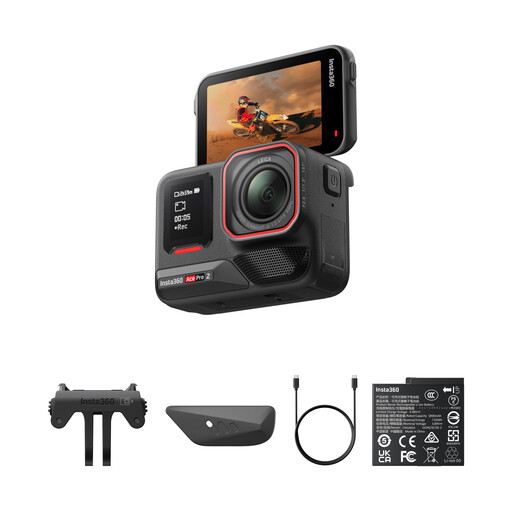
Insta360 Ace Pro 2 Dual Battery Bundle, 8K
The product title identifies this as an action camera. Check that the controls and field of view suit the way you like to shoot and the look you want for your reflections.
The product information lists a 1/1.3-inch sensor, a 157° wide-angle lens and FlowState stabilisation. It also mentions a low-light mode and water resistance to 12 metres.
View product at Joybuy
 No image available
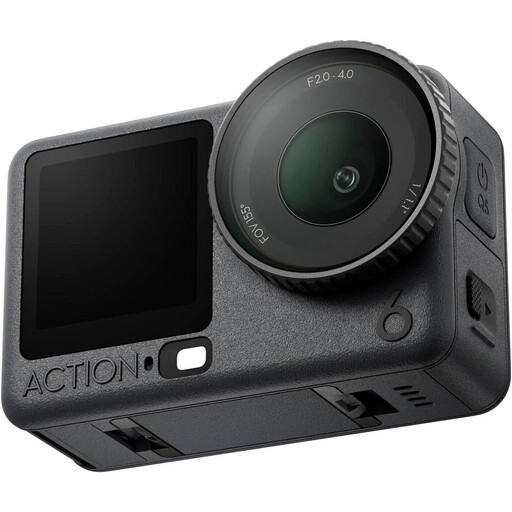
DJI Osmo Action 6 Adventure Combo
The product title identifies this as an action camera. Consider whether an action camera suits the way you prefer to control and compose your canal shots.
The product information lists a variable f/2.0–f/4.0 aperture, a 1/1.1-inch sensor and a weight of 149 g.
View product at Joybuy
Frequently asked questions
Does stabilisation help make rippling reflections look sharp?
Stabilisation is designed to compensate for camera movement, not to freeze moving water. Also consider the shutter speed and the effect you want; a stated number of stops doesn’t guarantee a still reflection.
Should you use a polarising filter for canal reflections?
Not necessarily: Canon Netherlands notes that a polarising filter reduces reflections from water. If the reflection is your subject, first try different viewpoints without a filter, then check the effect of a suitable filter.
What should you check before using your camera in the rain?
Check the weather protection of the exact camera and lens, and follow the instructions for use. OM SYSTEM lists IP53 for the OM-5 Mark II body; that specification doesn’t automatically apply to every lens or complete kit.
Who can help if your camera breaks too soon during normal use?
According to ACM ConsuWijzer, the retailer is responsible for statutory rights if a product is faulty. What you could reasonably expect from the camera depends on the product and the circumstances; your statutory rights aren’t automatically limited to the length of a manufacturer’s warranty.
Can you share photos of canals that show identifiable passers-by?
Bear privacy rules in mind, especially when sharing photos beyond a private circle. The Dutch Data Protection Authority explains that the exemption for personal or household use doesn’t apply to wider distribution; whether the GDPR applies depends, among other things, on who is publishing and for what purpose.


