
Reflection hunter
You want to decide how much of the canal, buildings and their reflections appear in the frame, while keeping the reflection recognisable.


Choose a compact camera with a fixed lens if you want to switch quickly between a wide view of the canal and close-up details as you walk; choose a system camera if you’d like to use different lenses later. If you’re shooting handheld, check where the stabilisation is built in, and in rainy weather check the protection offered by both the camera and lens. Canon Netherlands and Photofacts explain that a polarising filter can reduce reflections on water, so don’t use one automatically if the reflection itself is your subject.
You want to decide how much of the canal, buildings and their reflections appear in the frame, while keeping the reflection recognisable.
You walk without a tripod and want to make deliberate choices about shutter speed, camera shake and the effect of moving water in low light.
You often take your camera with you, sometimes in the rain, so portability and protection for both the camera and lens matter to you.
First, choose between a fixed lens for a compact set-up and a system camera that lets you use different lenses later. Then consider handling, stabilisation and the protection offered by the complete camera-and-lens combination.
| What to consider | What should you check? | Who should give this more weight? |
|---|---|---|
| Reflections and framing | Check the zoom range of the supplied lens and whether you can set the exposure and shutter speed yourself. | If I want to frame both the whole canal and close-up details from the same spot on the quay, the reflection needs to remain recognisable. Around 33% of consumers put framing and visible reflections first. |
| Handheld exposure | Check whether stabilisation is built into the camera body, the lens or both, and which shutter speed settings are available. | When I’m shooting without a tripod, I want to weigh up shutter speed and camera movement deliberately. Around 27% of consumers prioritise having control when shooting handheld. |
| Protection in wet weather | Check the specifications for both the camera and the lens you’ve chosen. | If I keep shooting in the rain, I want to know what protection applies to the complete set-up. Around 20% of consumers prioritise shooting in wet weather. |
| Portability | Compare the weight of the complete set and consider whether you want to take extra lenses with you. | For longer walks, I want a camera that I’ll actually carry with me. Around 20% of consumers prioritise portability and ease of use. |
A polarising filter can actually reduce reflections on water. That may not be ideal if the reflection is your subject.
First decide whether you want to keep the reflection or reduce glare. Then check that the filter fits the lens you’ve chosen.
Stabilisation can help reduce camera shake, but it won’t freeze moving water. A protection rating for the camera body doesn’t automatically tell you what applies to every lens.
Check the specifications for the exact camera body and lens combination you’re choosing.
A camera body on its own isn’t a complete camera-and-lens set-up. The lens and the other items in the kit also affect what you’ll carry on a walk.
Compare complete kits and check which items are actually included.
The RX100 VII is a fixed-lens option for anyone who wants to take just one camera on a walk.
The X-S20 is an APS-C system camera for anyone looking for interchangeable lenses and in-body stabilisation.
The OM-5 Mark II is a compact system camera for anyone who regularly takes their camera out and about.
The Z50II kit with the NIKKOR Z DX 16–50mm f/3.5–6.3 VR combines a system camera with a standard zoom lens.
The EOS R10 with the RF-S 18–45mm F4.5–6.3 IS STM is a system camera set-up with an interchangeable lens.
The options shown include a Songdian camera with 8× optical zoom, Sony camera kits with 16–50mm lenses and a Sony ZV-E10 camera body only. Check each product to make sure the lens and version suit the angle of view and equipment you’re looking for.
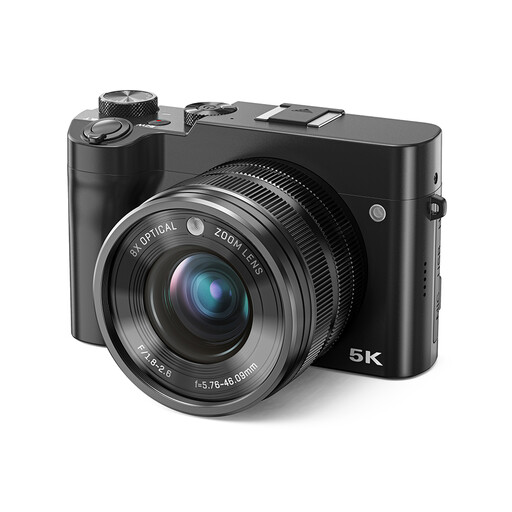 Image unavailable
The stated 8× optical zoom suits anyone who wants to switch between a wider scene and a cropped view from one spot.
Listed features include 5K, 64 MP and a dual lens.
 Image unavailable
This system camera kit suits anyone who wants an interchangeable lens and to frame different shots with one lens.
The combination includes an APS-C sensor, a 16–50mm zoom lens and OSS lens stabilisation.
 Image unavailable
This kit suits anyone who wants to frame both a wider scene and close-up details with an interchangeable lens.
Listed features include a 24.2 MP APS-C sensor and a stabilised 16–50mm f/3.5–5.6 OSS II lens.
 Image unavailable
This system camera kit suits anyone who wants an interchangeable lens to adjust the framing.
The combination listed includes a 16–50mm zoom lens with Optical SteadyShot stabilisation.
 Image unavailable
This version suits anyone who wants to choose their own compatible Sony E-mount lens.
This is a body-only version; you’ll need a compatible lens to take photos.
Not always. A filter like this can reduce reflections on water, so try it out and keep the reflection intact if it’s the subject. Check that the filter fits the lens you’ve chosen.
No. Calm water can create a clear reflection, while moving water is more likely to produce an abstract one. Choose the effect you want and check the shutter speed. You could also find a sheltered spot or wait for the wind to die down.
Compare the complete camera-and-lens combination: a camera body on its own doesn’t automatically include the lens you need for your preferred angle of view. The Consumers’ Association also recommends considering an extra battery and SD memory card; check what’s included with the kit you choose.
If a camera breaks during normal use sooner than you could reasonably expect, the seller must put things right free of charge, according to ACM ConsuWijzer. This could mean a repair, replacement or refund.
Not automatically. The Dutch Data Protection Authority distinguishes between images for your own personal use and publication; recognisable people in an image count as personal data. Before publishing, check which legal basis applies. In general, you’ll need a valid legal basis, usually consent.