A compact camera with a fixed angle of view keeps your kit simple if you can take photos from different spots; optical zoom is more useful if you want to switch between a wide view and a close-up from the same quayside. If you want interchangeable lenses or regularly shoot in changeable weather, compare a mirrorless camera with the lens you’ll actually take with you: the body alone won’t tell you how much space and weight the complete kit will need.
Which camera is right for you?
Walker with limited space to carry kit
You want to take photos as you explore a city without carrying a bag full of separate lenses. So compare the camera’s external dimensions and weight as a complete unit. Canon lists the PowerShot G7 X Mark III at approximately 304 g, including battery and memory card.
Photographer shooting from one quayside
You can’t always get closer to a building or its reflection, and want to frame your shots differently from the same spot. Optical zoom can help; according to their manufacturers, the Sony RX100 VII and Panasonic LUMIX DC-TZ99 have zoom lenses.
Photographer in changeable weather
You also take photos outdoors when the weather might turn, and want to assess the protection offered by both the camera body and the lens. OM SYSTEM lists an IP53 rating for the OM-5 Mark II body; check the chosen lens separately.
What should you look for when choosing?
Compact camera with a fixed angle of view
Choose this option: if you want to carry fewer separate parts and can change your position. According to Ricoh, the RICOH GR IV has an angle of view equivalent to approximately 28 mm; Fujifilm lists approximately 35 mm-equivalent for the X100VI.
Bear in mind: a fixed lens doesn’t offer optical zoom. To get a different crop, you’ll need to change position or crop the image afterwards.
Compact camera with optical zoom
Choose this option: if you want to frame both a wide canal view and a tighter detail from one spot. Canon lists a 24–100 mm equivalent range for the PowerShot G7 X Mark III, Sony lists 24–200 mm equivalent for the RX100 VII, and Panasonic lists 24–720 mm equivalent for the DC-TZ99.
Bear in mind: a greater zoom range doesn’t automatically make a camera more suitable in fading light; also compare the sensor and the lens aperture at the zoom setting you use.
Mirrorless camera with a suitable lens
Choose this option: if you want to be able to change lenses or protection in changeable weather is important to you. OM SYSTEM lists IP53 for the OM-5 Mark II body.
Bear in mind: the stated 418 g for this body includes the battery and SD card, but not the lens; assess the weight and protection of the complete combination.
First decide whether you want to zoom in from one spot or would rather change position. Then compare carry weight, performance in the available light and how you want the reflection to appear.
| What to consider |
What to check before buying |
Who is this important for? |
| Limited space to carry kit |
Compare the external dimensions and ready-to-use weight; include the lens when considering a mirrorless camera. |
If my bag has limited space, I want to carry the camera without a separate lens bag. Around 31% of consumers prioritise portability. |
| Framing from one spot |
Compare the angle of view and optical zoom range; for the Panasonic DC-TZ99, also check the aspect ratio for which the stated equivalent applies. |
When I can’t get closer to a building or reflection, I want to vary the crop from the quayside. Around 25% of consumers prioritise framing from one position. |
| Fading light |
Compare sensor size, lens aperture at the zoom setting you use, stabilisation and available exposure settings. Canon, Sony and Panasonic list these model specifications separately. |
As the light fades along the canal, I want to stay in control of my shot rather than relying solely on extra zoom. Around 19% of consumers prioritise low-light photography. |
| Preserving the reflection |
Consider whether you want to reduce glare or capture the reflection itself; a polarising filter can reduce reflections on water. |
When the reflection itself is the subject, I want to avoid using a filter that weakens it. Around 13% of consumers prioritise control over reflections. |
| Taking photos in the rain |
Check the stated protection for the exact body and lens, and follow the manufacturer’s instructions for use. |
If I’m taking photos by the water in changeable weather, I want to know what protection the complete setup offers. Around 12% of consumers prioritise rain protection. |
Avoiding common buying mistakes
-
Assuming the greatest zoom range is automatically the deciding factor
The Panasonic DC-TZ99 combines 30× optical zoom with a 1/2,3-inch sensor; Panasonic lists f/6,4 at the telephoto end. Extra reach doesn’t automatically overcome the limitations of fading light.
Think about how often you really photograph distant details, and compare the lens aperture at the zoom setting you’ll use for them.
-
Comparing a camera body’s weight with that of a complete compact camera
The 418 g listed by OM SYSTEM for the OM-5 Mark II body includes the battery and SD card, but not a lens.
Compare complete setups with a battery, card and the lens you actually intend to take with you.
A lens takes up extra space in your bag.
-
Using a polarising filter for every photo of water
A polarising filter can reduce reflections, but that reflection may be the subject of your photo. Nikon describes this effect for reflections on water.
First decide what you want to keep in the frame, and use a polarising filter only when reducing glare suits your aim.
-
Assuming a weather-resistant body protects every lens
OM SYSTEM describes the protection of the OM-5 Mark II body separately from that of weather-resistant lenses.
Check the specifications and instructions for use of the exact body-and-lens combination you choose.
A separate weather-resistant lens may cost extra.
Camera brands to compare
Canon
The PowerShot G7 X Mark III is a compact zoom camera for anyone who wants to frame both wide views and details with one camera.
- Canon lists a 1.0-type sensor, an f/1.8–2.8 lens aperture and a weight of approximately 304 g, including battery and memory card.
- Its stated zoom range is shorter than that of the Sony RX100 VII discussed here; this is a comparison of specifications, not a quality test.
Sony
The RX100 VII combines a 1.0-type sensor with optical zoom for different crops from one position.
- Sony lists a range equivalent to 24–200 mm.
- Sony lists f/4.5 at the telephoto end; assess that aperture at the zoom setting you use.
Panasonic
The LUMIX DC-TZ99 is designed to offer a wide optical zoom range in a fixed-lens camera.
- Panasonic lists 30× optical zoom and a weight of approximately 322 g, including battery and SD card.
- The stated specifications include a 1/2,3-inch sensor and f/6,4 at the telephoto end; weigh up the range against how you’ll use it in fading light.
RICOH
The GR IV is a compact alternative for anyone who deliberately shoots with a fixed, relatively wide angle of view.
- Ricoh lists an APS-C sensor and five-axis image stabilisation.
- The fixed lens has no optical zoom; you’ll need to change position if you want a different crop.
FUJIFILM
The X100VI has a fixed angle of view and a built-in ND filter.
- Fujifilm lists an APS-C sensor, a 35 mm-equivalent angle of view and a four-stop ND filter.
- An ND filter isn’t a polarising filter; the fixed lens can’t optically bring a distant detail closer.
OM SYSTEM
The OM-5 Mark II is a mirrorless camera for anyone who wants to change lenses and assess the protection offered by the complete setup.
- OM SYSTEM lists IP53 for the body and a weight of 418 g, including battery and SD card, without a lens.
- Assess the protection and total carry weight separately for the lens you choose.
Explore cameras at Joybuy
This Joybuy selection includes cameras with optical zoom, a mirrorless camera with a 16–50 mm lens, a pocket gimbal camera and an instant camera. Compare the features listed for each model with the way you take photos; these different types offer different approaches to capturing canal reflections.
 No image available
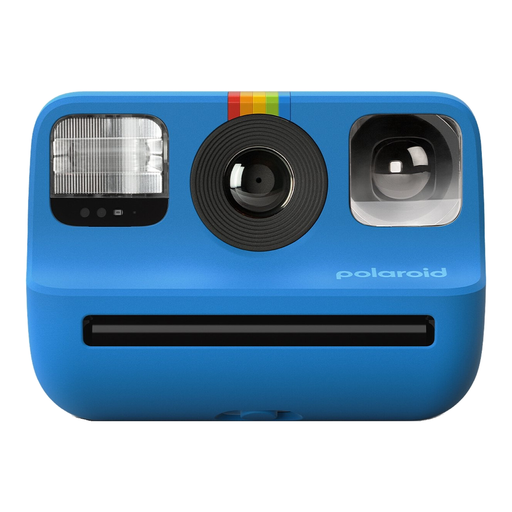
Polaroid Go Gen 2, blue
This instant camera is for anyone who wants to keep a print straight away as well as taking photos.
It uses Polaroid Go film. The product description lists a weight of 239 g.
View at Joybuy
 No image available
DJI Osmo Pocket 4 Standard Combo
According to the product title, this pocket gimbal camera is designed for photography and video; compare the listed features with what you want to capture.
The title lists a 1-inch CMOS sensor, 2× lossless zoom, 4K/240fps, 3-axis stabilisation, 107 GB of built-in storage and a 2-inch rotatable screen.
View at Joybuy
 No image available
KOMERY G7 5K digital camera
This point-and-shoot camera could suit anyone looking for a compact camera with optical zoom to frame shots differently from one spot.
The product information lists 18× optical zoom; the title mentions 5K and 80 MP.
View at Joybuy
 No image available
Songdian 5K digital camera, black
The stated optical zoom is useful if you want to switch between different crops from one position.
The title lists 56 MP, 10× optical zoom and front and rear cameras.
View at Joybuy
 No image available
Sony ZV-E10 with 16–50 mm zoom lens, black
This mirrorless camera kit is worth considering if you want an interchangeable lens and want to frame shots with the supplied zoom lens.
The description lists a 24.2 MP APS-C sensor, a 16–50 mm lens with a Sony E mount and a body weight of 343 g. A compatible SD card isn’t included; the stated weight is for the body only.
View at Joybuy
Frequently asked questions
Do I need a polarising filter for a canal reflection?
Not necessarily: a polarising filter can actually reduce reflections on water. Canon recommends still water or a sheltered spot for a clear reflection, so first decide which reflection you want to keep in the frame.
What should I take if I want to carry as little as possible?
Add the battery, memory card and any lenses to the camera’s weight, and check what’s included with the exact version. The Consumentenbond lists an extra battery and SD card as separate purchase considerations; they aren’t essential for every buyer.
What are the rules on returns and warranties for online purchases in the Netherlands?
When you buy remotely from a business, you’ll often have a 14-day cooling-off period; check the relevant terms and exceptions. ACM ConsuWijzer explains that your statutory guarantee is separate from any manufacturer’s or seller’s warranty, and that the seller is responsible for providing an appropriate solution if a product is faulty.
Can I share a photo publicly if passers-by are recognisable?
That depends on how you use and share the photo. The Dutch Data Protection Authority points out that recognisable people may count as personal data, and that GDPR rules may apply to wider or commercial use; consider the specific purpose and how you plan to publish the photo.


