Who is this choice relevant to?

Spontaneous canal-side walker

You want to be able to pick up your camera straight away without changing lenses. Size, controls and a useful built-in angle of view all matter. The Consumers’ Association also highlights size and ease of use as factors to consider when choosing a camera.

Photographer of wide reflections

You want to capture both the buildings and their reflection, so you choose your viewpoint and angle of view carefully. Canon Europe explains how changing the camera height can alter the view of a reflection.

Evening photographer looking to expand their kit

You often take photos in low light or want the option to choose a different lens later. If so, consider the stabilisation in both the camera and the lens you’ll actually be using.

What should you look for when choosing?

Compact camera with built-in zoom

Choose this option: if you want to switch quickly between a wide view and a tighter composition while out walking, without changing lenses. Sony specifies a built-in 24–200 mm equivalent zoom range for the DSC-RX100M7A.

Bear in mind: the lens can’t be changed, so check whether the wide-angle setting suits the places where you usually shoot from along the canal.

Compact camera with fixed wide-angle lens

Choose this option: if you mainly take wide street and canal shots and know in advance that a fixed angle of view will suit you. Ricoh specifies a fixed lens of around 28 mm equivalent for the GR IV.

Bear in mind: you can’t optically zoom in on a building further away. Before you set off, consider whether you’ll have enough room on the canal bank to frame the shot you want.

Mirrorless camera with lens already attached

Choose this option: if you want to switch to a different angle of view later or if in-body stabilisation matters to you. Fujifilm specifies five-axis stabilisation in the X-S20; on the Canon EOS R50, image stabilisation for photos depends on the lens you choose.

Bear in mind: check which lens comes with the kit and whether it’s already attached. A body on its own isn’t a complete camera setup for taking a quick first shot.

What to consider What should you check? Who might weigh this more heavily?
Being ready to shoot straight away Check whether a lens is included and whether you find the controls easy to use. If I want to grab my camera quickly when the light or reflection is just right, I don’t want to have to change lenses. Around 36% of consumers prioritise being able to shoot straight away.
Framing the whole reflection Compare the wide-angle setting in 35 mm equivalent and check the framing from your usual viewpoint. If I want to capture both the building and its reflection from the canal bank, I need to know whether the angle of view is wide enough. Around 29% of consumers prioritise framing the whole reflection.
Handheld shots in low light Check whether stabilisation is in the body, the lens or both. Also consider whether you want to use a tripod or a steady surface. When I want to take handheld shots in low light, I pay attention to stabilisation and how I shoot. Around 21% of consumers prioritise handheld shots in low light.
A complete kit you can expand Check which lens is included and whether its mount is compatible with the lens you want to use. If I want to try different angles of view later, I need to know what’s included in the complete kit and which lenses are compatible. Around 14% of consumers prioritise expandability and the kit contents.

Buying pitfalls

  • Buying a polarising filter to make the reflection ‘better’

    A polarising filter can actually reduce reflections on water. That may work against you if the reflection itself is your subject.

    First decide whether you want to keep the reflection in the shot. Then consider whether a filter suits the image you want and is compatible with your lens.

  • Comparing a camera body with a complete compact camera

    A mirrorless camera needs a compatible lens, whereas a compact camera has a lens built in. A body on its own is therefore not the same kind of complete kit.

    Compare what’s included and check whether the chosen lens is already attached if you want to get started quickly.

  • Assuming stabilisation will freeze moving water

    Stabilisation is designed to compensate for camera movement; ripples and passing boats will still move. For a very long exposure, Nikon recommends using a tripod or another sturdy support.

    Decide whether you want to capture the water as it is in a quick handheld shot or take a longer exposure with support.

  • Assuming a warranty period covers all your rights in the Netherlands

    The Dutch government states that there is no fixed statutory warranty period in the Netherlands. What you can expect from a product depends, among other things, on the product, its price and the sales information.

    If you’re considering an extended warranty, read the additional terms and compare them with your statutory rights as a consumer dealing with the seller.

Brands to consider

Sony

The DSC-RX100M7A is a compact camera with built-in zoom, for anyone who wants to frame shots in different ways without changing lenses.

  • Sony specifies a type 1.0 sensor, optical stabilisation and a built-in zoom range of 24–200 mm equivalent for this model.
  • The lens can’t be changed, and the specifications are no guarantee of exceptional performance for canal photography.

Ricoh

The GR IV is a compact option for anyone who knows in advance that a fixed angle of view of around 28 mm equivalent will suit them.

  • Ricoh specifies an APS-C sensor and five-axis sensor-shift stabilisation.
  • The fixed lens doesn’t have optical zoom.

Canon

The EOS R50 is a mirrorless camera for anyone who wants to use an RF or RF-S lens and have the option to change lenses later.

  • Canon specifies support for RF and RF-S lenses.
  • The EOS R50 doesn’t have sensor-shift stabilisation, so check the stabilisation of your chosen lens separately.

Fujifilm

The X-S20 combines lens choice with stabilisation in the camera body.

  • Fujifilm specifies five-axis image stabilisation and a body weight of 491 g.
  • The stated compensation of up to 7.0 stops is no guarantee for every handheld shot. Also check which lens is included in the kit.

Joybuy products

The product selection below includes compact digital cameras and pocket cameras. Check each model to make sure its photo features and angle of view suit capturing still reflections along the canal.
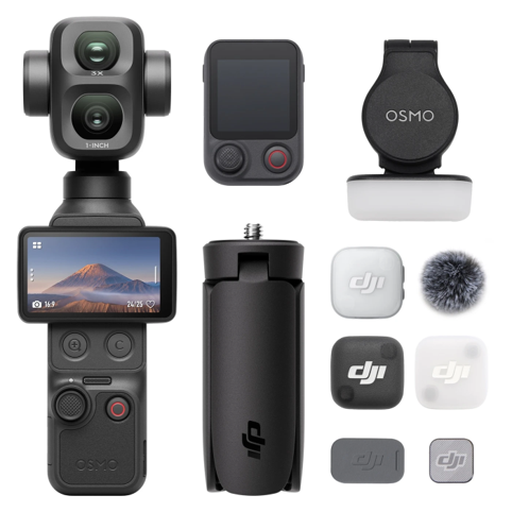
Osmo Pocket 4P Vlog Combo in black

Osmo Pocket 4P – Vlog Combo, Black

The product name describes this as a vlog combo. Check that the photo modes and angle of view suit the kind of canal photo you want to take.

View at Joybuy
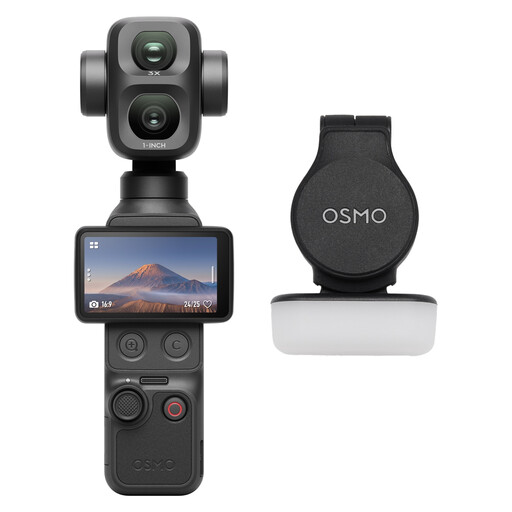
Osmo Pocket 4P Standard Combo in black

Osmo Pocket 4P – Standard Combo, Black

According to the product name, this is the Standard Combo version of the Osmo Pocket 4P. Check which items are included and whether the camera is suitable for still photos of reflections.

View at Joybuy

NAXSIR digital camera with autofocus, 18× digital zoom and 32 GB memory card

NAXSIR Digital Camera 4K Ultra HD, 64 MP

The product name mentions autofocus, 18× digital zoom and an included 32 GB memory card. Check whether the angle of view and controls suit your usual spot by the canal.

View at Joybuy

DJI Osmo Pocket 4 Standard Combo with 1-inch CMOS sensor and 107 GB of built-in storage

DJI Osmo Pocket 4 Standard Combo

The product name mentions a 1-inch CMOS sensor, 3-axis stabilisation, 2× lossless zoom and 107 GB of built-in storage. Check whether the pocket camera size and the listed features suit the way you take photos.

View at Joybuy
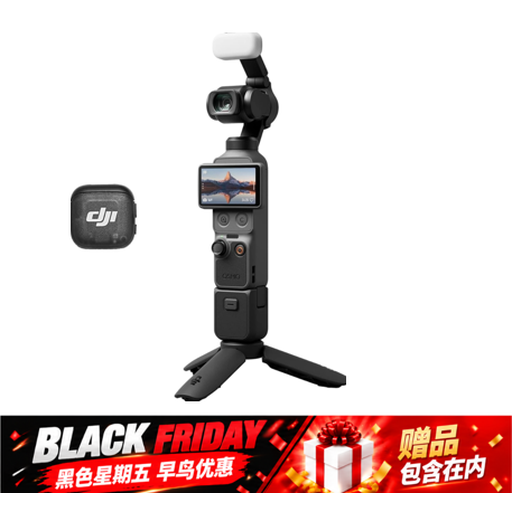
DJI Osmo Pocket 4 Creator Combo with a handle featuring a 1/4-inch thread

DJI Osmo Pocket 4 Creator Combo

The product name mentions a handle with a 1/4-inch thread and 4K/240fps. According to the product information, 4K/240fps is only available in slow-motion mode. Check whether this vlog camera meets your needs for still photography.

View at Joybuy

Frequently asked questions

How can I get a building to appear clearly in the reflection?

Try changing the camera height and look for calmer water or a sheltered spot. Canon Europe explains that ripples create a more abstract effect, while still water can produce a clearer reflection.

Will a polarising filter help if I want to show the reflection?

Not necessarily: Nikon explains that a polarising filter can reduce reflections on water. Check the effect before you take a photo, and separately make sure the filter is compatible with your chosen lens.

Do I need a tripod for a long exposure?

For a very long shutter speed, Nikon recommends using a tripod or another sturdy support. This takes extra time to set up. For a quick handheld shot, consider whether the shutter speed and stabilisation you’ve chosen suit the image you want to create.

What can I do if my camera turns out to be faulty in the Netherlands?

According to the Dutch government, you’re entitled to a product that works properly, and the seller must provide a solution if there’s a fault. The Netherlands has no fixed statutory two-year warranty period; what you can expect depends, among other things, on the product, its price and the sales information. Damage caused by misuse or normal wear and tear isn’t automatically covered by free repairs.

Can I post photos of identifiable passers-by on a canal online?

Not without considering the circumstances of publication. According to the Dutch Data Protection Authority, the exception for personal or household use doesn’t necessarily apply if you share images of identifiable people more widely or publicly, or use the images for business purposes. In those cases, check the relevant privacy rules. This is not a general ban on taking photos, nor does it amount to general permission to publish them.
