When you’re standing on a narrow quay and want to capture an entire façade, a suitable wide-angle lens matters more than a long telephoto reach. A compact camera with a built-in wide-angle lens keeps your kit simple. A mirrorless camera gives you more choice of lenses, but check which lens is included and how much the complete kit weighs. Keep the camera as level as possible to avoid façades appearing to lean backwards, as Nikon also explains in its photography tips.
Who is this guide for?
Photographers who want to capture the whole façade
Standing close to a building but still want to include the roofline? Check the field of view of the lens that actually comes with the camera. Canon describes its RF-S 10-18mm lens as an ultra-wide-angle option for capturing an entire building.
Weekend walkers who like to travel light
If you want to grab your camera quickly while you’re out and about, without changing lenses, a compact camera with a fixed lens could suit you. The trade-off is that you won’t be able to choose a different lens later. The Consumers’ Association lists size and ease of use among the things to consider when choosing a camera.
Photographers who care about façade details and straight lines
If you want to frame brickwork carefully and keep the edges of façades straight, consider your position and how you hold the camera, as well as the camera itself. Nikon explains that tilting the camera sharply upwards can make vertical lines converge.
What should you look for when choosing?
First, work out how wide a field of view you need from the quay, then decide how much kit you want to carry. With a mirrorless camera, it’s the complete kit that matters: the camera body alone doesn’t tell you which lens is included.
| What to consider |
What to look for when buying |
Who is this important for? |
| Framing the whole façade |
Check the wide-angle end of the lens included in the kit. Only compare focal lengths if they’re given on the same sensor or full-frame-equivalent basis. |
If I want to fit the roof and façade into one shot from a narrow quay, a wide-angle lens is my top priority. Around 36% of consumers say capturing the whole façade is their first buying priority. |
| Easy to carry |
Compare the camera with your chosen lens, battery and any accessories you need. Also check whether you’re buying a body or a complete kit. |
For a weekend walk, I want to keep my kit light and simple, without carrying or changing separate lenses. Around 29% of consumers give portability top priority. |
| Straight façade edges and details |
Check whether the field of view you want leaves room to keep the camera level and crop the image if needed. Resolution alone doesn’t tell you how clearly brickwork will show up. |
If I want to capture façade details and straight lines matter to me, I also consider my position and framing. Around 21% of consumers put geometry and detail first. |
| Changing daylight |
Check whether the camera and lens combination you’ve chosen offers image stabilisation for stills. Digital stabilisation for video isn’t the same as stabilisation for stills. |
As the light fades, I want to know what stabilisation the combination actually offers, without assuming it will keep moving passers-by sharp. Around 14% of consumers prioritise taking photos in changing light. |
Common buying mistakes
-
Assuming the camera body comes with the wide-angle lens you want
With a mirrorless camera, the lens included in the kit determines whether you can frame an entire façade from close by.
Read the full list of kit contents and check the lens mount and focal length before you buy.
-
Assuming a longer zoom range is automatically better
To capture an entire façade from a narrow quay, the wide end of the zoom range matters more than how far you can zoom in.
Compare the wide-angle end on the same basis, ideally using the full-frame-equivalent field of view.
-
Confusing lens stabilisation with in-body image stabilisation
Stabilisation can vary between camera and lens combinations. Canon says the EOS R50 doesn’t have sensor-shift stabilisation; Fujifilm lists digital stabilisation for the X-M5 for video only.
Check the still-photo stabilisation offered by the exact camera and lens you want to buy.
Camera brands to compare
Canon
The EOS R50 is a mirrorless camera that supports RF-S lenses.
- Canon describes the separate RF-S 10-18mm lens as an ultra-wide-angle lens with optical image stabilisation.
- Canon says the EOS R50 doesn’t have sensor-shift stabilisation. Check which lens is included in the kit on offer.
Nikon
The Z50II is a mirrorless camera for which Nikon describes a separate Z DX 12-28mm ultra-wide-angle lens.
- Nikon lists an electronic viewfinder on the Z50II.
- Check whether the 12-28mm lens is actually included in the kit on offer.
Sony
The ZV-1 II is a compact camera with a fixed zoom lens.
- Sony gives the built-in zoom a full-frame-equivalent range of 18–50mm.
- The lens isn’t interchangeable. Sony also positions this model for creators and vlogging; this isn’t an independent assessment of its suitability for architectural photography.
Fujifilm
The X-M5 has an APS-C sensor and can be paired with the separate XF10-24mmF4 R OIS WR lens.
- Fujifilm gives this lens a full-frame-equivalent range of 15–36mm.
- The X-M5 specifications list digital stabilisation for video only. Check the complete kit and its stabilisation for stills.
OM SYSTEM
The Tough TG-7 is a compact camera with a fixed zoom lens, for anyone who wants protection against water and knocks.
- The manufacturer lists water, dust and shock resistance, and a full-frame-equivalent zoom range of 25–100mm.
- Its stated zoom range starts at a less wide 25mm than the Sony ZV-1 II’s 18mm. Compare the difference if you’re standing close to a wide building.
Joybuy cameras for a weekend walk
This Joybuy selection includes compact cameras, a Sony mirrorless camera with a 16–50mm kit lens, and an action camera. If you’re taking photos from close by, check that the stated field of view suits the composition you have in mind.
 No image available
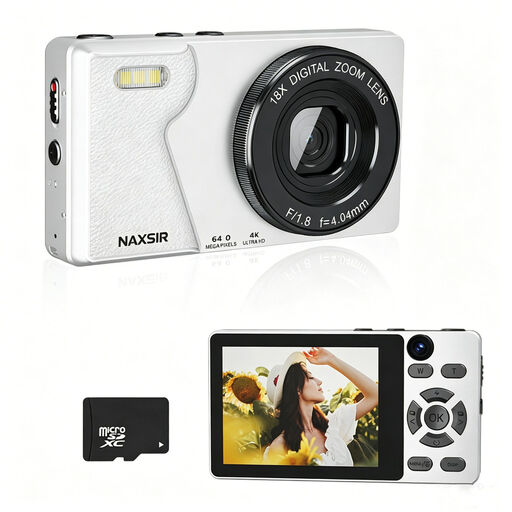
NAXSIR 4K digital camera, 64 MP, 32 GB card
An option to consider if you’re looking for a camera for travel and everyday photography. For façades from close by, check the wide-angle range separately.
The product name lists 64 MP photo resolution, autofocus, 18× digital zoom and an included 32 GB memory card. Digital zoom isn’t optical zoom.
View at Joybuy
 No image available
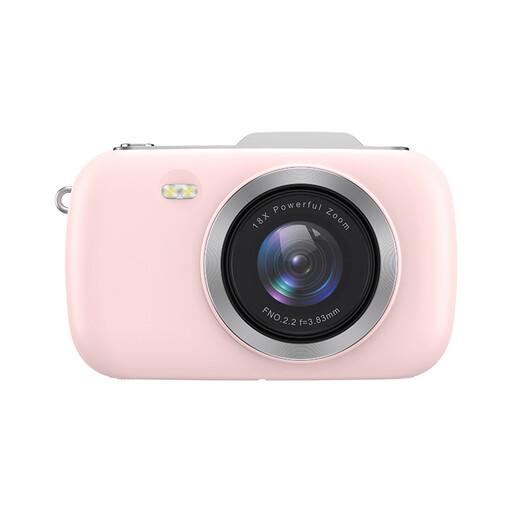
KOMERY G7-A 4K digital camera, pink
This camera is worth considering for a day out if you’re looking for a travel-friendly point-and-shoot. Check that its field of view is suitable for capturing a façade from where you’ll be standing.
The product name lists 80 MP photo resolution and 18× zoom.
View at Joybuy
 No image available
Sony ZV-E10 + 16-50mm Zoom, black
A mirrorless camera with a kit lens to consider if you want to take an interchangeable-lens system with you. Check whether the included lens offers a wide enough field of view for the façades you want to photograph.
The product description lists a 24.2 MP APS-C sensor and a Sony E PZ 16–50mm kit lens. It also says that an adapter/charger isn’t included.
View at Joybuy
 No image available
Sony ZV-1 compact camera
A fixed lens could suit you if you don’t want to carry separate lenses on a walk. Bear in mind that you won’t be able to change it.
The product information lists a built-in lens, 2.7× optical zoom and image stabilisation.
View at Joybuy
 No image available
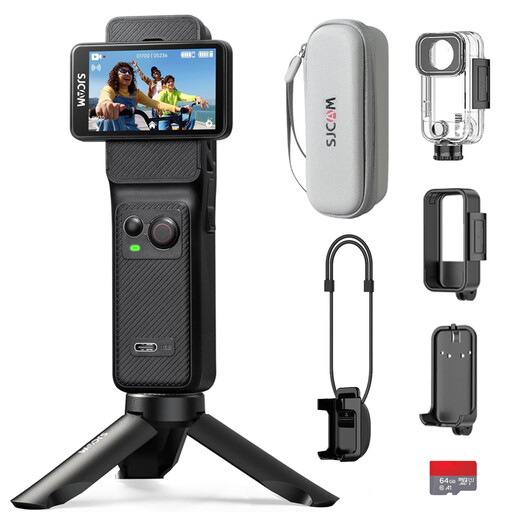
SJCAM C400 action camera with accessory kit
Worth considering if you’re looking for an action camera with a stated wide field of view. Decide for yourself whether it suits the façade composition you want.
The product description lists a 154° field of view, photos up to 16 MP, 6-axis stabilisation and an included 64 GB card.
View at Joybuy
Frequently asked questions
Why do canal houses look as if they’re leaning backwards in my photos?
This can happen when you tilt the camera sharply upwards to include the roof. Keep the camera as level as possible and choose a wider composition if needed. Nikon explains how tilting upwards can make vertical lines converge.
Do I need to buy a lens separately for a mirrorless camera?
It depends on the version: a camera body isn’t the same as a kit that includes a lens. Check that a lens with the field of view you need is included. The Canon RF-S 10-18mm and Nikon Z DX 12-28mm are lenses described separately.
What should I do with the battery and memory card before a day of photography?
Charge the battery beforehand and check that you have a suitable memory card. The Consumers’ Association lists memory cards and a possible spare battery among the things to consider; whether you need a spare depends on how you use your camera.
Am I always entitled to exactly two years’ legal guarantee in the Netherlands?
No. According to the Dutch government, the Netherlands has no fixed statutory guarantee period: a product must work as you can reasonably expect it to for a reasonable length of time, and the retailer is your point of contact if there’s a problem. If you’re considering paying for an extended guarantee, check what additional rights it offers.
Can I share weekend photos publicly if passers-by are recognisable?
Not necessarily. The Dutch Data Protection Authority distinguishes between photos that stay private or are shared with a very limited group, and those shared publicly or for business purposes. If people are recognisable, sharing them in the latter way may require a lawful basis under the GDPR. That doesn’t mean every street photograph is prohibited.


