
Sunset silhouette photographer
Wants a recognisable dark bridge against a bright sky and is looking for control over exposure. Nikon USA describes exposing for the background as a way to render the subject dark.


For a bridge silhouette with a visible reflection, the right angle of view and careful exposure are important. If possible, start with the camera you already own. Expose for the bright background if you want to keep the bridge dark, and choose a lens that lets you frame the bridge and its reflection together from your viewpoint. A lightweight APS-C kit can be comfortable to carry; a full-frame body-only camera requires a separate lens and, based on the available information, has no proven advantage for this particular shot.
Wants a recognisable dark bridge against a bright sky and is looking for control over exposure. Nikon USA describes exposing for the background as a way to render the subject dark.
Wants to frame both halves of the image from one viewpoint and retain the reflection. The lens’s angle of view and the use of a polarising filter are therefore worth considering; Nikon USA notes that this type of filter can reduce reflections.
Wants to try different viewpoints along the water with a portable camera-and-lens kit. Compare the weight of the complete kit and check which lens is included with the version you’re considering. For example, Canon Netherlands lists the black EOS R50 body at around 328 g without a lens.
Suitable if: you want to try different viewpoints while walking and choose your own lens for the framing you want.
Trade-off: the weight and cost of the complete kit depend in part on the lens and any additional equipment. Canon lists the black EOS R50 body at around 328 g without a lens; Sony’s ILCE-6400 uses E-mount lenses.
Suitable if: you also want to use the camera for other landscapes and are happy to invest in a more extensive camera system.
Trade-off: the Nikon Z5II version mentioned in the Netherlands is a body without a lens. Compare the complete kit; this version alone does not prove that it offers better quality for a bridge photo.
Suitable if: you can already frame the bridge and reflection as you want and adjust the exposure.
Trade-off: a new camera won’t automatically solve an unsuitable viewpoint, a missing reflection or the wrong exposure choice. Nikon USA describes focusing on the subject and exposing for the background to create a silhouette.
| What to consider | What should you check? | Who should give this more weight? |
|---|---|---|
| Silhouette and bright background | Check whether you can expose for the background and focus on the bridge. | If I want to keep the bridge dark while making the sky visible, I want to be able to set the exposure deliberately for the background. Around 40% of consumers prioritise silhouette exposure. |
| Framing the bridge and reflection | Check whether the exact lens’s angle of view captures both; compare the image with and without a polarising filter. | I want to frame the bridge and its reflection together from my viewpoint, without unintentionally reducing the reflection. Around 30% of consumers prioritise composition and retaining the reflection. |
| Stability as the light fades | Compare shutter speeds for the water effect you want, and consider how steadily you can hold the camera while taking the shot. | When shooting at dusk, I want to choose a shutter speed that suits the water while also limiting camera movement. Around 20% of consumers prioritise stability and shutter speed selection. |
| Portability and complete kit | Compare like for like: body, lens and any necessary accessories. The weight of the body is not the weight of the complete kit. | When I’m walking along the water, I want to know how much the whole camera-and-lens kit weighs and whether it comes with a suitable lens. Around 10% of consumers prioritise portability and what’s included in the complete kit. |
A polarising filter can reduce reflections, even though the reflection may be an important part of your photo.
First decide whether the reflection is part of the subject or an unwanted glare, then compare the image with and without the filter.
A body-only version and a camera supplied with lenses are not like-for-like purchases if you want to start taking photos straight away. The Nikon Z5II version mentioned is body-only; the Z50II kit mentioned includes two lenses.
Check what’s included with the exact version and choose a lens suited to your distance from the bridge and the angle of view you want.
With a body-only version, you’ll need to choose a suitable lens separately before you can create the composition you want.
When photographing a dark subject against a bright background, your exposure choice determines the silhouette; a new camera model won’t make that choice for you.
Try to achieve the result you want with your current camera first, then decide whether you’re missing a particular lens or feature.
According to Canon Europe, the EOS R50 is a lightweight APS-C body with an RF mount for RF and RF-S lenses.
The ILCE-6400 is an APS-C model with an E-mount; Sony Netherlands lists RAW as a recording format.
The Z50II kit and Z5II body mentioned illustrate different options in what’s included, according to Nikon Netherlands.
This Joybuy selection consists of compact vlogging and pocket cameras. For the exact version, check that the controls for still photography and the angle of view you want are suitable for a bridge silhouette with a reflection.
 No image available
The title lists a 150° ultra-wide-angle lens; check whether this angle of view captures the bridge and reflection together from your viewpoint.
Wi-Fi, electronic image stabilisation and a 330° rotatable lens are also listed.
 No image available
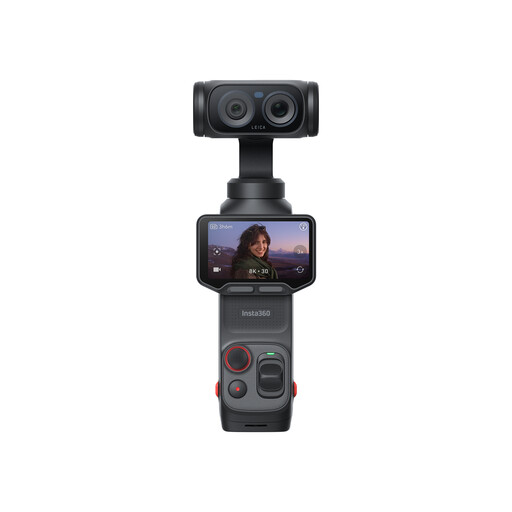
This pocket gimbal camera is described as a camera for photography; check that its controls and framing suit your still photos of bridges.
The title lists a 1-inch CMOS sensor, 2× lossless zoom, 4K/240fps video, 3-axis stabilisation, 107 GB of built-in storage and a 2-inch rotating screen.
 No image available
Before choosing, check whether this pocket gimbal camera’s features suit still photos of a bridge and its reflection.
The title lists a 1-inch CMOS sensor, 2× lossless zoom, 4K/240fps video, 3-axis stabilisation, 14 stops of dynamic range, 107 GB of built-in storage and a handle with a 1/4-inch thread.
 No image available
The description lists a telephoto lens and zoom of up to 6×; check whether the angle of view and controls suit your distance from the bridge.
A 1-inch main sensor and a detachable touchscreen with remote control from up to 20 m are also listed.
 No image available
This version is described as a vlogging camera for photography; check that it supports the still shot and framing you want.
The title lists a 1-inch CMOS sensor, 4K/120fps video, 3-axis stabilisation, fast focusing, a 2-inch rotating screen and a microphone.
Focus on the bridge and expose for the bright background if you want a silhouette. Nikon USA describes this as a photographic technique, not a feature that requires a new camera model.
Not necessarily: Nikon USA explains that a polarising filter can reduce or remove reflections. If you want to retain the reflection, compare the effect on the spot.
Check whether a lens is included with the exact version and whether its angle of view suits your viewpoint. According to the Dutch government, when you buy a product you’re entitled to a product that works properly under the statutory guarantee; a manufacturer’s or additional warranty is separate. For an online purchase, ACM ConsuWijzer states that you’ll generally have a 14-day cooling-off period from delivery; check the applicable exceptions and returns policy.
It depends on the purpose and circumstances. The Dutch Data Protection Authority notes that recognisable people in images are personal data, and privacy rules may apply when taking and publishing photos. This is not blanket permission or a general ban for every bridge photo.