
Creator with a permanent bookbinding table
Wants to keep the whole work surface and every step in frame consistently. The right framing and a fixed camera setup are important here.


If you’ll mainly be filming above a fixed work table, choose a camera setup with a suitable field of view and check that both the paper and your hands stay in focus. A mirrorless camera with an interchangeable lens gives you more framing options. If you often change your position, a compact gimbal camera is more practical, but check that its fixed field of view captures the whole table from where you plan to mount it. With window light, take a test recording of both the picture and sound.
Wants to keep the whole work surface and every step in frame consistently. The right framing and a fixed camera setup are important here.
Moves the camera between wide shots, tools and small details. Your choice will depend in part on how much freedom of movement and lens choice you need.
Wants to capture clear instructions and account for window light that may change during recording.
Start with where you’ll mount the camera and the size of your work surface. Then consider how you want to manage window light and spoken explanations in your recording.
| What to consider | What should you look for? | Who is this important for? |
|---|---|---|
| Framing the work surface and details | Measure the available mounting height and work surface; check the field of view and focusing distance with a test setup. | If you want to show folds, thread or cutting lines alongside your hands, framing is your top priority. Around 30% of consumers prioritise this. |
| Picture quality in changing window light | Check how you can adjust exposure and white balance; test a recording while your hands move over the paper. | If you want the paper to remain clear as the daylight changes, take a test recording in the light you’ll be filming in. Around 30% of consumers prioritise visibility in window light. |
| Clear spoken explanations | Record from the planned camera position and check that your preferred microphone and connection are compatible with the camera. | If viewers need to follow your explanations while the camera is further away, listen back to a recording before choosing accessories. Around 20% of consumers prioritise clear instructions. |
| Movement and lesson length | Plan the movements you expect to make and how long you’ll record; check the exact model’s battery life, power supply, storage and any recording limits. | If you want to move between work areas or record a longer lesson, check the practical recording requirements of the model you’re considering. Around 20% of consumers prioritise freedom of movement or recording plans over the other factors. |
On the DJI Osmo Pocket 3, 4K/120 fps is for slow motion; DJI specifies up to 60 fps for standard 4K recording. Neither figure tells you on its own whether a small bookbinding task will be clearly visible.
Compare the standard recording mode and, above all, test the field of view, focus and position above the table.
Depending on your chosen lens and mounting position, you may also need a suitable support or memory card.
The mechanical stabilisation of the DJI Osmo Pocket 3 doesn’t determine whether the camera can be positioned safely and effectively above your work surface.
Plan the mount and framing separately, even if the camera has stabilisation.
You may need a separate, suitable mount for a fixed position.
According to the ACM, the Dutch statutory guarantee doesn’t limit every product to a fixed two-year period. The retailer is your point of contact if a product proves faulty sooner than you would reasonably expect under normal use.
Keep your proof of purchase and distinguish between a commercial manufacturer’s warranty and your statutory rights.
The EOS R50 V is a video-focused mirrorless camera with interchangeable RF lenses. The kit reviewed includes an RF-S 14-30mm F4-6.3 IS STM PZ lens.
The Sony ZV-E10 II is an APS-C camera with interchangeable lenses and a Product Showcase mode.
DJI says the Osmo Pocket 3 combines a compact camera with a fixed lens and a mechanical gimbal.
The LUMIX G100D is a compact system with interchangeable Micro Four Thirds lenses.
These Joybuy product picks are suited to filming a bookbinding lesson. Check that the camera and included accessories work with your table setup for the version you choose.
 Image unavailable
This gimbal camera is worth considering if you want to move the camera between work areas; check that the included handle is suitable for your planned mount above the table.
The product listing mentions 4K/240fps, 3-axis stabilisation, 107GB of built-in storage and a handle with a 1/4-inch thread.
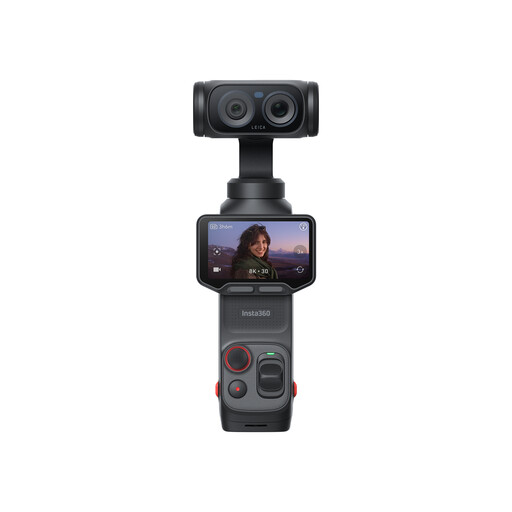 Image unavailable
If you want to switch between wide shots and close-ups, check which lens settings and mounting options this version offers, and whether they suit your mounting height.
Image unavailable
This compact gimbal camera may suit you if you move between work areas; stabilisation isn’t a substitute for a suitable mount for a fixed overhead shot.
DJI specifies focusing from 0.2 m and standard 4K recording up to 60 fps; 4K/120 fps is for slow motion. The product name indicates that a microphone is included.
 Image unavailable
A mirrorless camera may be a good fit for a fixed work table where you want to adjust the framing; check whether the included 16–50mm zoom lens captures both your hands and the work surface from your mounting height.
 Image unavailable
If you want to film hands-free, check that the mount holds the camera in the position you need and that the field of view captures both the paper and your hands.
The product listing mentions 4K/60, a 143° field of view and recording time of up to 200 minutes.
Start with a test recording of the whole work table and avoid direct, bright sunlight washing out details on white paper. Canon recommends using curtains or voile to diffuse available window light; check the results in your own setup.
Not necessarily. First, record your spoken explanation from the planned camera position and listen back. Only then consider a compatible external microphone. A built-in microphone doesn’t guarantee that your lesson will sound clear in your room.
Check which lens, mount, memory card or microphone you need for your setup, and what’s included in the kit you choose. For a consumer purchase in the Netherlands, statutory warranty is provided through the retailer. According to the ACM, the period isn’t fixed at two years for every product; it depends on what you can reasonably expect under normal use.
If a business or organisation films identifiable people and publishes the footage, the Dutch Data Protection Authority says there must be a lawful basis for doing so. Consent is often the obvious choice, and the people involved must be properly informed. If you film only your own hands and nobody else is identifiable, this specific issue about identifiable students doesn’t arise. The appropriate lawful basis depends on the circumstances.