
Detail photographer
You want to capture small lines, printed designs or raised details separately and in close-up. So look at the close-up capabilities of the complete camera and lens combination.


To photograph the whole biscuit tin, choosing the right framing and controlling the light matter more than maximum macro magnification. For small decorations that need to fill the frame, the lens or close-up mode is the main consideration. A compact camera keeps your setup simple, while with a mirrorless camera you’ll need to check the lens and what’s included in the kit. With either option, reflections and raised details at different distances need special attention.
You want to capture small lines, printed designs or raised details separately and in close-up. So look at the close-up capabilities of the complete camera and lens combination.
You want the decoration to show clearly without distracting reflections. So consider your shooting position and lighting setup when choosing.
You mainly want to photograph the whole tin, with as few separate components as possible. Compare a compact camera with what’s actually included in a mirrorless camera kit.
Ideal if: you want a fixed lens and to photograph the whole tin and the occasional detail without changing lenses.
Bear in mind: the framing you can achieve depends on the focusing distance at the zoom setting you choose.
Ideal if: you want to match the lens and shooting distance to small decorations.
Bear in mind: check the mount and whether the lens you need is actually included in the kit.
| What to consider | What should you check? | Who is this important for? |
|---|---|---|
| Filling the frame with fine decorations | Check the maximum magnification or macro mode of the exact lens, the mount and whether you can also frame the whole tin. | Do you want to make a small motif appear large in the frame while still being able to photograph the whole tin? Around 33% of consumers prioritise capturing fine details. |
| Controlling reflections on metal | Consider whether you can position the camera steadily and adjust the shooting angle and light source. | If you want the decoration to remain visible without distracting reflections, changing the shooting angle or lighting setup is worth considering. Around 27% of consumers prioritise controlling reflections. |
| Keeping raised details at different distances in focus | Check the focusing options and, for stacking, whether the exact camera and lens are supported. | If you want both the edge and raised decoration to appear sharp, depth of focus across different distances is an important consideration. Around 20% of consumers prioritise this. |
| A simple, complete kit | Check whether you’re buying a camera body or a kit, which lens is included and whether the close-up mode can achieve the framing you want. | If you want to get started with as few separate components as possible, it’s important to know what comes with the camera. Around 20% of consumers prioritise a simple, complete purchase. |
A short macro focusing distance doesn’t automatically mean you’ll get the framing you want or enough room for your lighting. Panasonic lists a macro AF distance of 3 cm at wide angle and 200 cm at telephoto for the DC-TZ99, so check the distance at the zoom setting you want to use. Nikon specifies 1:1 magnification for the separate NIKKOR Z MC 50mm f/2.8 lens, not for every Nikon Z kit.
Focus bracketing or focus stacking may be useful if parts of the tin are at different distances. Canon lists focus bracketing for the EOS R50, and OM SYSTEM lists Focus Stacking for the OM-5 Mark II. Check that the feature works with your chosen lens, and bear in mind that a focusing feature won’t remove reflections by itself. Sony warns that a camera or photographer may be visible in a reflective subject, so your shooting position and controlled lighting still need separate attention.
Magnification of 1:1 or 1.4× applies to a specific lens. It isn’t automatically available with every camera or kit from the same brand.
Before choosing, check the exact kit contents, lens mount and lens magnification.
The stated macro AF distance for the Panasonic DC-TZ99 varies depending on the zoom setting. A reflective tin may also show the camera or its surroundings.
Consider your desired framing, zoom setting and the space available for your lighting setup together.
Reflections also depend on the shooting angle, while focus stacking is designed to improve sharpness across different distances.
Plan your shooting position and lighting separately from your choice of resolution or focusing feature.
The EOS R50 is an APS-C mirrorless camera with focus bracketing; for high magnification, there’s a separate RF macro lens.
The LUMIX DC-TZ99 is a compact camera with a fixed zoom lens, macro AF and focus stacking.
The OM-5 Mark II is a mirrorless camera with Focus Stacking; the Tough TG-7 is a compact camera with macro photography modes.
The separate NIKKOR Z MC 50mm f/2.8 offers a close-up option for compatible Nikon Z cameras.
The separate E 30 mm F3.5 Macro is available for compatible APS-C cameras with an E-mount.
These cameras offer different options for framing product photos. Check the lens, kit contents and close-up capabilities for each model; zoom, resolution or video features alone don’t prove that a camera is suitable for macro photography.
 No image available
The stated zoom may be useful if you want to adjust the framing; the product specifications don’t list macro magnification.
The title lists 12× optical zoom, 64 MP and 4K.
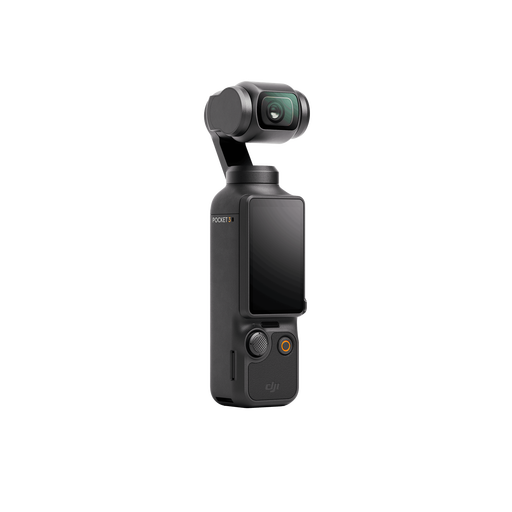 No image available
The product title lists video and stabilisation features, but doesn’t mention macro magnification for capturing details on a biscuit tin.
The title lists a 1-inch CMOS sensor and 4K/120fps video.
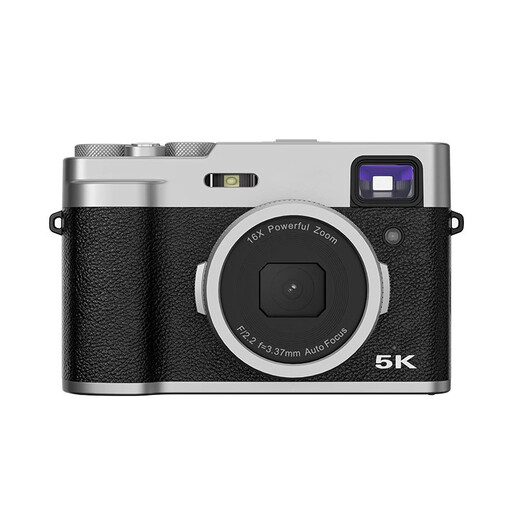 No image available
The title mentions autofocus for general photography, but doesn’t specify close-up or macro magnification.
The title lists 48 MP and an optical viewfinder.
 No image available
According to the title, the kit includes a 16–50mm zoom lens; check separately whether its close-up capabilities suit the framing you want.
The title lists the Sony ZV-E10 with 16–50mm Zoom.
 No image available
The title lists a kit with a zoom lens; check whether its close-up capabilities suit the details you want to photograph.
The title lists the Sony Alpha A6100 and the 16–50mm f/3.5-5.6 OSS II lens.
Not necessarily: 1:1 magnification is designed to fill the frame with very small details, while for a full shot you also need to consider framing, background and lighting. Choose a magnification that suits the shot you want.
Change the shooting angle and check for reflections as you adjust the lighting setup. Sony warns that a camera or photographer may be visible in a reflective subject; simply choosing a different camera won’t solve the problem.
For a consumer purchase, the retailer is responsible for the statutory guarantee. The Netherlands Authority for Consumers and Markets states that if a product is faulty, the retailer must offer an appropriate solution, such as a free repair or replacement. In the Netherlands, there isn’t simply a fixed two-year statutory guarantee period for every camera.
For distance purchases from a business, you’ll often have a 14-day cooling-off period, but there are exceptions. This doesn’t necessarily apply in the same way to an online purchase from a private seller.