
Photographer with a removable camera battery
You want to charge a removed battery in your hotel room. Check that the standalone charger lists the full battery type; Canon and Nikon specify which battery families their chargers support.


First, check the full battery type and camera model: a USB port on a power supply doesn’t mean you can charge a removable camera battery directly. Choose a compatible standalone charger for a battery you’ve removed, or use USB power if your camera or battery charger supports USB charging. If you want to charge two batteries at once, check the number of charging slots and the power supply required.
You want to charge a removed battery in your hotel room. Check that the standalone charger lists the full battery type; Canon and Nikon specify which battery families their chargers support.
You may want to charge two compatible batteries at the same time. Compare the number of charging slots and the power source required, as shown in the product specifications from Sony and PATONA.
You want to plug in a compatible camera or battery charger alongside other USB devices using a single socket. A multi-port USB power supply can do this, but it isn’t a standalone camera battery charger.
First, work out how your camera battery charges. Then choose the number of ports or charging slots to suit your trip.
| What to consider | What to look for | Who should prioritise this? |
|---|---|---|
| Compatibility | Note down the full battery type and camera model. Check whether the manufacturer supports in-camera charging or whether you need a compatible standalone charger. | If I want to charge a removable battery, the charging method must suit its exact type. Around 36% of consumers put compatibility first. |
| Multiple batteries | Check how many batteries fit in the charger at once, which types it supports and what power supply it needs. | If I want to charge two compatible batteries at once, I check both the number of charging slots and the power supply required. Around 29% of consumers give simultaneous charging top priority. |
| Ports and power | Compare the ports and charging protocol required with those available on the USB power supply. If you’re charging multiple devices, also check the stated power output for simultaneous use. | With limited access to sockets, I want to power several compatible devices from one place. Around 21% of consumers put this need first. |
| Safe charging | Use undamaged cables and chargers. Place the charger in an open area so heat can escape, and don’t charge devices under bedding. | When charging in a hotel room, I want to be able to place my equipment in an open area and use undamaged cables. Around 14% of consumers make safe charging their top priority. |
A USB power supply delivers power through its ports; a standalone camera battery charger is designed for specific battery types. So a USB port alone doesn’t prove that a removable battery is compatible.
First, find out whether your battery charges in the camera or in a standalone charger. Then check that your chosen USB power supply is suitable for that camera or charger.
For the Anker Prime A2669, Anker lists different total power outputs when using one, two or three ports. The stated maximum for one device therefore doesn’t automatically apply to all devices when used at once.
Compare how the power is distributed with the number of devices you actually want to connect at the same time.
The Netherlands Fire Service warns about the risks of damaged charging equipment and inadequate heat dissipation.
Don’t use a damaged cable or charger. Place your equipment in an open area, not under a pillow or duvet.
Canon describes both a standalone charger and in-camera charging in a compatible EOS camera using a suitable USB power supply.
Sony describes the BC-ZD1 as a dual USB-PD battery charger for two NP-FZ100 batteries.
Nikon describes the MH-33 as a USB-C charger for certain EN-EL18 batteries.
PATONA describes a dual USB-PD charger for certain Canon LP-E6 batteries, including the LP-E6NH.
The Anker Prime 67W A2669 is a multi-port USB power supply for cameras or chargers that support USB charging, not a standalone camera battery charger.
These products are multi-port USB power supplies for a camera or battery charger that supports USB charging. Check in advance that the connection and charging protocol are suitable for your equipment; these aren’t standalone camera battery chargers.
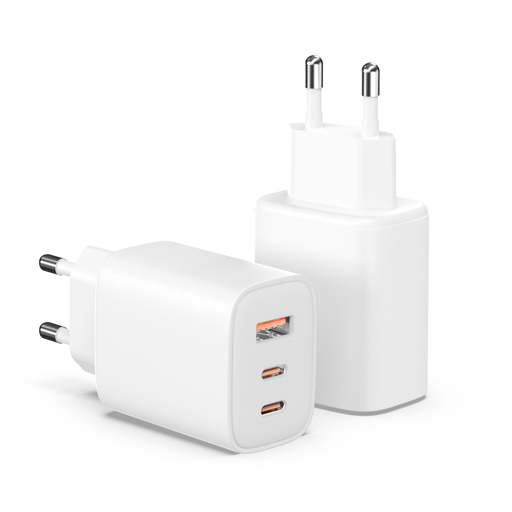 Image unavailable
A suitable power source if your camera or battery charger supports USB charging; check that the charging protocol matches.
The product name lists 65 W, two USB-C ports and one USB-A port.
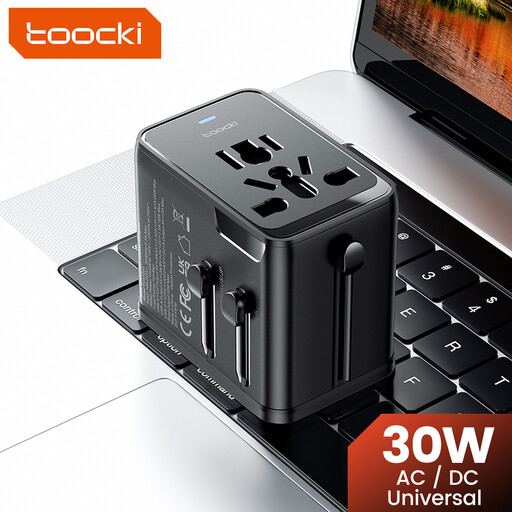 Image unavailable
This travel adaptor is a power option if your camera or battery charger supports USB charging and its charging requirements are met.
The product name lists 30 W PD, two USB-C ports, one USB-A port and plug adaptors for the EU, UK, US and Australia. Check that the plug fits the hotel socket.
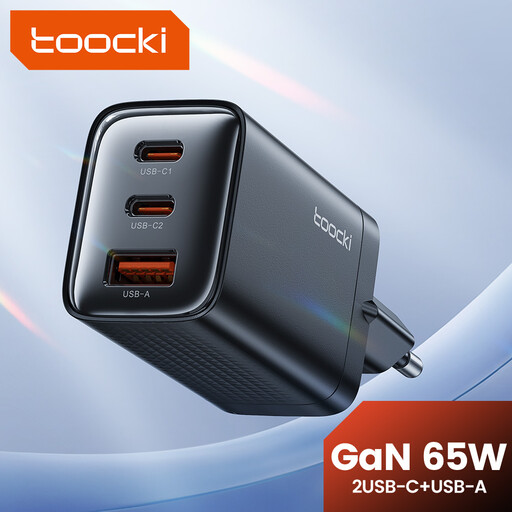 Image unavailable
Use it as a power source if your camera or battery charger supports USB charging; check the charging protocol required.
The product name lists 65 W, GaN and three ports.
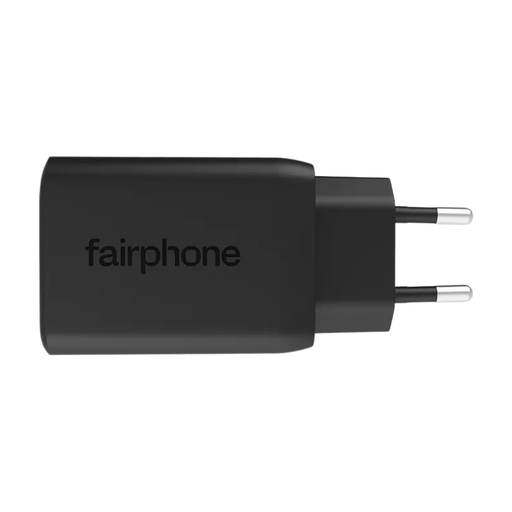 Image unavailable
This USB power supply is suitable for charging via the camera or a battery charger, provided the required connection and charging protocol match.
The product name lists 65 W and Dual USB-C + USB. Also check which cables you’ll need.
Not based on the USB connection alone. Check whether the manufacturer says the battery itself can be charged via USB. For the LP-E6NH, Canon describes using a compatible LC-E6E charger or charging it in a compatible EOS camera with a PD-compatible USB power supply.
Use a charging method that suits your battery and undamaged equipment. The Netherlands Fire Service advises placing the charger in an open area so heat can escape, and not charging devices under a pillow or duvet.
It depends on your destination and the socket in your hotel room. Check that the plug fits and compare the mains voltage with the range stated on the power supply. Canon lists AC 100–240 V for the LC-E6E, but this doesn’t tell you whether the plug will physically fit the socket.
For a consumer purchase, the product must conform to the contract. According to the Netherlands Government, there is no fixed statutory warranty period, and you should contact the seller if there’s a fault. For online purchases from a business, a 14-day cooling-off period also applies in many cases; terms and exceptions may be relevant.
No. The NVWA states that products covered by the Dutch Commodities Act Decree on Electrical Equipment must carry a CE mark. This means the manufacturer declares that the product meets the applicable European requirements. A CE mark isn’t proof of an independent product test.