For close-ups of leaves on wet walks, a rugged compact camera with a documented close-up mode is a practical choice. If you also want to capture woodland scenes and choose your own lenses, a mirrorless camera with a suitable lens may be a better fit. Compare the protection offered by the complete kit, the focusing distance and what you want to carry.
Who is this choice for?
Detail-seeker on the woodland trail
You want to photograph veins, leaf edges or dewdrops up close. Check the focusing capabilities of both the camera and the lens you choose. Canon UK emphasises the importance of considering the minimum focusing distance when shooting close-up; OM SYSTEM describes a Microscope mode on the TG-7.
Camper in changeable weather
You want to take photos outdoors and make an informed choice between a model with a fixed lens and documented protection, or camera equipment that you protect from the wet yourself. According to OM SYSTEM, the stated waterproof rating of up to 15 m applies to the TG-7, not automatically to other cameras or lenses.
Woodland photographer travelling light
You want to switch between woodland scenes and shots of leaves without carrying more than you need. The Consumers’ Association describes compact cameras as generally small and light, with a fixed lens; with a mirrorless camera, the weight of your complete kit also depends on the lens you choose.
What should you look for?
First decide whether you mainly need close-ups, woodland scenes or a lightweight complete kit. Then check the focusing distance, protection and equipment you’ll need to carry for the exact camera and any lens.
| What to consider |
What should you check? |
Who is it for? |
| Focusing on leaf details |
Check the focusing distance at the zoom setting you want to use, as well as the close-up mode of the exact model or lens. |
If I want to capture veins or dewdrops up close, I need to know whether the camera can focus at the distance I’ve chosen. Around 31% of consumers put leaf details at the top of their list when buying. |
| Protection from the wet |
Read the protection specifications for the exact camera. With a mirrorless camera, also check the lens and accessories you’ve chosen. |
When I take photos in changeable weather, I want to know in advance which parts of my kit need protection. Around 25% of consumers prioritise protection from the wet. |
| Framing leaves and woodland scenes |
Compare the built-in zoom range or included lenses with the compositions you want; for close-ups, check the focusing distance at each zoom setting. |
If I want to switch between woodland scenes and shots of leaves, I’m looking for framing options that suit both. Around 25% of consumers prioritise woodland scenes and a variety of compositions. |
| Carrying your complete kit |
Compare the weight of the complete kit and check which lens and charging accessories are included. |
For a camping walk, I want to keep my load manageable and know in advance what I’ll need to carry in addition to the camera body. Around 19% of consumers prioritise travelling light. |
Common pitfalls
-
Looking only at the weight of the camera body
With a mirrorless camera, you’ll also need to carry the lens you choose, so the body’s weight alone doesn’t tell you how much you’ll be carrying on your camping walk.
Compare complete kits that suit the photos you want to take, not just camera bodies.
-
Assuming one focusing distance across the entire zoom range
For the Sony RX100 VII, Sony quotes approximately 8 cm at the wide-angle end and approximately 100 cm at the telephoto end, measured from the front of the lens.
Check the focusing distance at the zoom setting you’ll use to frame the leaf.
-
Expecting a mirrorless camera body to be a complete close-up solution
The Canon EOS R50 supports RF and RF-S lenses, but close-up capabilities also depend on the lens you choose.
Check what’s included in the kit, the lens mount and the close-up specifications of the lens you want to use.
Brands to compare
OM SYSTEM
The TG-7 is a rugged compact camera option; the OM-5 is a separate mirrorless camera option.
- OM SYSTEM lists a Microscope mode and waterproofing up to 15 m for the TG-7.
- These features apply to the TG-7 and don’t automatically apply to other cameras or provide protection for a complete kit.
PENTAX
The WG-8 is a rugged compact camera with a fixed lens.
- Ricoh Imaging lists approximately 20 effective megapixels and 5x optical zoom for the WG-8.
- Check the close-up focusing capabilities of this specific model.
Canon
The EOS R50 gives you the option to change lenses; the PowerShot G7 X Mark III is a separate compact camera.
- Canon lists RF and RF-S lens support for the EOS R50.
- The close-up focusing distance of the PowerShot G7 X Mark III varies between wide-angle and telephoto; Canon doesn’t list sensor-shift image stabilisation for the EOS R50.
Nikon
The Z50II is a mirrorless camera for anyone who values an electronic viewfinder and a choice of lenses.
- Nikon describes adjustable Picture Controls, with their effects visible through the electronic viewfinder.
- This alone doesn’t tell you whether your chosen lens is suitable for close-ups or protected against the weather.
Sony
The RX100 VII is a compact camera with a fixed lens and built-in zoom.
- Sony gives this model a zoom range equivalent to 24–200 mm.
- The stated minimum focusing distance ranges from approximately 8 cm at the wide-angle end to approximately 100 cm at the telephoto end. Don’t assume this model is waterproof unless the specifications say so.
Cameras on Joybuy
The cameras below are designed for a range of uses. For each model, compare the listed features with your plans for close-ups of leaves, woodland scenes and a manageable camping kit.
 No image available
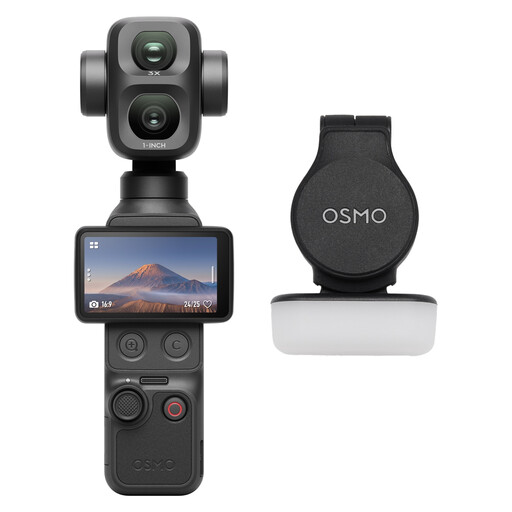
DJI Osmo Pocket 4P – Standard Combo – Black
The product description highlights its pocket-sized design; check that the camera and controls suit the close-ups and woodland scenes you want to capture.
Version: Standard Combo, black.
Joybuy
 No image available
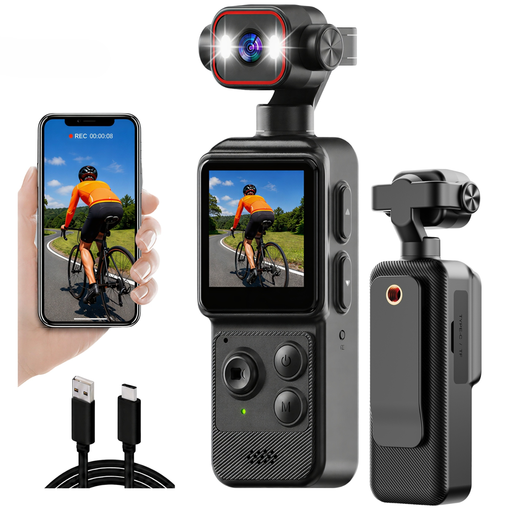
Mini 4K Action Camera with Clip, 140° Wide-Angle Lens
The listed wide-angle lens could be useful for wide woodland scenes; check whether its field of view also suits the framing you want for leaves.
Listed features: 4K, clip, 1.54-inch display and 140° wide-angle lens.
Joybuy
 No image available
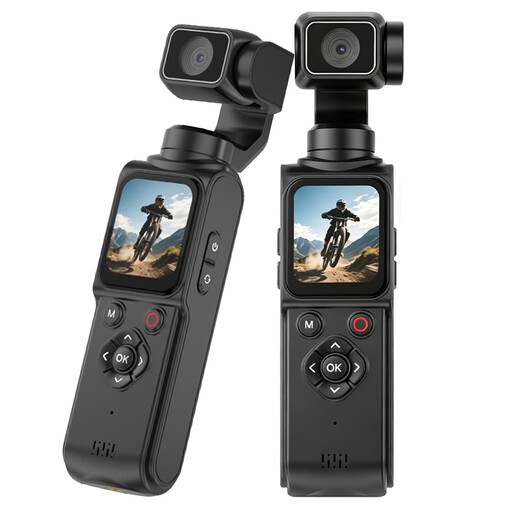
KINSI Mini Vlog Camera 4K, 64 MP, 330° Rotating Lens
The product name describes a vlog camera; check whether its features are suited to photographing still leaves and woodland scenes.
Listed features: 4K, 64 MP, 330° rotating lens and 1.72-inch touchscreen.
Joybuy
 No image available
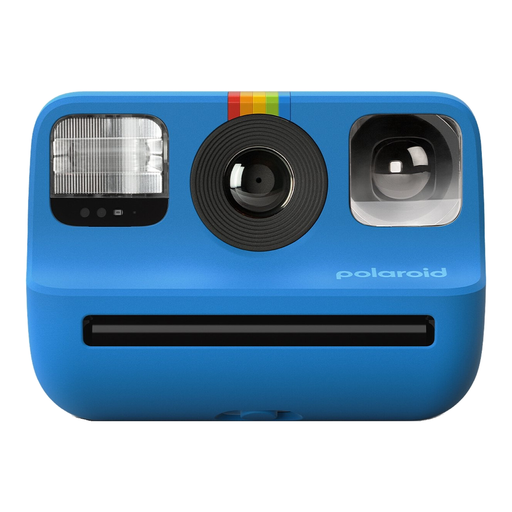
Polaroid Go Gen 2 – Blue
This instant camera is designed to produce physical prints; bear in mind that you’ll need Polaroid Go film.
Version: Gen 2, blue.
Joybuy
 No image available
DJI Osmo Pocket 3 Creator Combo
The product name describes a compact camera for photography and video; check that its controls and features suit the still images you plan to take.
Listed features: 1-inch CMOS sensor, 4K video up to 120 fps and 3-axis stabilisation.
Joybuy
Frequently asked questions
Do I need a dedicated macro lens to take sharp photos of small leaf details?
Not with every camera: OM SYSTEM lists a built-in Microscope mode for the TG-7. With a mirrorless camera, check the focusing distance and magnification you want from your chosen lens; the body alone won’t tell you whether you can take the close-up you have in mind.
What should I check before taking my camera out in wet weather?
Check the protection specifications for the exact model. With a mirrorless camera, check those for your chosen lens too. According to OM SYSTEM, waterproofing up to 15 m is a feature of the TG-7, not of compact cameras in general.
What if my camera breaks too soon during normal use?
In the Netherlands, a product must be fit for purpose, and the seller is responsible for providing an appropriate solution if a fault falls within their responsibility. The Dutch government says there is no fixed statutory guarantee period. Damage caused by misuse is not automatically covered by free repairs.
Can I leave the path in a nature reserve to take an autumn photo?
Check the access rules for the area before leaving the path. Staatsbosbeheer advises visitors to check the signs at the entrance for the rules that apply to that particular area; this information doesn’t automatically apply to areas managed by other organisations.


