
Sellers with small engravings on keys
If you want to show fine lettering, teeth and signs of wear separately, it’s worth comparing the magnification of the exact lens and how sharp it is at different depths.


If you want to switch quickly between overview and detail shots without changing lenses, a compact camera with a close-up mode could be a good fit. For small engravings and more choice over magnification, another option is a mirrorless camera with a suitable macro lens. Compare the magnification of the lens actually included in the kit, and bear in mind that reflections, lighting and depth of field also depend on your shooting setup.
If you want to show fine lettering, teeth and signs of wear separately, it’s worth comparing the magnification of the exact lens and how sharp it is at different depths.
If you often switch between an overview and a close-up, consider using a fixed, repeatable setup and how easily the camera switches to close-up mode.
If you want to control reflections on metal, consider the lighting and the position of the camera and key. Your choice of camera alone won’t determine the result.
Choose this when: you want to photograph both overviews and very close details without carrying separate lenses. According to its manual, the OM SYSTEM Tough TG-7 has a microscope mode for shooting from as close as 1 cm and supports focus bracketing.
Trade-off: the lens is fixed, and a short shooting distance doesn’t guarantee enough room for effective lighting. OM SYSTEM also states that an SD card is not included.
Choose this when: you mainly want to photograph the whole key and may want to use a different lens later. The Canon EOS R50 kit includes the RF-S 18–45 mm; Canon specifies a maximum magnification of 0.16× with autofocus for this lens at 45 mm.
Trade-off: don’t assume the kit zoom offers the same magnification as a dedicated macro lens.
Choose this when: small markings are your main focus and you want to choose a lens to suit. Nikon specifies 1:1 magnification for the NIKKOR Z MC 50mm f/2.8; Sony also specifies 1:1 for the E 30 mm F3.5 Macro SEL30M35.
Trade-off: check the camera mount and which lens is actually included in the kit. Depth of field can be limited at high magnification, so also check whether your chosen combination supports focus bracketing or focus stacking.
| What to consider | What to check before buying | Who should pay particular attention? |
|---|---|---|
| Small engravings and wear | Compare the maximum magnification of the exact lens included and assess a close-up of a small engraving. | If I want fine lettering and signs of wear to show clearly, I look at the lens magnification and sharpness across the key. Around 36% of consumers give small engravings and wear their highest priority. |
| Reflections on metal | See how the key reflects light; try diffused or repositioned lighting and take a test shot. | If I want to reduce distracting bright spots on shiny metal, I also assess the lighting and whether I can keep the key in a fixed position. Around 29% of consumers prioritise controlling reflections. |
| Consistent, repeatable photography | Consider how you switch between an overview and a close-up, and whether the camera setup can remain stable. | When photographing a range of different keys, I want to create similar compositions each time without complicated steps. Around 21% of consumers particularly value speed and consistency. |
| Complete kit and terms | Check exactly what’s included in the kit and which extras, such as a lens or SD card, you’ll need. If ordering for business, check the terms. | If I want to put together a complete setup, I want to know in advance exactly what comes with the camera. Around 14% of consumers give the cost and terms of the complete kit their highest priority. |
Shooting close to a key can leave little room for the lens and lighting. The minimum focusing distance alone doesn’t tell you how much of the frame an engraving will fill.
Compare the magnification of the exact lens and test the smallest engraving with the lighting you plan to use.
The Canon EOS R50 kit includes the RF-S 18–45 mm; the separate RF 35mm F1.8 MACRO IS STM is a different lens. The Sony ZV-E10 II kit described also comes with an E PZ 16–50 mm F3.5–5.6 OSS II zoom lens, not the separate SEL30M35 macro lens.
Before buying, check the full lens name and what’s included in the camera kit.
A suitable macro lens may need to be purchased separately.
Shiny metal reflects its surroundings. A tripod can help keep your composition steady while you adjust the lighting, but it’s no substitute for suitable lighting.
Start with a repeatable setup and check whether details, colour and distracting reflections are clearly visible.
Adjusting the lighting and composition can take extra time if you need to reshoot.
The Tough TG-7 is a compact camera option for close-ups without a separate lens.
The EOS R50 kit with RF-S 18–45 mm is an option for overview shots in a system with interchangeable lenses.
The NIKKOR Z MC 50mm f/2.8 is a separate macro lens for a compatible Nikon Z camera.
An APS-C camera with an E-mount can be paired with the separate E 30 mm F3.5 Macro SEL30M35.
This selection includes cameras described in their product names as being for photography, video or vlogging. For keys and small engravings, check what close-up capabilities the exact camera and lens offer.
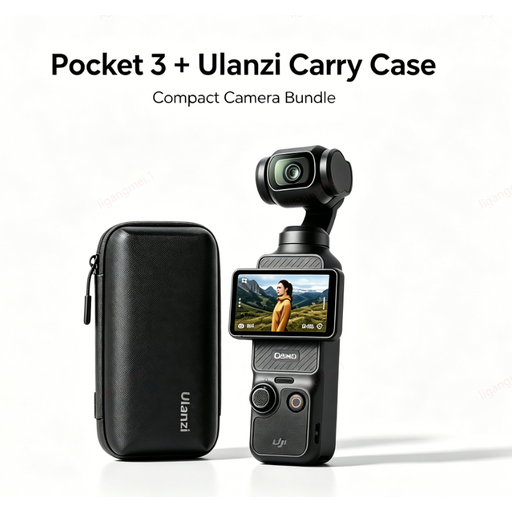 Image unavailable
The product title mentions filming and vlogging; check whether its close-up capabilities suit the smallest details you want to show on keys.
The title mentions a Ulanzi storage case.
 Image unavailable
The title mentions photography and video; check the close-up capabilities of the exact kit before choosing it for small engravings.
The product title mentions a 1″ CMOS sensor, 4K/240fps, 3-axis stabilisation, 2× lossless zoom, 107GB of built-in storage and a rotating 2″ screen.
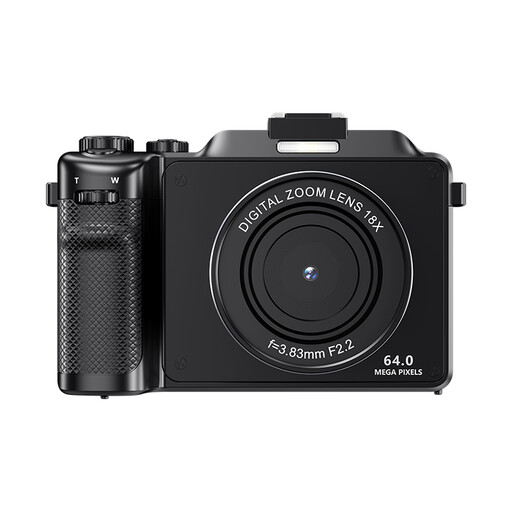 Image unavailable
The title describes a camera for photography and vlogging; take a test shot to see whether the close-up view works for your key subjects.
The title mentions 18× digital zoom. The product description warns that this zoom reduces image quality, so don’t rely on it to enlarge small details without testing it first.
 Image unavailable
The title describes a camera for photography and vlogging; check separately whether the lens can focus at the distance you need for key shots.
The product title mentions 12× optical zoom, 4K, 64MP and Wi-Fi.
 Image unavailable
The title describes a pocket camera for photography and video; check the minimum focusing distance and close-up capabilities before deciding whether it’s suitable for capturing small details on keys.
The product title mentions 16× zoom and the colour pink.
It depends on the size of the engraving and how tightly you want to frame it. Canon specifies a maximum magnification of 0.16× with autofocus for the RF-S 18–45 mm at 45 mm. Compare this with a test shot before choosing a separate macro lens.
A narrower aperture increases depth of field, but for close-ups, taking a series of shots at different focus points can be useful. Check whether your exact camera and lens support focus bracketing or focus stacking, and keep the camera and key still.
Start with a clean shooting area, check what the metal is reflecting, then change or soften the lighting. Afterwards, check that signs of wear and the patina are still visible. Switching to a different camera body won’t replace these adjustments to your setup.
Check what’s included in your chosen kit. OM SYSTEM states that the TG-7 has no internal memory and doesn’t come with an SD card. The EOS R50 kit discussed includes the RF-S 18–45 mm, not the separate RF 35mm macro lens.
Don’t assume so. Business.gov.nl explains that different warranty rules apply to business sales and there’s no statutory consumer cooling-off period. According to KVK, a small business may still be able to rely on consumer protection in some cases. Check the type of contract and the seller’s terms before placing your order.