
Detail enthusiast
You want to capture the texture of an acorn’s cup or shell in sharp detail, so you compare the close-up capabilities of both the camera and the lens.


When choosing a camera for acorn photos, focus on the framing you want and the distance between the lens and your subject. A compact camera is ideal for taking with you at a moment’s notice, while a bridge camera lets you switch between close-ups and wider garden views. A mirrorless camera requires a suitable macro lens. OM SYSTEM says the TG-7 can shoot from 1 cm away; Canon specifies 1 cm for the SX740 HS Lite Edition in macro mode at wide angle, while Panasonic gives a minimum focusing distance of 150 cm at telephoto for the FZ82D. So check the focusing distance at the zoom setting you plan to use, and make sure there’s enough room for light.
You want to capture the texture of an acorn’s cup or shell in sharp detail, so you compare the close-up capabilities of both the camera and the lens.
You want a camera you can take with you without changing lenses, and to switch quickly between an acorn and the garden around it.
You’d like to photograph other small subjects in future, and are happy to choose a compatible camera body and a separate macro lens.
First decide whether you mainly want to capture the texture of an acorn or include the garden around it. Portability and performance in wet weather can then help narrow down your choice.
| What to consider | What should you look for? | Who might prioritise this? |
|---|---|---|
| Capturing fine detail | Compare the magnification and the distance between the lens and your subject. For a mirrorless camera, check which lens is included. | I want to fill the frame with the ridges on the cup and shell, so I look beyond the minimum focusing distance alone. Around 36% of consumers put detail and magnification first. |
| Taking it with you at a moment’s notice | Check the size and weight, and whether the lens offers the close-up setting you need. | For a spontaneous stroll around the garden, I want to be able to pick up the camera without changing lenses. Around 29% of consumers prioritise being able to grab their camera and start shooting straight away. |
| Switching between acorn and garden shots | Check the focusing distances for wide angle and telephoto separately, and consider how well each works for the compositions you want. | If I want to photograph both an acorn and the garden around it, I want to be able to switch between those framings. Around 21% of consumers prioritise being able to vary their framing. |
| Taking photos in wet weather | Check the protection specifications for the exact model and follow the care instructions. | I want to take photos when the garden is wet too, so protection on my chosen model matters more to me. Around 14% of consumers prioritise use in wet weather. |
A minimum distance may only apply at wide angle. Panasonic gives a minimum focusing distance of 150 cm at telephoto for the LUMIX FZ82D; Canon specifies 1 cm for the SX740 HS Lite Edition in macro mode at wide angle.
Compare the focusing distance at the focal length you plan to use, rather than looking only at the lowest figure in the specifications.
Nikon’s stated magnification applies to the separate NIKKOR Z DX MC 35mm f/1.7 lens and doesn’t automatically apply to every Z50II kit.
Before you buy, check the full model name of both the camera body and the included lens.
The right macro lens may need to be bought separately, so you may have to choose a body and lens individually.
When the lens is very close to an acorn, it can limit where you position the camera and how you light your shot.
Try shooting from a little further away too, and check whether the cup, shell and the light you want are all framed well.
The Tough TG-7 is a fixed-lens camera for anyone looking for a microscope mode.
The PowerShot SX740 HS Lite Edition combines a fixed zoom lens with a macro mode.
The LUMIX FZ82D is a bridge camera for anyone looking to combine close-ups with a greater zoom range.
The Z50II with the separate NIKKOR Z DX MC 35mm f/1.7 lens is a mirrorless option for anyone looking to choose a specific macro combination.
These cameras are designed for photography and offer different ways to frame your shots. For acorn photos, check each model’s close-up capabilities and focusing distance. A zoom lens or autofocus alone won’t tell you how close you can focus for macro shots.
 No image available
The stated optical zoom can help you switch between different framings; for acorn photos, also check the macro mode and focusing distance.
The product name lists 12× optical zoom, 4K, 64 MP and Wi-Fi.
 No image available
The product description mentions still photography and fast focusing; check whether its close-up distance suits the acorns you want to photograph.
The product name lists a 1-inch CMOS sensor, 4K/120fps video and 3-axis stabilisation.
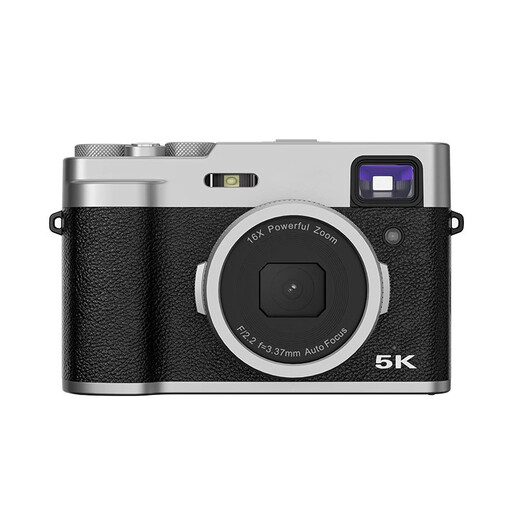 No image available
The listing mentions autofocus; for acorn close-ups, also check the camera’s focusing distance.
The product name lists 48 MP, 5K, an optical viewfinder and a 2.8-inch LCD screen.
 No image available
The included zoom lens offers a range of focal lengths; check whether it can focus close enough for the acorn photos you want to take.
The listing says an SD card and adapter/charger aren’t included.
No. Canon specifies 1 cm for the SX740 HS Lite Edition in macro mode at wide angle. Panasonic lists 1 cm at wide angle for macro on the FZ82D, but gives a minimum focusing distance of 150 cm at telephoto. So check the distance for the setting you plan to use for your shot.
According to the OM Digital Solutions manual, the TG-7 has a focus stacking function that combines shots taken with different focus points. Keep the camera and acorn still while shooting, and check that the result works for your composition.
Don’t assume it does. Nikon describes the Z50II as a possible DX camera for the separate NIKKOR Z DX MC 35mm f/1.7 lens. Check which body and lens are actually included in the kit.
If a product is faulty, the seller must put things right free of charge under guidance from ACM ConsuWijzer, for example by repairing or replacing it, or giving you a refund. What you could reasonably expect from the camera is relevant to your statutory guarantee. Online purchases usually also come with a 14-day cooling-off period after delivery, subject to exceptions; this is separate from a remedy for a fault.
The Dutch Data Protection Authority describes an exception to the GDPR when images stay private or are shared only with a very limited group. That exception doesn’t apply to wider or commercial sharing. Recognisable people are personal data, and processing them requires a lawful basis under the GDPR. Photos of acorns alone, without any recognisable people, don’t fall into this specific situation.