
Looking for acorn details
If you want to show the texture of an acorn’s cap or shell clearly, compare close-focusing distance and magnification. Canon points out that precise focusing can be tricky in close-ups because the depth of field is shallow.


To capture an acorn’s cap and shell clearly, compare the close-up capabilities of the exact camera and lens you’re considering; a wide zoom range alone tells you little about how well a camera can focus at close range. A rugged compact camera suits walks in changeable weather, a travel compact suits a range of holiday photos, and a mirrorless camera suits anyone choosing a suitable close-up lens. If you’re buying a mirrorless camera, always check which lens is actually included in the kit.
If you want to show the texture of an acorn’s cap or shell clearly, compare close-focusing distance and magnification. Canon points out that precise focusing can be tricky in close-ups because the depth of field is shallow.
If you want to photograph landscapes and other subjects as well as acorns, without changing lenses, look at both the close-up mode and the camera’s capabilities for everyday travel photos. The Consumers’ Association describes a compact camera as one with a fixed lens.
If you take your camera on damp or dusty walks, check the protection and care instructions for the exact model. OM SYSTEM and Ricoh describe their own models individually; those features don’t automatically apply to other cameras.
Best for: walks where moisture, mud or dust may be an issue, if you’d prefer a fixed lens.
Trade-off: the lens can’t be changed. OM SYSTEM and Ricoh quote close-focusing capabilities from around 1 cm for their own models; check that enough light reaches your subject at that distance.
Best for: anyone who wants to take both acorn close-ups and wider holiday shots with one camera.
Trade-off: close-up capabilities can vary with the zoom setting. Canon quotes 1 cm for the PowerShot SX740 HS Lite Edition in macro mode at wide angle only; Sony quotes around 8 cm at wide angle and around 100 cm at telephoto for the RX100 VII, measured from the front of the lens.
Best for: anyone who wants to change lenses and deliberately choose a close-up or macro lens.
Trade-off: a standard zoom isn’t automatically a macro lens. Canon quotes maximum magnification of 0.25× for the RF-S 18-45mm; Nikon quotes up to 0.67× for the NIKKOR Z DX MC 35mm f/1.7. Check the mount and what’s included in the kit on offer.
| What matters | What to look for when buying | Who is this most important for? |
|---|---|---|
| Capturing acorn details | Compare the focusing distance and magnification of the exact camera-and-lens combination; check from which point the distance is measured. | If I want to capture the texture of a cap or shell in sharp, close detail, I prioritise close-up capabilities. Around 36% of consumers say capturing details is their top buying priority. |
| Taking other holiday photos too | Look separately at the zoom, wide-angle and close-up modes; consider whether you want to photograph different subjects without changing lenses. | If I want to capture landscapes and other holiday subjects as well as acorns, versatility matters. Around 29% of consumers put versatile holiday photography at the top of their list. |
| Using it in changeable weather | Check the protection and care instructions for the exact model, including guidance on covers and seals. | If I take my camera on damp or dusty walks, protection matters more to me. Around 21% of consumers make weather resistance their top priority. |
| Keeping equipment manageable | Check which lens is included in the kit and compare its close-up capabilities with the framing you want. | If I don’t want to take or buy extra lenses by mistake, I check the complete kit. Around 14% of consumers name keeping their equipment to a minimum as their top priority. |
Sony gives different minimum focusing distances for the RX100 VII at wide angle and telephoto.
Compare the focusing distance and framing at the same zoom setting you’ll use to photograph the acorn.
A standard zoom’s magnification can differ from that of a dedicated close-up lens. Canon quotes a maximum of 0.25× for the RF-S 18-45mm, while Nikon quotes up to 0.67× for the separate NIKKOR Z DX MC 35mm f/1.7.
Check what’s included in the exact kit and compare the supplied lens with the framing you want.
You may need an extra compatible lens, which also means carrying more equipment.
OM SYSTEM’s TG-7 manual advises taking care to keep dust and sand away from the seals and contact surfaces.
Follow the care instructions for the exact model and check the seals as advised by the manufacturer, especially after using the camera in dusty conditions outdoors.
The Tough TG-7 is a rugged compact camera for close-ups on walks where weather protection matters.
The WG-90 is a rugged compact camera option for outdoor use and close-range shooting.
Canon offers both a travel compact camera with a macro mode and mirrorless cameras with interchangeable RF and RF-S lenses.
A compatible Z-DX camera with the NIKKOR Z DX MC 35mm f/1.7 is an option for anyone deliberately choosing an interchangeable close-up lens.
The RX100 VII is a compact camera for a range of travel photos, but its focusing distance varies with the zoom setting.
This Joybuy selection includes cameras for travel, vlogging and outdoor photography. For acorn photos, also compare the focusing distance of the exact camera and, if it has an interchangeable lens, the lens included in the kit; zoom and megapixel figures alone won’t tell you.
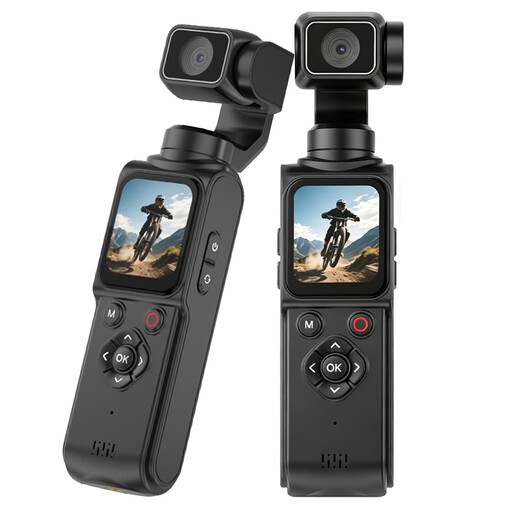 No image available
An option to compare for travel and vlogging; check separately whether its close-up capabilities are suitable for photographing acorns.
The product name lists 4K, 64 MP, Wi-Fi and a rotating lens.
The product information warns against exposing the camera to moisture.
 No image available
A travel-focused point-and-shoot option; check the focusing distance before assuming it’s suitable for close-ups of acorns.
The product name lists 5K, 80 MP and 18× optical zoom.
The product information warns against keeping the camera near water or in damp environments.
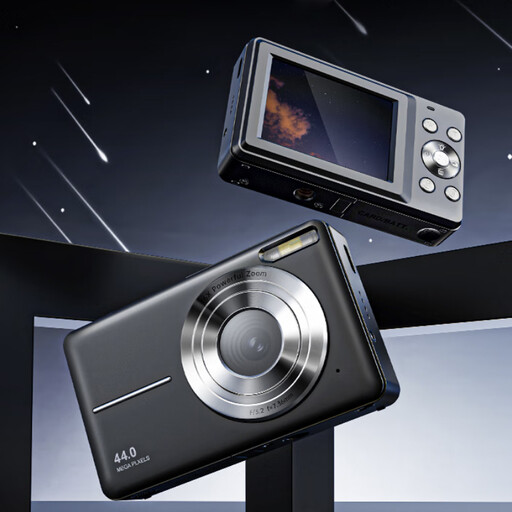 No image available
A portable camera for taking out and about; check separately whether its close-up capabilities suit the framing you want for an acorn.
The product name lists 4K, 44 MP and 16× zoom.
The product information warns against keeping the camera near water or in damp environments.
 No image available
The zoom-lens kit is an option for travel photos and changing your framing; check whether the included lens offers enough close-up capability for capturing acorn details.
The product name lists a 16–50mm zoom lens.
The product information warns against exposing the camera to moisture.
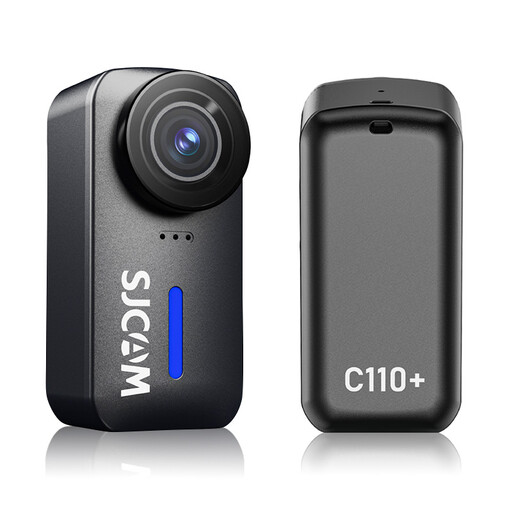 No image available
An option to compare for outdoor activities; check separately whether it can take the close-up of an acorn you want.
The product name lists a 170° wide-angle lens and photos up to 20 MP.
The quoted water resistance to 30 m applies when using the supplied waterproof housing.
No. Check which shooting or zoom setting the distance applies to, what framing you want and how much light is available. Canon quotes 1 cm for the PowerShot SX740 HS Lite Edition in macro mode at wide angle only, and also points out that the depth of field is shallow in close-ups.
Follow the care instructions for the exact model. Among other things, the OM SYSTEM TG-7 manual says to check the seals and contact surfaces on the battery/card compartment cover and connector cover for dust and sand; don’t automatically apply this guidance to another model.
No. Canon quotes maximum magnification of 0.25× for the RF-S 18-45mm; Nikon quotes up to 0.67× for the separate NIKKOR Z DX MC 35mm f/1.7. Compare this with the framing you want and check which lens is actually supplied with the camera.
No. ACM ConsuWijzer explains that statutory warranty in the Netherlands doesn’t have a fixed term of exactly two years: it depends on what you can reasonably expect from the product under normal use. Many online purchases also usually come with a cooling-off period of up to 14 days after delivery, subject to statutory exceptions.
No, don’t assume you have general permission. Staatsbosbeheer says that rules can vary between nature reserves and that the signs at the site determine where you can go. The Dutch Government says that provinces set the rules for nature reserves, so check the regulations for the specific place where you plan to take photos.