
Detail photographer
You want to capture small embellishments, seams or fastenings clearly, so you’re comparing magnification, working distance and lens compatibility.


Start with the smallest details you want to photograph: check the lens magnification and working distance, not just the number of megapixels. A compact camera with a close-up mode keeps your setup simple. A mirrorless camera with a suitable macro lens offers another way to capture frame-filling detail, but you’ll need to consider the lens mount, what’s included in the kit, stability and lighting.
You want to capture small embellishments, seams or fastenings clearly, so you’re comparing magnification, working distance and lens compatibility.
You want to show colour and finish clearly in changing window light, without distracting reflections.
You photograph accessories laid flat and are weighing up a compact setup, a stable position and whether you might need an extra lens.
First choose between a fixed lens for a simple setup and a mirrorless camera with a separate macro lens. Then compare how much detail each can capture, the space available for window light and the support you’ll need.
Choose this option: if you want to photograph small, stationary embellishments without changing lenses and can check for yourself whether the framing and space for light are sufficient.
Bear in mind: the fixed lens limits your choice of lenses. The 1 cm quoted by OM Digital Solutions for close-up photography is not a measurement of the clear space in front of the lens.
Choose this option: if you want to fill the frame with tiny stitches, stones or fastenings and are happy to choose a suitable lens separately.
Bear in mind: check the lens mount and what’s included in the kit. Nikon quotes 1:1 for the NIKKOR Z MC 50mm f/2.8, while Canon quotes a maximum of 1:2 for the RF 35mm F1.8 MACRO IS STM. These are product specifications, not a direct test of photo quality.
| What to consider | What should you check? | Who is this important for? |
|---|---|---|
| Small details | Check the maximum magnification and working distance of the specific lens. If you’re using a mirrorless camera, also check that the lens mount is compatible and that the lens is included in the kit. | If I want a bead or fastening to appear large in the frame while still leaving room for window light, I look at both magnification and working distance. Around 31% of consumers give detail reproduction top priority. |
| Colour and reflections | Check whether RAW files and adjustable white balance are available. Also see whether you can change the position of the accessory and the angle of the light. | If I need the colour of my shiny accessory to look true to life and reflections are distracting, I want to be able to adjust the white balance and change the angle. Around 25% of consumers prioritise colour and reflections. |
| Sharpness in window light | Consider whether the camera can be positioned steadily and how you’ll focus. Check what stabilisation is built into the camera body or included lens. | If I’m photographing stationary details while the window light changes, I want to position the camera steadily and control the focus point. Around 25% of consumers say sharp photos in window light are their top priority. |
| Simple complete setup | Check exactly which lens is in the box and which accessories you need for your photos. Don’t assume a standard zoom lens can replace a macro lens. | If I want to get started without having to choose an unexpected extra lens, I compare the complete setup with what my smallest detail shots require. Around 19% of consumers prioritise keeping the complete setup simple. |
The Nikon and Canon kits discussed include standard zoom lenses; the macro lenses mentioned are sold separately.
Check the full model name of the included lens and compare its maximum magnification with the smallest details you want to show.
Minimum focusing distance is measured from the image sensor, while working distance is measured from the front of the lens. If there’s little space between the lens and your subject, the setup may block the window light.
Check both distances and make sure you can get the framing you want while leaving enough room for light.
Stabilisation is designed to reduce camera movement; it won’t change reflections or correct an incorrectly selected focus point.
Check sharpness and reflections separately. If necessary, use a stable support and adjust the shooting angle.
The EOS R50 is an RF mirrorless camera that lets you choose a separate lens.
The Z50II offers a Z-system camera option, letting you choose a lens for capturing small details separately.
The E-mount ZV-E10 is an interchangeable-lens option for anyone who wants to choose a separate lens for close-up work.
The Tough TG-7 is a compact camera with a fixed lens for close-up photography, so there’s no need for a separate macro lens.
Joybuy product picks related to this topic. Check whether the lens and close-up capabilities of each model are right for your detail shots.
 No image available
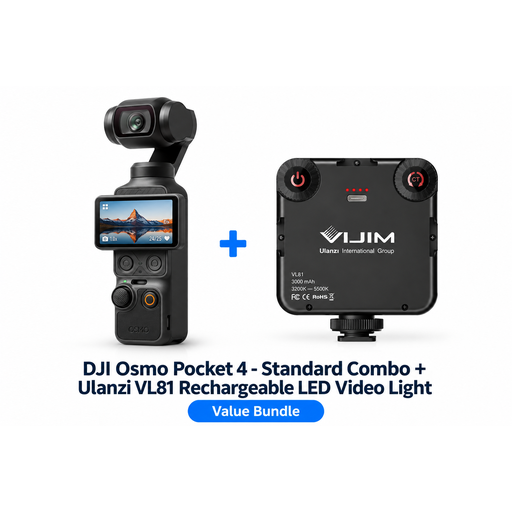
The bundle description mentions product photography and an included light. Check whether the camera can handle close-ups of your smallest embellishments.
According to the product description, the light has an adjustable colour temperature of 3200–5500 K.
 No image available
The product name mentions photography as well as video. Before choosing, check whether its close-up capabilities suit the smallest embellishments you want to capture.
The product name specifies a 1-inch CMOS sensor, a rotating 2-inch touchscreen, 4K/120fps video and 3-axis stabilisation.
 No image available
This version is a camera body without a lens, so bear in mind that you’ll need to choose a separate lens for both wide shots and close-ups.
Sony specifies RAW shooting and an E mount for the ZV-E10. Sony describes the separate SEL30M35 as a 1:1 macro lens with a working distance of around 2 cm for close-up shots.
 No image available
The included zoom lens is a different option from the separate macro lens used for small details. Check whether you’ll need another lens for close-ups.
The product name specifies a 16–50 mm zoom lens. Sony specifies RAW shooting for the ZV-E10 and describes the separate SEL30M35 as a 1:1 macro lens with a working distance of around 2 cm.
 No image available
This set includes an A6100 with a zoom lens. For small embellishments, check separately whether the lens can focus close enough.
The product name specifies a 16–50mm f/3.5-5.6 OSS II lens.
No. A wide shot needs a different level of magnification from a frame-filling shot of a stone or fastening. For the smallest detail you want to capture, check the lens magnification and working distance; don’t rely on the word ‘macro’ alone.
Take a test shot, check the white balance and, if you see reflections, change the angle of the camera or accessory as needed. RAW files can give you more flexibility to adjust the white balance afterwards; Canon describes cloudy conditions as one way to soften natural light. Also check that the detail you want remains sharp.
No. According to the Dutch government, there is no fixed statutory guarantee period in the Netherlands. What you can expect from a product depends, among other things, on the circumstances and its expected lifespan. A manufacturer’s guarantee is separate from your statutory rights.
For distance sales from a business seller, you’ll often have a 14-day cooling-off period, according to the Dutch government. There are exceptions, and the rules do not apply in the same way to purchases from a private individual. So check who the seller is and which terms and conditions apply.