
Vandaag of morgen in huis

Kwaliteit gegarandeerd

Welkomstaanbiedingen ontgrendelen: GRATIS bezorging | Tot 80% korting | Gratis 30 dagen JoyPlus-proefperiode
Download de app
A calming dog bed for large dogs needs to offer more than just a soft outer layer. Larger dogs put more strain on the sleeping surface, need more room and often bring more dirt and moisture indoors. A bed that looks comfortable in a product photo may turn out to be too small, slide around on a smooth floor or be difficult to clean.
Look out for these common pitfalls:
Measure your dog from nose to the base of their tail, then add around 20 to 30 centimetres. Also consider how your dog sleeps. A dog that curls up may be perfectly happy in a donut dog bed. A dog that stretches out needs more room to lie down.
A bed with a diameter of 100 centimetres may suit medium to large dogs, but bear in mind that the raised edge takes up some of the space. A 120-centimetre model offers more room, but check that it will fit in your living room, bedroom or crate.
A soft dog bed or plush dog bed feels comfortable, but the outer material doesn’t tell you everything about the support it offers. Check:
An orthopaedic dog bed is often recommended for older or sensitive dogs. Don’t treat the term as a guarantee of medical benefits. Instead, check the specific product details. If your dog has ongoing mobility issues or signs of pain, speak to a vet first.
A dog bed with a removable cover is generally more practical than a model with a fixed cover. Check whether you can remove the cover using a zip and whether the product information clearly explains how to wash it.
For a washable dog bed, check which parts can be washed. Some models have a cover that’s machine washable, while the inner filling should only be aired or spot cleaned. Use a mild detergent and avoid bleach or harsh chemicals if the care instructions advise against them.
A non-slip dog bed or one with rubber studs stays put more easily on laminate, tiles or smooth wooden floors. This is useful for playful dogs and senior dogs, but check the base regularly to make sure it’s still in good condition.
If you’re using it as a dog bed for a crate, compare the crate’s internal measurements with the bed’s dimensions. A round bed measuring 100 or 120 centimetres won’t necessarily fit a standard crate. The bed shouldn’t block ventilation or stop the door from closing.
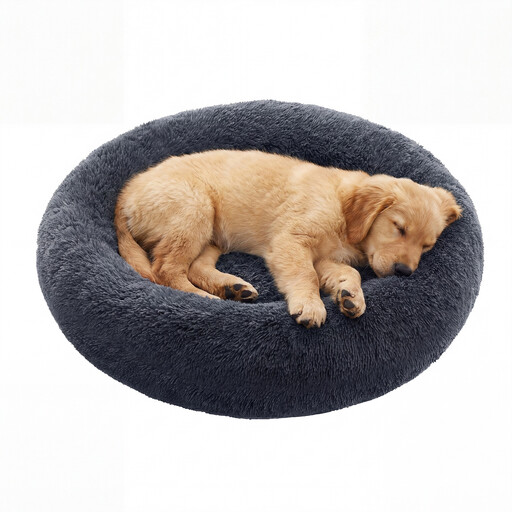
Why it suits this profile: This round bed has a diameter of 100 cm and, according to the product information, is designed for medium to large dogs weighing up to around 30 kg. The raised edge suits dogs that like to curl up or sleep with their head against a rim.
The dimensions, recommended maximum weight and removable cover are clearly stated. This makes it easier to check in advance whether the size and care requirements suit your dog.
Plush polyester fabric, PP cotton filling, raised edges and a cover that’s machine washable according to the product information.
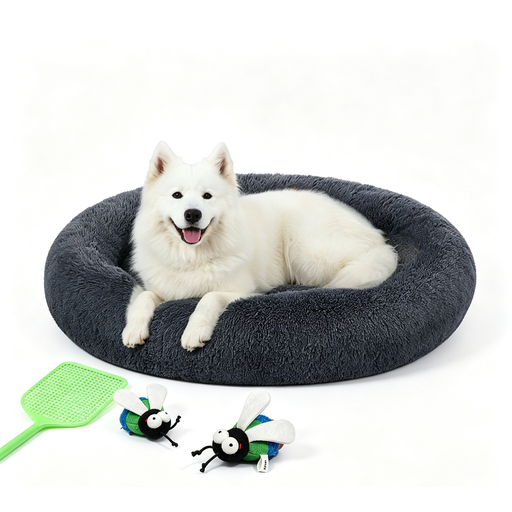
Why it suits this profile: With a diameter of 120 cm, this bed gives larger dogs more room to lie down. The plush fabric, PP cotton filling and 20 cm height make it suitable for use at home or in a spacious resting area.
The larger size means you don’t have to rely on a soft-looking finish alone. The product information also lists a removable cover and rubber studs on the base.
120 cm diameter, 20 cm height, machine-washable cover and a non-slip base with rubber studs.
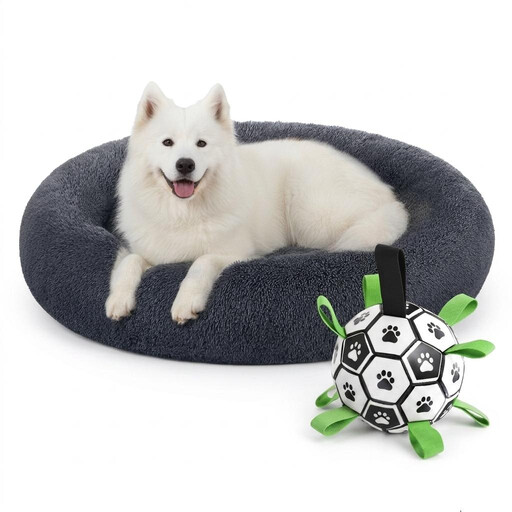
Why it suits this profile: This model is designed for large dogs and households where the bed will get frequent use. It can be placed on a flat surface or in a suitably spacious crate.
The cover unzips for removal, while the inner filling can be cared for separately. The non-slip studs help reduce movement on smooth floors.
Plush, resilient fabric, 120 x 20 cm, removable machine-washable cover and rubber non-slip details.
We’ve put together a complete, up-to-date list of products that meet these strict selection criteria and the applicable European safety requirements.
According to the product description, a donut shape with a raised edge may create a sheltered, nest-like feeling. That doesn’t mean every dog bed will relieve stress or anxiety. Pay attention to your dog’s behaviour and pair a comfortable resting place with a calm environment, a consistent routine and plenty of space.
If the product instructions recommend it, allow a vacuum-packed bed to expand for 24 to 48 hours first. Fluff up the filling and place the bed somewhere dry and level. A familiar blanket or favourite toy may help your dog settle in. Don’t place the bed right next to a busy walkway or heat source.
How long it lasts depends on your dog’s weight, digging and chewing habits, how often the bed is used and how well it’s maintained. Fluff up the filling regularly, wash the cover according to the instructions, and check the seams, zips and base. Stop using the bed if the filling or small parts become visible, especially if your dog chews their bed.
