Who is this camera setup for?

Teachers who want to show pen strokes up close

If you want students to follow the nib, line width and placement on the paper, check the field of view, focusing distance and mounting position in advance. Canon describes the EOS R50 V's lens compatibility, while DJI states that the Osmo Pocket 3 has a minimum object distance of 20 cm.

Teachers who teach live from a computer

If you want to show your desk during a video call while explaining what you’re doing, consider the computer connection, camera angle and audio setup. Logitech describes the MX Brio's downward-facing Show Mode.

Makers of longer recorded lessons

If you record lessons from a fixed position, check in advance that the mount, power supply and storage suit the planned recording length. Bear in mind that the light from the window may change during recording.

What should you look for when choosing?

Computer webcam

A good fit if: you mainly teach live and want to show your desk during a video call. Logitech describes Show Mode as a way to point the webcam downwards.

Keep in mind: check that the mount shows the whole writing area and that fine lettering appears sharp enough.

Mirrorless camera with interchangeable lens

A good fit if: you want to choose the lens and recording settings yourself for a controlled close-up. Canon lists RF and RF-S lens compatibility for the EOS R50 V.

Keep in mind: your choice of lens, working distance, power supply and mount all affect how practical the setup is; a camera body alone won’t guarantee a suitable close-up.

Camcorder with fixed zoom lens

A good fit if: you want to film from one position and adjust the frame without changing lenses. Panasonic lists 24× optical zoom for the HC-VX3.

Keep in mind: zoom doesn’t prove that the nib will appear sharp when filmed up close. Panasonic listed the HC-VX3 variants shown on its Dutch product page as unavailable.

Compact gimbal camera

A good fit if: you also change your viewpoint during a demonstration. DJI lists gimbal stabilisation for the Osmo Pocket 3.

Keep in mind: you’ll still need a suitable mount for a fixed overhead shot of your paper. Check whether the minimum object distance of 20 cm gives you the frame you want, and compare bundles to see what’s included.

What to consider What should you check? Who is this important for?
Nib and lettering details Test the focus and field of view at the actual distance between the camera and paper. Check that both the nib and enough of the writing area remain visible. If I want to show fine lines and the nib, I prioritise a clear close-up. Around 36% of consumers put details on the paper first.
Window light and ink colour Make a test recording at the expected lesson time, and check the exposure and white balance again if the light changes. If I want the paper and ink to remain easy to distinguish as daylight changes, I focus on light and colour control. Around 29% of consumers give this their highest priority.
Live teaching and audio Check computer compatibility and test the microphone where you’ll be teaching. Also check whether your teaching platform supports the view you want. If I want to demonstrate and explain at the same time, a practical computer setup with clear audio is my main concern. Around 21% of consumers prioritise live teaching.
Fixed setup and recording length Check the mount, power supply, storage and intended recording length. Camera stabilisation is no substitute for a secure mount above the table. If I’m recording a longer lesson from the same position, I want the framing and power supply to remain practical throughout. Around 14% of consumers prioritise uninterrupted recording.

Common buying mistakes

  • Choosing based on 4K alone

    Resolution alone won’t tell you whether the nib will look sharp and large enough at your chosen distance.

    Before letting resolution make the decision for you, check the working distance, focus and framing in a test recording.

  • Assuming window light will stay the same throughout the lesson

    Changing daylight can affect how the paper and ink look during a recording.

    Make a test recording at the expected lesson time, then check the white balance and exposure again when the light changes. Nikon recommends reviewing the white balance when lighting conditions change; Canon describes a window as a source of soft light.

  • Assuming there is a fixed statutory guarantee period in the Netherlands

    In the Netherlands, there is no fixed period for the statutory guarantee. The Dutch government distinguishes between the statutory guarantee and any manufacturer’s or seller’s guarantee.

    Read the seller’s terms and keep the product description and proof of purchase.

Camera brands to consider

Logitech

The MX Brio is designed for computer-based lessons where you want to show your desk.

  • Logitech says Show Mode and image controls give you options for pointing the webcam at your work surface and adjusting the picture.
  • How clearly fine calligraphy appears also depends on the mount, working distance and how the teaching app streams the video.

Canon

The EOS R50 V is a mirrorless camera for anyone who wants to choose a suitable lens and recording settings.

  • Canon lists support for RF and RF-S lenses, as well as autofocus, for this model.
  • Choosing a suitable close-up lens and mount is up to you; Canon does not list in-body sensor-shift stabilisation.

Panasonic

The HC-VX3 is a camcorder with a fixed zoom lens for filming from one position.

  • Panasonic lists 24× optical zoom and USB-C power among the model's specifications.
  • Panasonic listed the HC-VX3 variants shown on its Dutch product page as unavailable; this says nothing about other sellers or models.

DJI

The Osmo Pocket 3 is designed for compact video recording where you may change your viewpoint.

  • DJI lists gimbal stabilisation and a minimum object distance of 20 cm.
  • Check that this distance works for the paper framing you want. Bundles may vary in what’s included.

Joybuy products for this teaching setup

This selection includes compact cameras for demonstrations and webcams for teaching live from a computer. Check the focusing distance, framing and mounting options for your paper size for each model.
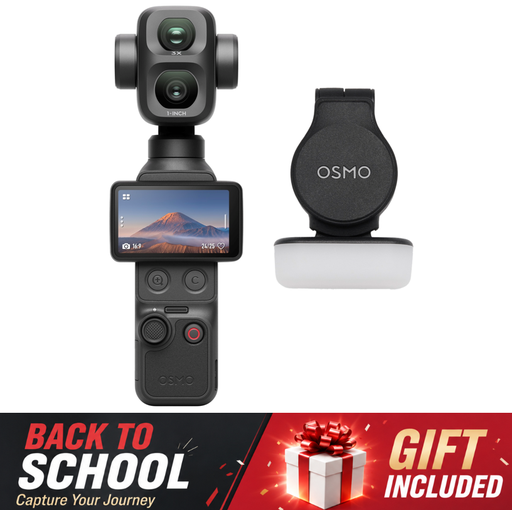
Osmo Pocket 4P Standard Combo in black

Osmo Pocket 4P Standard Combo, black

For a calligraphy demonstration: before mounting the camera, check that the focusing distance and framing suit the distance to the paper.

View at Joybuy
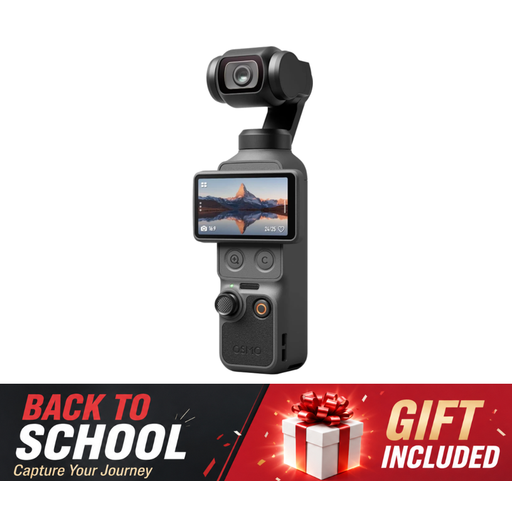
DJI Osmo Pocket 4 Standard Combo

DJI Osmo Pocket 4 Standard Combo

The gimbal design is suited to recordings where you move the camera. For a fixed shot of your paper, also check the mount and close-up framing.

The product title lists 4K/240fps, 3-axis stabilisation, 2× lossless zoom, 107GB of built-in storage and a 2-inch rotating screen.

View at Joybuy

Philips 4000 Series 4K UHD webcam SPL6408BT/00

Philips 4000 Series 4K UHD webcam SPL6408BT/00

A webcam for teaching live from a computer. Test whether the included clip shows your desk clearly in your setup.

The product title lists 4K UHD, 8MP, autofocus, dual built-in microphones, a privacy cover and EU Version.

View at Joybuy

Philips 2K QHD PC webcam SPL6308S/00

Philips 2K QHD PC webcam SPL6308S/00

For computer-based lessons where you want to position the camera on a monitor, laptop screen or tripod. Check that your chosen position shows the whole sheet of paper.

The product title lists 2K QHD, a noise-cancelling microphone, a clip for desktop and laptop computers, and EU Version.

View at Joybuy

DJI Osmo Pocket 3 with 1-inch CMOS sensor and 4K/120fps video

DJI Osmo Pocket 3, 1-inch CMOS, 4K/120fps

The stabilisation is suited to demonstrations where the camera angle changes. DJI lists a minimum object distance of 20 cm for the Osmo Pocket 3; check whether that gives you the framing you want on the paper.

The product title lists 3-axis stabilisation, fast focusing and a 2-inch rotating touchscreen.

View at Joybuy

Frequently asked questions

What should you test before mounting a camera above calligraphy paper?

Set up a test shot at the planned height and check that both the nib and enough of the paper are visible and in focus. DJI lists a minimum object distance of 20 cm for the Osmo Pocket 3; that doesn’t guarantee it will give you the framing you want.

How should you deal with changing window light?

Check the light and dark areas of the paper in your recording, and review the white balance whenever the lighting changes. Nikon describes white balance as a way to correct colour casts; a window can provide soft light, while a reflector can bounce light back onto your subject.

What should you check about extra accessories and the guarantee?

Check what’s included for your setup, such as a lens, mount, memory card or power supply. In the Netherlands, there is no fixed period for the statutory guarantee. According to the Dutch government, what you can expect from a product depends, among other things, on the product itself and the information provided by the seller.

Can you record or publish a calligraphy lesson in the Netherlands if students are identifiable?

It depends on who is filming and what happens to the footage. According to the Dutch Data Protection Authority, identifiable people count as personal data; wider publication or commercial use requires an appropriate legal basis under the GDPR. Specific consent rules apply to schools filming and publishing identifiable pupils; for pupils under 16, the regulator states that parental consent is required. If you film only your own hands and work, with no other identifiable people, this information does not imply a general camera permit or registration requirement.
