
Bakers catering for a crowd
Making a cake, cupcakes or several desserts for a group? Jumbo and ALDI list 600 g packs of sprinkles. Work out how much you’ll need for your bakes and whether you can use the rest before it goes out of date.


For several cakes or cupcakes, a 600 g pack of sprinkles is a sensible starting point if you’ll use that amount; for one cake or a particular finish, 380–400 g may be a better fit. Choose your sprinkles for their flavour and appearance, and if you’re sharing your bakes, check the ingredients and allergens on the exact pack.
Making a cake, cupcakes or several desserts for a group? Jumbo and ALDI list 600 g packs of sprinkles. Work out how much you’ll need for your bakes and whether you can use the rest before it goes out of date.
If the sprinkles will be on show, choosing between milk chocolate sprinkles, dark chocolate sprinkles, larger sprinkles and colourful fruit sprinkles may matter more than pack size.
If other people will be eating your bakes, you’ll want to check the ingredients and allergens in your chosen sprinkles before decorating. Product information from Jumbo and Albert Heijn shows that the details vary between chocolate varieties.
First, work out how many sprinkles you’ll use for your bakes. Then choose the finish you want and read the pack label before use.
| What to consider | What to look for | Who it matters to |
|---|---|---|
| Quantity and using up leftovers | Compare the net weight with how much you’ll need for your bakes. Check how to store an opened pack. | If I’m decorating several cakes or cupcakes, I want enough sprinkles without being left with lots over. For around 40% of consumers, the amount needed would be the first thing to consider. |
| Flavour and finish | Choose between chocolate and fruit sprinkles, and consider the colour or size of sprinkle you want. | For a cake that will be on display, I want the flavour and appearance to suit my plans. For around 30% of consumers, the finish would come first. |
| Ingredients and allergens | Read the ingredients and allergen information on the exact variety you plan to use. | When I’m sharing my bakes, I want to check whether the sprinkles are suitable for the people eating them. For around 30% of consumers, ingredients would be the main consideration. |
The name doesn’t tell you how many sprinkles are in the pack. For this use, you’ll find both 600 g packs and smaller options.
Check the net weight and choose an amount that suits the number of bakes you’re making and what you plan to do with any leftovers.
The layer underneath matters too if you want the sprinkles to stick. In a Lidl recipe, the biscuits are left to cool completely before being decorated with chocolate spread and sprinkles.
Let your bakes cool, then add the sprinkles over a suitable sticky layer, such as chocolate spread.
Jumbo’s milk chocolate sprinkles list milk as an allergen; Albert Heijn lists milk and soya for De Ruijter Royaal extra dark. So one label won’t tell you enough about a different flavour or variety.
Before serving, check the allergen information on the exact pack, especially if you’re sharing the cake with others.
Information from the Netherlands Food and Consumer Product Safety Authority about iodised baker’s salt in bakery products doesn’t establish what’s in a particular pack of sprinkles.
To find out whether a particular ingredient is in your sprinkles, check the ingredients list for the product you’ve chosen.
Jumbo lists 600 g packs of chocolate sprinkles, including milk and dark varieties. It’s a brand to consider if you need enough for several bakes.
ALDI lists 600 g packs of Kiekeboe sprinkles in milk and dark varieties, as well as 400 g packs of fruit sprinkles for a different colour and flavour.
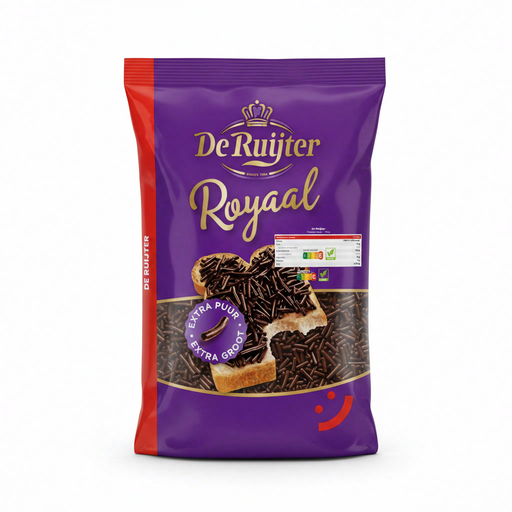
De Ruijter’s range includes 390 g packs of Royaal extra dark chocolate sprinkles and Kleintjes packs with eight servings. These options may suit you if you’re after a particular chocolate variety or several smaller portions.
Jumbo lists Venz sprinkles in 380–400 g varieties, including milk, dark and larger-sprinkle options.
These packs of sprinkles suit different plans for cakes and cupcakes: choose 600 g if you need more, or a smaller pack if the type of sprinkle is your priority. Compare the quantity with your baking plans, and check the pack for ingredients and allergens.
 No image available
This 600 g pack is worth considering if you want to decorate several bakes with milk chocolate sprinkles and smileys.
If you’re sharing your bakes, check this variety’s label for milk, soya and wheat.
 No image available
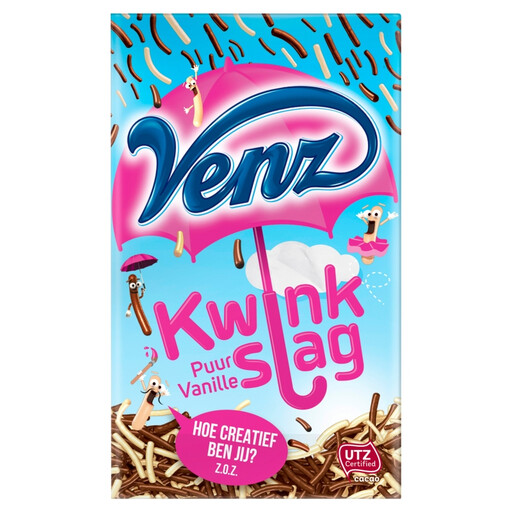
This 400 g pack could suit you if you want a mix of chocolate and vanilla flavours for your bakes.
If others will be eating your bakes, check the label for milk, soya and wheat.
 No image available
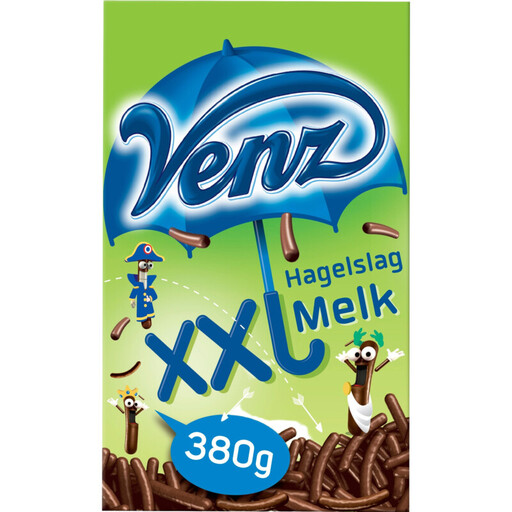
This 380 g pack is an option if you want milk chocolate sprinkles for cupcakes or other bakes without buying a 600 g pack.
If you have relevant allergies, check the exact pack for milk, lactose and soya.
 No image available
This 390 g pack may suit you if you want to use chocolate chunks as a standout finish on your bakes.
If you’re baking for others, check the exact pack for milk and soya.
 No image available
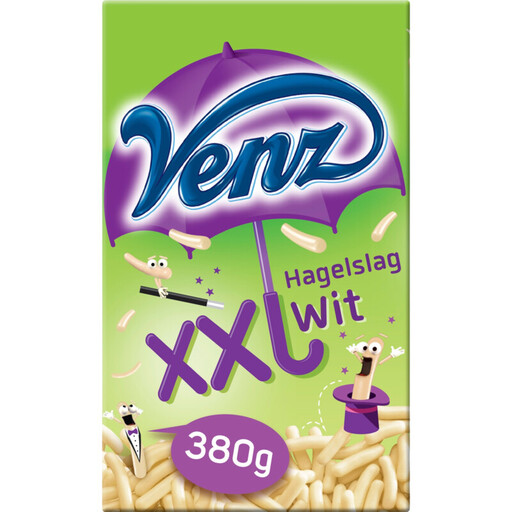
The large white sprinkles in this 380 g pack give cakes and cupcakes a different look.
If you have allergies, don’t rely on a general description: check the ingredients and allergen information on the exact pack before use.
It depends on your recipe and how much you want to decorate; ‘sharing bag’ doesn’t have a standard pack size. Jumbo and ALDI list 600 g packs, while 380–400 g varieties are also available. Work out how much you’ll use first, and if you choose a larger pack, think about what you’ll do with the rest.
Yes, you can use sprinkles to decorate cooled bakes with a sticky layer underneath. In a Lidl recipe, fully cooled biscuits are topped first with chocolate spread and then with sprinkles.
Yes, check the allergens for the exact variety you’re buying. Jumbo lists milk for its 600 g milk chocolate sprinkles; Albert Heijn lists milk and soya for De Ruijter Royaal extra dark. Don’t rely on the information for a different flavour or pack.
No, that rule doesn’t mean a particular pack of sprinkles contains iodised baker’s salt. The Netherlands Food and Consumer Product Safety Authority’s information is about the use of baker’s salt in bread and other bakery products; to find out what’s in your sprinkles, check the ingredients list for the product you’ve chosen.
Follow the storage instructions and best-before date on the pack. Jumbo says its 600 g milk chocolate sprinkles should be stored in a cool, dry place. Bear these conditions in mind if you’re considering a larger pack.