What should you look for when buying?
Start by checking your camera mount and the shot you take most often: a view of the whole cake or a close-up of small decorations. The percentages shown indicate which of these buying questions comes first for consumers in this cake photography scenario.
The whole cake and wider framing
A good fit when: your current lens or a shorter close-up lens can capture the whole cake from the space available. Canon Netherlands lists 35 mm as an option for wider overhead shots.
Trade-off: a wider frame can show more of the cake and its surroundings, but it won’t magnify a small decorative detail to the same extent.
Small details with a longer macro lens
A good fit when: you want to capture individual decorations at a larger size and have enough space for your camera, cake and background. Sony, Nikon and Sigma specify a maximum magnification of 1:1 for the 90–105mm models mentioned; Canon lists a maximum of 1.4× for the RF 100mm F2.8L Macro IS USM.
Trade-off: a narrower angle of view may mean you need more distance for a full-cake shot. Close-ups also require more precise focusing and have a limited depth of field.
A 50mm macro lens
A good fit when: you want to combine detail shots with more general framing on a compatible Nikon Z camera. Nikon lists a maximum magnification of 1:1 for the Z MC 50mm f/2.8.
Trade-off: at the closest focusing distance, Nikon gives around 5 cm of working space in front of the lens, which may limit where you can place your lighting.
| What to consider |
What should you check? |
Who is this important to? |
| Mount and version |
Make a note of your camera model and mount, then check the full lens name and exact version. |
I want to know whether the lens fits my camera before comparing magnification. Around 33% of consumers prioritise finding the right version. |
| Full view or detail |
Decide which shot matters most, then compare the angle of view and focal length, as well as the maximum magnification of the exact lens. |
I want to know whether the whole cake will fit in the frame or whether a small decoration will appear large. Around 27% of consumers start by weighing up framing against detail size. |
| Working distance and lighting |
Measure the space for your camera, cake and background, then check the working distance at the magnification you need. |
On a small table, I want enough room to position my lighting properly. This is the top priority for around 20% of consumers. |
| Sharpness and colour |
Test sharpness on decorations at different depths, and set the white balance to suit the lighting you use. |
I want the decorations to look sharp and the white setup to stay free of unwanted colour casts. Around 20% of consumers make this their first priority. |
Joybuy products
These Sony E lenses are suited to wide to more flexible framing, as well as close-ups of cake decorations. They aren’t an equivalent replacement for a 1:1 macro lens when you need to magnify very small details significantly.
 No image available
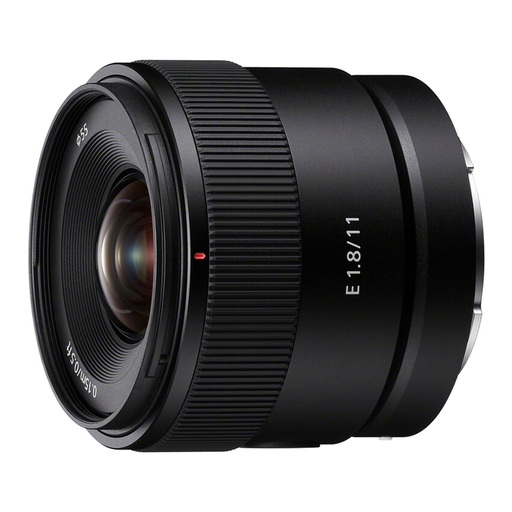
Sony E 11mm F1.8 APS-C Wide Angle Prime Lens (SEL11F18)
The ultra-wide angle may suit you if you want to frame the whole cake broadly and take close-ups too.
The product name lists 11 mm, F1.8, APS-C and Sony E. For very small decorations that need significant magnification, it isn’t an equivalent replacement for a 1:1 macro lens.
View at Joybuy
 No image available
Sony E 50mm f/1.8 OSS Black
This lens may suit close-ups and product photos if its Sony E mount is compatible with your camera.
The product name lists 50 mm, f/1.8 and OSS. For very small decorations that need to appear large in the frame, check whether the stated magnification meets your needs; this isn’t a replacement for a 1:1 macro lens.
View at Joybuy
 No image available
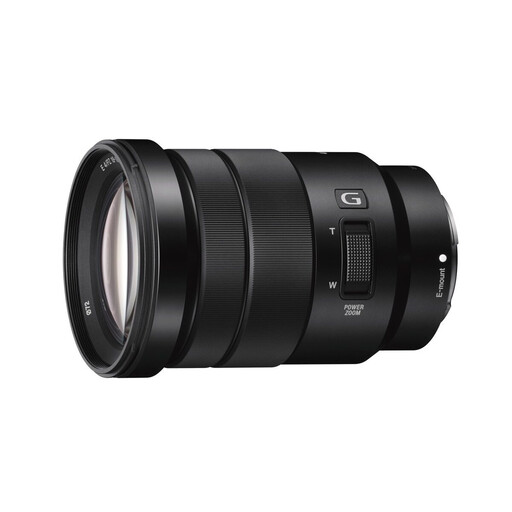
Sony E PZ 18-105mm f/4 G OSS
The zoom range can be handy if you want to adjust the framing between a full view and a close-up.
The product name lists 18–105 mm, f/4, G and OSS. For small decorations that need significant magnification, it isn’t an equivalent replacement for a 1:1 macro lens.
View at Joybuy
Frequently asked questions
Do I definitely need 1:1 magnification to photograph the whole cake?
No, not just to photograph the whole cake. First check whether the angle of view and focusing distance allow for the framing you want. A higher maximum magnification matters most when you want to capture a small decorative detail at a larger size.
Why does a white background look grey or coloured in my photo?
Check the exposure and set the white balance to suit the lighting you use. A matt white background can reduce unwanted reflections and colour casts, but a macro lens won’t make the background white by itself.
How can I keep several layers of cake decorations in focus?
Take some test shots to see where the plane of focus falls and how much depth of field you need. For very close-up shots, focus stacking may be an option if your camera and workflow support it.
What warranty applies when buying a lens in the Netherlands?
When you buy as a consumer, the product must conform to the agreement. The Dutch government says there is no fixed statutory warranty period in the Netherlands, and the seller must provide a solution if a product is faulty. Any manufacturer’s warranty is in addition to this.
Can I return a lens bought online if it doesn’t fit?
In many cases, consumers buying online from a business have 14 days to change their mind. The Dutch government lists buying from a private individual as a situation that isn’t covered by these distance-selling rules; check which terms apply to your purchase.


