
Vandaag of morgen in huis

Kwaliteit gegarandeerd

Welkomstaanbiedingen ontgrendelen: GRATIS bezorging | Tot 80% korting | Gratis 30 dagen JoyPlus-proefperiode
Download de app
A cabin suitcase may seem simple to choose, until you reach the gate and discover that it will not fit in the overhead locker or that you have to pack your clothes awkwardly. Marketing terms such as “lightweight”, “airline approved” and “extra strong” only mean something once you have checked the exact dimensions, weight and construction.
For air travel, a weekend away or a business trip lasting a few days, three pitfalls are particularly important:
Airlines have different rules for hand luggage. Always check your airline’s current terms and conditions before buying, and measure the full external dimensions, including wheels, handles and protruding parts.
A 20-inch suitcase is often designed as a cabin model, but this is not a universal guarantee. One example is the NINETYGO Rhine 2.0, which has listed dimensions of 56 × 38.5 × 23 cm. According to the product description, the NINETYGO Danube measures approximately 56.5 × 37.5/38 × 23 cm. That may work well for many flights, but check the limit for your ticket.
For short trips, 28 to 38 litres is often a practical capacity. If you want to take enough clothing for several days, you could also consider around 46 litres, but you will need to pay even closer attention to cabin baggage requirements. A foldable or expandable suitcase offers greater flexibility, but only use the extra space if the dimensions are still permitted.
A lightweight suitcase reduces the amount of your baggage allowance taken up by the case itself. Do not look only at the material, but also at the empty weight:
According to the Beneunder LC363 product description, this model is made from PC panels and protective fabric, with a net weight of 6.83 lb, approximately 3.1 kg, and a listed capacity of 46 litres. The description also mentions a folding mechanism and an expandable structure. The claim of a 50% weight reduction is a brand claim, so treat it as information from the product description rather than an independent comparison.
A 4-wheel suitcase with 360-degree rotation is convenient in stations, airports and narrow corridors. You can roll it alongside you instead of pulling it behind you. Do check that the wheels are sufficiently recessed and that the overall width remains within the permitted dimensions.
A TSA lock is designed to allow security checks at certain airports without the lock having to be forced open in the same way. It does not prevent a suitcase from being opened or stolen. Keep the combination safe and test the mechanism before departure.
Also look out for:

Why it suits this profile: The compact dimensions of 34 × 22 × 52 cm and a weight of 2.5 kg make this model suitable for short trips and occasional use. The product description states that the model is suitable for most airlines; always check this yourself for your flight.
The dimensions, 30-litre capacity and weight are clearly stated. This means you do not have to rely solely on the terms “cabin” or “carry-on”.
ABS body, telescopic handle, internal compartments and a combination lock; the statutory minimum two-year guarantee is stated.
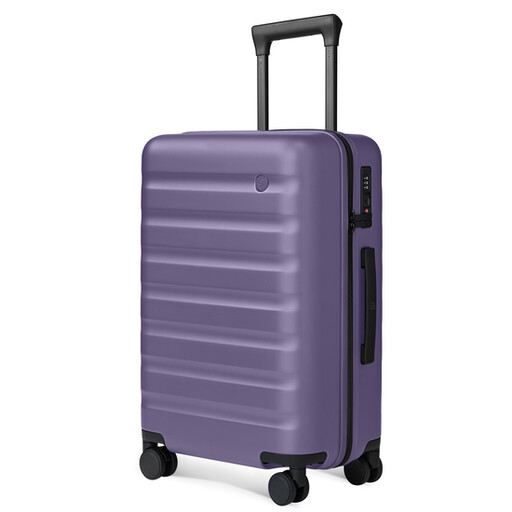
Why it suits this profile: This hard-shell suitcase is designed for travellers who value organisation and protection on trips lasting three to five days.
The product description specifies PC hard-shell material, a TSA lock, compression straps and a separate PVC bag for wet items. This makes the features easy to verify.
PC shell, recessed handle and lock, double 360° wheels, and a zip for which the product description states a test value of 2,500+ cycles.

Why it suits this profile: The folding function is practical when you have little storage space after arrival, for example in a small flat, at the office or during several short trips.
The listed dimensions give both the in-use and folded measurements. In particular, check the in-use dimensions before using this model as hand luggage.
Expandable structure, 2:8 compartment layout, PC panels with fabric, aluminium handle, 360° wheels and a TSA-approved lock according to the product description.
We have put together a complete, up-to-date list of products that fully meet these strict selection criteria and the applicable European safety regulations.
Use this quick checklist before ordering:
This varies by airline, ticket type and flight. An 18-inch or 20-inch model may be suitable, but always check the official size and weight restrictions. Remember to include the wheels and handles.
A hard-shell suitcase, for example one made from ABS or PC, has a fixed outer shape and can be useful for fragile items. A soft or partially fabric suitcase can be packed more flexibly. The right choice depends on your journey, packing habits and available storage space.
Its lifespan depends on use, the surfaces it is rolled over, the load and maintenance. Do not exceed the suitcase’s maximum carrying capacity, avoid rough surfaces where possible, and clean the wheels and handle. With a zipped model, it is advisable not to force the suitcase closed when it is too full.
