
Vandaag of morgen in huis

Kwaliteit gegarandeerd

Welkomstaanbiedingen ontgrendelen: GRATIS bezorging | Tot 80% korting | Gratis 30 dagen JoyPlus-proefperiode
Download de app
A cabin suitcase may seem straightforward to choose, until you reach the gate and discover that your trolley won’t fit in the overhead locker or has to be checked into the hold. With budget airlines in particular, a few centimetres or an overfilled bag can lead to extra charges. And a lightweight suitcase isn’t automatically practical: wheels, handles, compartments and laptop access can all make a big difference when you’re travelling.
In this buying guide, you’ll find out what to look for in a cabin suitcase, cabin trolley, cabin bag or cabin backpack. Our recommendations are based on verifiable product specifications, such as dimensions, weight, capacity and available pockets.
A suitcase measuring, for example, 55 x 40 x 20 cm doesn’t automatically have the same internal dimensions. Wheels, handles, protective edges and the frame all take up space. That’s why the product information for various models notes that internal dimensions may differ by around 1 to 2 cm.
Pay attention to how your airline measures bags, too. Some airlines include protruding handles or wheels. So, before you travel, check the airline’s current baggage rules, especially if you’re looking for cabin baggage for Ryanair, cabin baggage for easyJet or cabin baggage for British Airways.
A compact suitcase may be suitable for the cabin, but that doesn’t necessarily mean you can take it on board as a free personal item to stow under the seat. A 40x30x20 cm travel bag or an underseat bag often falls into a smaller baggage category than a 55 x 40 x 20 cm suitcase.
With Ryanair, the difference between a small personal item and a larger cabin bag can be important. easyJet, British Airways and other airlines each have their own conditions. So check your ticket, fare and permitted baggage type.
A lightweight cabin suitcase leaves more of your baggage allowance available for clothes, but a low weight tells you nothing about its compartments or wheel construction. A soft suitcase may be easier to pack and store, while a hard-shell suitcase holds its shape better. Four spinner wheels roll smoothly in different directions, but often add weight and protruding parts.
First, think about how you’ll use it:
Measure your bag when it’s packed. Compression straps can help keep soft luggage within the limit, but you can’t compress a hard-shell suitcase.
For a weekend away, around 20 to 35 litres is often practical. Pay attention to the bag’s empty weight, too:
A 33-litre model may look roomier on paper than a 24-litre one, but pockets, walls and wheel housings all affect the usable space.
For business trips, a cabin bag with a laptop pocket or a front pocket is useful. Always check the maximum laptop size: a pocket for a 15.6-inch laptop isn’t the same as a universal padded compartment.
A cabin bag with a TSA lock can be useful when authorised airport staff need to open your suitcase. However, the lock won’t prevent someone from opening the case if they can access the zip or fastening. Think of it as an extra security feature, not a guarantee against loss or theft.
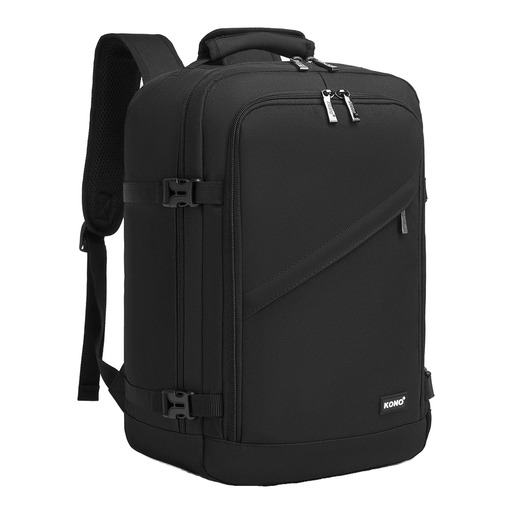
Why it suits this type of traveller: Measuring 40 x 20 x 25 cm and with a capacity of around 20 litres, this bag is designed for travellers who want to pack light for a short flight or city break.
Its clearly stated compact external dimensions make it easier to compare with personal item limits. Check your airline’s current conditions before you book.
Backpack design with a 20-litre capacity; suitable as a compact underseat bag for light luggage.
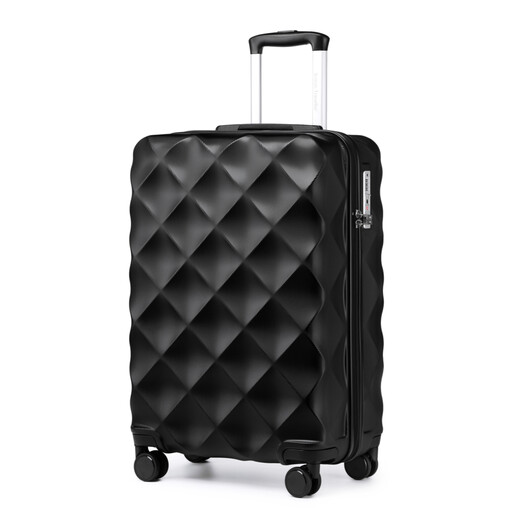
Why it suits this type of traveller: This hard-shell cabin suitcase combines external dimensions of 53 x 35 x 21 cm with a capacity of around 34 litres, a TSA combination lock and four 360° wheels.
The specifications list both the weight, at around 2.27 kg, and the external dimensions. This helps you estimate the available luggage allowance more realistically.
ABS+PC shell, four spinner wheels, TSA combination lock and an interior with packing straps and a mesh pocket.
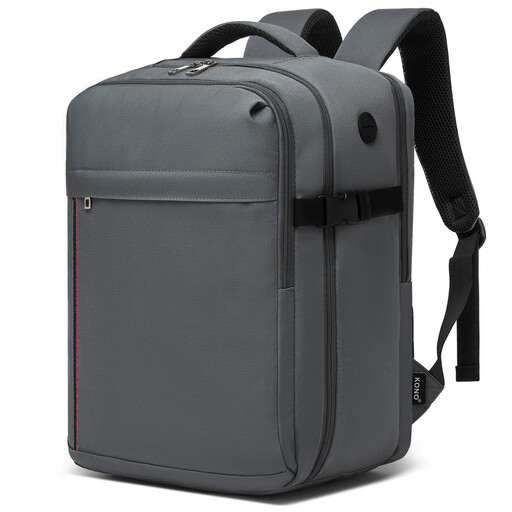
Why it suits this type of traveller: Measuring 40 x 30 x 20 cm, this backpack is designed for short business trips, commuting and two- to three-day breaks.
Its fixed dimensions help prevent an expandable compartment from accidentally exceeding the baggage limit. Compression straps help keep the contents compact.
Around 24 litres of capacity, a padded pocket for laptops up to 15.6 inches and a weight of around 0.5 kg.
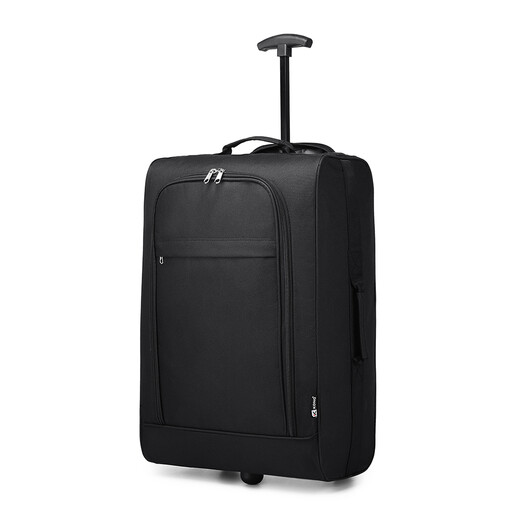
Why it suits this type of traveller: This soft trolley is designed for weekend breaks and short business trips when you want a lightweight, shape-retaining bag with quick access to your belongings.
The product information lists the external dimensions and weight, and explains the difference between the internal and external dimensions. This makes it easier to compare the bag with airline limits.
Around 33 litres of capacity, a weight of approximately 1.46 to 1.7 kg, a front that opens fully and two wheels.
We’ve put together a complete, up-to-date list of products that meet these strict selection criteria and the applicable European safety regulations.
Before you check out:
It varies by airline, ticket type and fare. A 40x30x20 cm bag is often used as a personal item or underseat bag, while 55 x 40 x 20 cm is more commonly used for larger cabin baggage. Always check the current rules of the airline you’re flying with.
A backpack is useful when you’re using stairs, public transport and narrow aisles. A cabin suitcase rolls more easily on flat surfaces and often has a more structured interior. If you’re carrying a laptop and everyday work essentials, a cabin backpack with a laptop pocket may be more practical.
Its lifespan depends on the materials, fastenings, wheels, how heavily it’s packed and how often you travel. Overpacking can put extra strain on zips, wheels and handles. Check the wheels regularly, pack within the available internal space and store the suitcase somewhere dry when you’re not using it.
