
Vandaag of morgen in huis

Kwaliteit gegarandeerd

Welkomstaanbiedingen ontgrendelen: GRATIS bezorging | Tot 80% korting | Gratis 30 dagen JoyPlus-proefperiode
Download de app
A cabin suitcase may seem easy to choose: pick a compact model, pack your things and set off. But problems often only arise at the airport. The suitcase turns out to be a few centimetres too big, its weight takes up too much of your baggage allowance, or the wheels are less practical than you expected.
As Joybuy Product Recommendation Officer, I start by looking at verifiable specifications. Not big marketing claims, but dimensions, weight, material and how you plan to use the suitcase.
Airlines have different rules. For example, a cabin suitcase for Ryanair may be subject to different requirements from one for easyJet. Allowances and permitted dimensions can also vary depending on your ticket type.
Always check:
A product listing may say that a model is suitable for certain airlines, but you should still check with the airline.
A lightweight cabin suitcase is handy because it leaves more room for clothes and electronics. But consider the balance between weight and construction. A soft suitcase weighing 1,46 to 1,7 kg can be comfortable to carry, while a hard-shell suitcase often offers more structure and protection but is also heavier.
As well as weight, look at:
A suitcase with spinner wheels can move smoothly in multiple directions. That’s useful in a departure lounge or along a narrow shopping street. Two wheels often roll more efficiently behind you and may take up less space underneath the case.
With either system, check the wheel housing, how the wheels are attached and the surfaces you’re likely to travel on. “Silent” and “smooth” are descriptions used in product information, not a guarantee of performance on every surface.
A 20-inch suitcase is often intended for short trips, but the label tells you less than the exact external dimensions. A model measuring 55 × 40 × 20 cm will fit differently from a suitcase measuring 56,5 × 37,5 × 23 cm.
Always compare the full dimensions. Also bear in mind:
On some models, the internal dimensions may differ from the external dimensions by around 1 to 2 cm.
A hard-shell cabin suitcase made from ABS, polycarbonate or ABS+PC has a rigid shell. This can be useful if you’re carrying fragile items or your suitcase is often moved around. A hard shell may be less easy to squeeze into a tight luggage compartment, though.
A soft cabin suitcase made from polyester is often more flexible and usually has an exterior pocket. This is handy for a passport, tablet or boarding pass. Its contents are generally less protected from pressure on the outside. Choose based on how you pack, not just on looks.
A suitcase with a TSA lock can be opened by authorised security staff using a special tool. The lock won’t stop someone from picking up the suitcase, or fully protect its contents. It’s mainly an extra locking feature for journeys where luggage may be inspected.
Also look for:
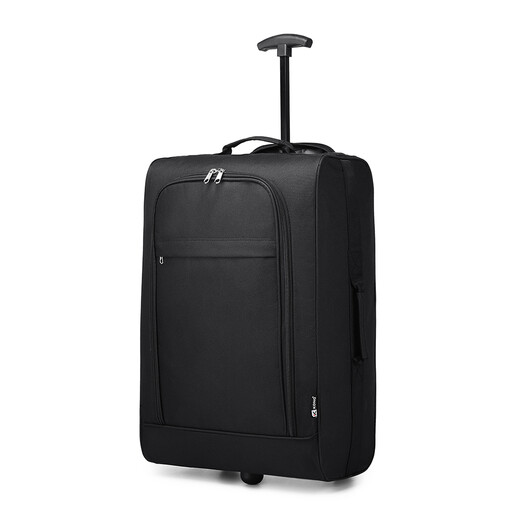
Why it suits this type of traveller: This soft cabin suitcase is designed for weekends away and short-haul flights. Its stated weight of 1,46 to 1,7 kg leaves more room within your baggage allowance.
The external dimensions of 53 × 36 × 18 cm are clearly stated. Check for yourself whether they’re permitted with your ticket type.
Around 33 litres of capacity, a front pocket, a fully opening front and two wheels.
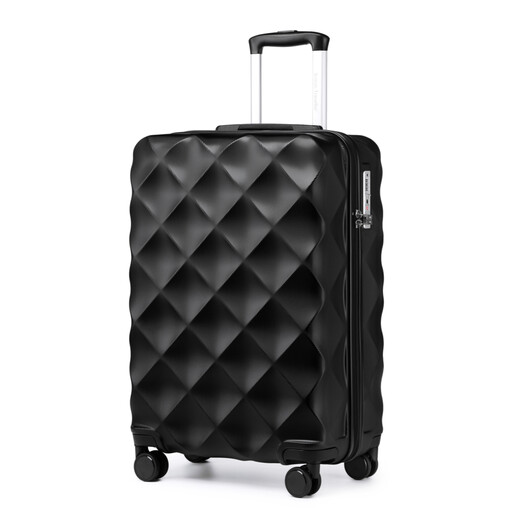
Why it suits this type of traveller: The hard ABS+PC shell, four 360-degree wheels and internal packing straps are a good fit for travellers who value structure and organised luggage.
The dimensions of 53 × 35 × 21 cm and weight of 2,27 kg are specified. That makes it easier to compare than relying on the term “20 inch” alone.
Four spinner wheels, a three-digit TSA lock, YKK zips and a capacity of around 34 litres.
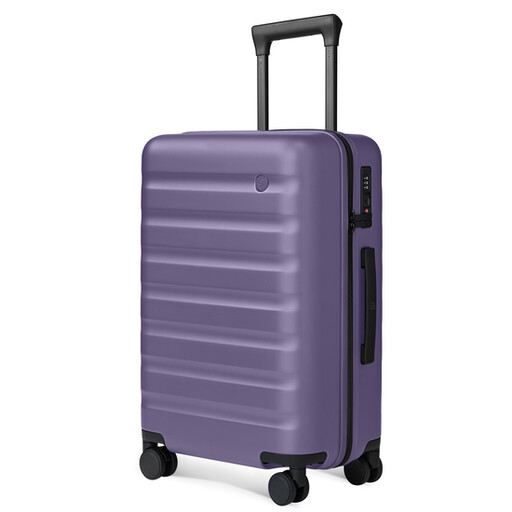
Why it suits this type of traveller: This model is worth considering if you travel often and value a fixed layout, a TSA lock and dual spinner wheels.
The stated dimensions are 56 × 38,5 × 23 cm. Check the depth particularly carefully if you’re travelling with a cabin suitcase on Ryanair or easyJet, where the size limits are strict.
PC hard shell, 360-degree wheels, compression straps and a waterproof PVC pouch, according to the product description.
According to the product information, this model has undergone testing and certification. This information comes from the manufacturer and shouldn’t be taken as a general guarantee of a particular lifespan.
We’ve put together a complete, up-to-date list of products that meet these strict selection criteria and the applicable European safety regulations.
It depends on your ticket and the latest baggage rules. Compare the suitcase’s external dimensions with the allowance for your booking. A model described on its product page as suitable for several airlines may still not be permitted with a different fare.
Its lifespan depends on how it’s used, the surfaces it’s wheeled over, how heavily it’s packed and how well it’s maintained. Don’t exceed the maximum load for the handle or wheels, and avoid abrasive cleaning products. Wipe it with a soft cloth and check the zips and wheels regularly to spot wear and tear.
Routine maintenance costs very little: empty the suitcase after a trip, remove dirt with a soft cloth and check the wheels and zips. Spare parts such as wheels or a handle aren’t available for every model. Check the seller’s warranty and service information before you buy.
