
Vandaag of morgen in huis

Kwaliteit gegarandeerd

Welkomstaanbiedingen ontgrendelen: GRATIS bezorging | Tot 80% korting | Gratis 30 dagen JoyPlus-proefperiode
Download de app
A cabin suitcase might seem easy to choose: find a compact case, check the price and pack it. In practice, problems often only become apparent at the airport. The case turns out to be a few centimetres too large, its empty weight leaves little room for clothes, or its wheels struggle on uneven surfaces.
For holidaymakers, business travellers and weekenders, there are three pitfalls to watch out for:
Always check the full external dimensions, including the wheels, handles and any protruding parts. A 20-inch case isn’t automatically suitable as cabin baggage. Check the measurements in centimetres, not just the size in inches.
Many models in this selection measure around 55 × 35–40 × 20–23 cm. That may meet the cabin baggage requirements of many airlines, but the rules vary by airline, ticket type and route. So check your airline’s official baggage allowance before you travel. Also look out for the difference between a free small bag that fits under the seat and a wheeled case that you may have to pay to put in the overhead locker.
A lightweight suitcase leaves you more of your baggage allowance for your belongings. According to the product information, a soft Kono cabin case weighs around 1,46–1,7 kg and has a capacity of around 33 litres. A hard-shell ABS or PC case may weigh between 2,27 and 3,45 kg, but often has a more rigid shape and greater structure.
As well as the weight, check:
Around 30 to 40 litres is often practical for a weekend case. If you’re only packing business clothes and electronics, a well-organised interior may be more useful than extra capacity.
A hard-shell case made from ABS or polycarbonate keeps its shape and protects the contents from external pressure. ABS is generally affordable and lightweight; product information often describes polycarbonate as offering a combination of rigidity and lower weight. These qualities don’t guarantee that the case will be damage-free during transport.
A soft case made from polyester can be more flexible to pack and often has a handy front pocket. However, it offers less protection from sharp pressure or moisture than a closed hard shell.
Also look out for:
A TSA lock won’t stop a case from being broken into, and it isn’t a substitute for good travel insurance. Its main purpose is to allow an inspection without damaging the lock.
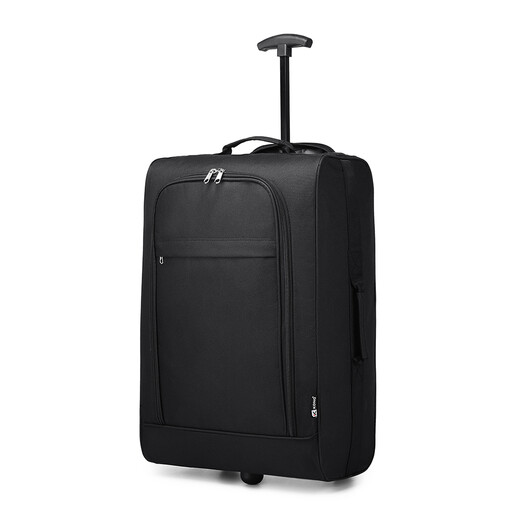
Why it suits this traveller: This compact soft cabin case is ideal for short trips and weekends, and for travellers who prioritise a low weight and a front pocket.
The product information gives specific dimensions of 53 × 36 × 18 cm and a weight of around 1,46–1,7 kg. Be sure to check your airline’s requirements yourself.
Around 33 litres of capacity, 600D polyester, a fully opening front panel and a separate zipped pocket.

Why it suits this traveller: A practical choice for travellers who want to combine hard-shell protection, flexible storage and an organised interior.
Its dimensions, empty weight of 6,83 lb and capacity of 46 litres are all specified. The case also folds away, so it takes up less space in storage.
46 litres, 360° spinner wheels, TSA-approved lock and a combination of polycarbonate and fabric.
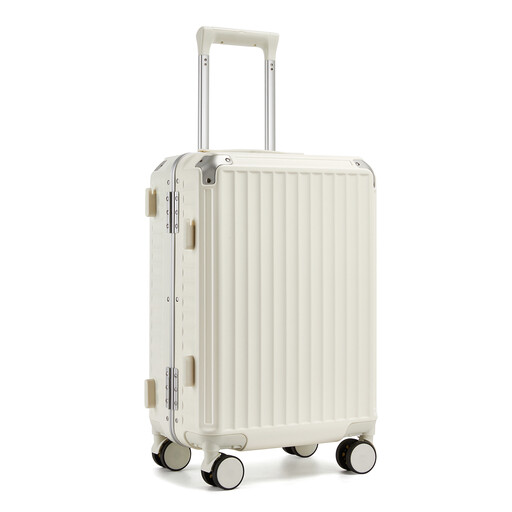
Why it suits this traveller: Designed for frequent business trips or for anyone who appreciates extra organisation and handy features on the go.
The product information lists dimensions of 55 × 37,5 × 23 cm, a capacity of 39 litres and a weight of 3,45 kg. This makes it easy to compare the size, capacity and weight with your airline’s rules in advance.
PC shell, aluminium frame, TSA lock, 360° spinner wheels, phone holder and hidden cup holder.
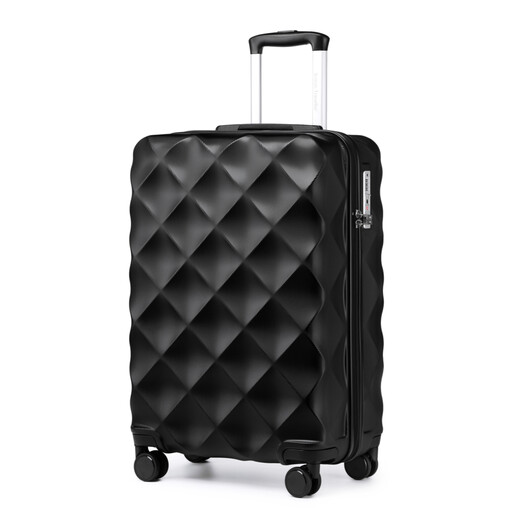
Why it suits this traveller: A well-organised case for short flights, with four wheels, a structured interior and a relatively low weight.
The 20-inch version is listed as measuring 53 × 35 × 21 cm, weighing 2,27 kg and holding 34 litres. This makes it easier to compare than relying on the term “cabin size” alone.
ABS+PC shell, four 360° TPE wheels, adjustable aluminium handle and a three-digit TSA combination lock.
Use this quick checklist:
We’ve put together a complete, up-to-date list of products that meet these strict selection criteria and the applicable European safety regulations.
It depends on the airline, your ticket and the type of cabin baggage. Many models are around 55 cm tall, but the width, depth and wheels count too. Always check the latest requirements of the airline you’re flying with.
A hard-shell case holds its shape and can shield the contents better from pressure. A soft case is often lighter and more flexible, and usually has an external pocket. Choose based on what you’re packing, how long you’re travelling for and how you’ll be transporting the case.
Its lifespan depends on how often it’s used, the surfaces it’s wheeled over, how much it carries and how well it’s maintained. Check the wheels, zips and handle regularly. Clean the case with a soft cloth, and don’t exceed the stated weight limits for the handle and wheels.
