
Vandaag of morgen in huis

Kwaliteit gegarandeerd

Welkomstaanbiedingen ontgrendelen: GRATIS bezorging | Tot 80% korting | Gratis 30 dagen JoyPlus-proefperiode
Download de app
A cabin suitcase may seem easy to choose, until you arrive at the gate with a case that’s just too big or too heavy. Marketing terms such as “lightweight”, “quiet” and “airline approved” don’t always tell the whole story either. Size limits vary between airlines and sometimes between ticket types.
Use this guide to compare a cabin case on the things that matter in practice: size, weight, material, wheels, layout and security.
A product description may say that a case fits commonly used cabin sizes, but each airline sets its own rules. With Ryanair cabin baggage, for example, the permitted size depends on the option you choose. The rules for easyJet cabin baggage can also vary by ticket and any extras you buy.
So, before you travel, check:
A suitcase measuring 55 × 40 × 20 cm may be allowed on one flight but not with another booking.
A 3 kg hard-shell case with a capacity of 38 litres leaves you less room within a weight limit than a soft cabin case weighing around 1.5 kg. Always check both the empty weight and the capacity.
Be wary of vague terms such as “ultralight”, too. A verifiable product specification, such as 1.46–1.7 kg, is more useful than a general marketing claim.
Four spinner wheels generally turn easily in several directions, making them useful on smooth floors in stations and airports. On cobbles, uneven pavements and stairs, two larger wheels may be more practical. Also check whether the wheels are double, what material they’re made from and whether the handle is adjustable.
A 20-inch suitcase is often intended as a cabin case, but the actual outer dimensions vary by model. Compare specifications such as these:
According to the product descriptions, these models are designed for short breaks, business trips or air travel. Always check your airline’s current baggage rules, especially if you have a budget ticket.
A hard-shell suitcase made from ABS, polycarbonate or a combination of ABS and PC has a rigid outer shell. This can be useful for clothes and fragile items, but a hard shell may be less flexible when the overhead locker is full.
A soft cabin case made from polyester is often lighter and usually has a front pocket. This is handy for a laptop, passport or charger. However, the exterior may be more susceptible to moisture and scuffs. Check the fabric density, reinforced areas, and the quality of the zips and stitching.
Claims about scratch resistance, impact resistance or long life come from the brand’s product description. Treat them as product specifications, not as a guarantee that the case will remain undamaged.
An adjustable telescopic handle should extend smoothly without too much wobble and feel comfortable as you walk. Also check whether the case has a top or side handle for lifting.
Inside, a packing strap, zipped pocket and divider are more useful than one large empty compartment. A TSA lock allows authorised security staff to open your luggage without forcing the lock. It doesn’t protect against every form of theft. Reset the default code, 000 or 0-0-0, straight away and keep your new code somewhere safe.
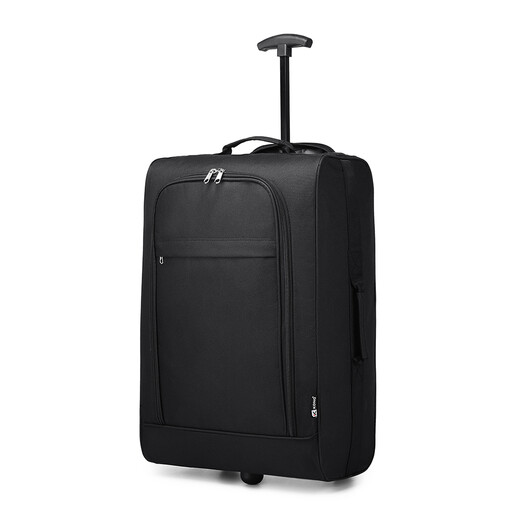
Why it suits this traveller: This soft-sided wheeled case combines a low stated weight with a compact size, making it a good fit for short trips, weekends away and overnight business stays.
The stated outer dimensions of 53 × 36 × 18 cm and weight of 1.46–1.7 kg are more specific than simply calling it “lightweight”. Be sure to check your airline’s rules.
Around 33 litres of capacity, a front pocket, a fully opening front panel and two wheels. Made from 600D polyester with a reinforced back.
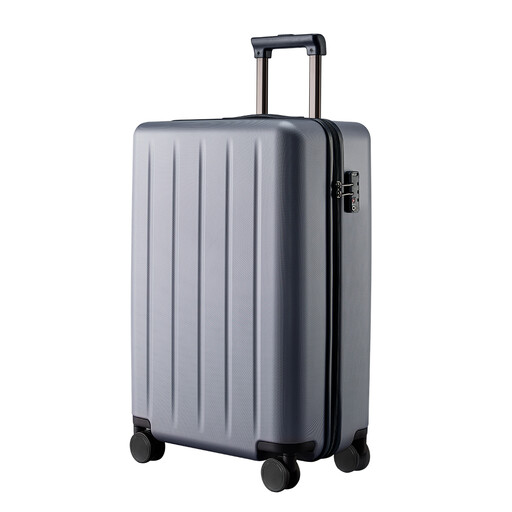
Why it suits this traveller: This hard-shell case is designed for travellers who value a rigid PC shell, an organised interior and four smooth-rolling wheels.
The product description gives specific dimensions, a capacity of 38 litres and a weight of 3 kg. This makes it easy to compare the model without relying on marketing claims alone.
PC hard shell, double spinner wheels, TSA lock, zipped pocket and X-shaped packing straps, according to the product information.
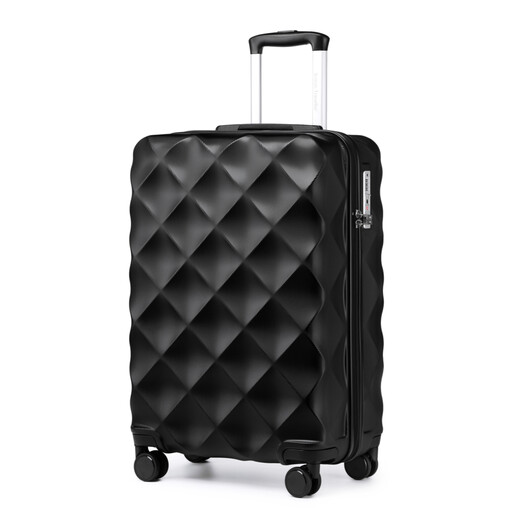
Why it suits this traveller: The ABS and PC construction, four 360° wheels and packing straps make this a good choice for frequent short flights and business trips.
The product description lists dimensions of 53 × 35 × 21 cm, a capacity of 34 litres and a weight of 2.27 kg. This makes it easy to compare the size, capacity and empty weight.
Four 360° TPE wheels, a three-digit TSA combination lock, an adjustable aluminium handle and an interior mesh pocket, according to the product information.
We’ve put together a complete, up-to-date list of products that meet these strict selection criteria and the applicable European safety regulations.
It depends on the airline, ticket type and baggage option. Many cabin cases are around 55 × 40 × 20 cm, but this isn’t a universal standard. Measure your case including the wheels and handles, and check the latest rules before you travel.
A hard-shell case has a rigid exterior and can be a good choice for fragile items. A soft cabin case is often lighter and has more accessible external pockets. A front pocket can be useful for a short business trip; if you have several connections, four spinner wheels may make the case easier to manoeuvre.
Its lifespan depends on the surfaces you use it on, how much you pack, the zips and wheels, and how you handle the case. Don’t overpack it, avoid dragging it over rough surfaces for long periods, and check the handle and wheels regularly. A product or statutory guarantee relates to your rights, but it won’t prevent normal wear and tear.
