
Vandaag of morgen in huis

Kwaliteit gegarandeerd

Welkomstaanbiedingen ontgrendelen: GRATIS bezorging | Tot 80% korting | Gratis 30 dagen JoyPlus-proefperiode
Download de app
A cabin suitcase may seem straightforward to choose, but small differences in size, wheels and fastening can make a big difference to how convenient it is during your journey. A suitcase that seems spacious at home may turn out to be too large at the gate. And a model with an attractive design is not automatically practical for everyday use.
That is why it is important to focus on verifiable product specifications. Below, you can find out which common pitfalls to watch out for, which sizes and features matter, and which type of cabin suitcase best suits the way you travel.
A 20-inch suitcase sounds compact, but the actual external dimensions can vary from one brand to another. Wheels, handles and protective edges all count towards the dimensions checked by airlines. Always check the complete measurements in centimetres.
A suitcase that is 52 cm high may be accepted by one airline but exceed another airline’s limit. Check your airline’s current baggage rules before departure.
A large capacity is useful, but a deep suitcase can be more difficult to fit into an overhead locker. An expandable or foldable suitcase may also exceed the permitted dimensions when expanded. Compare both the capacity in litres and the dimensions when in use.
A suitcase with 360-degree wheels is convenient in narrow aisles and busy stations because you can push the trolley upright. A two-wheeled model often rolls steadily behind you, but is less easy to manoeuvre sideways. Check the product description carefully: the title and technical details may sometimes contain different information.
For cabin luggage for air travel, these points are important:
The ProWorld Explorer’s dimensions of 34 x 22 x 52 cm make it a compact option, but always check whether these dimensions are permitted on your flight.
A lightweight suitcase gives you more room within the permitted baggage allowance. An ABS hard-shell suitcase is generally easy to clean and retains its shape. A combination of polycarbonate and protective textile can offer a different balance between flexibility, weight and protection.
Be aware of the difference between the suitcase’s own weight and the maximum permitted baggage weight. A 2.5 kg model leaves more room for personal belongings than a heavier trolley.
Check that the telescopic handle feels sturdy and that its height suits your stature. A handle that extends to 100 cm, as on the ProWorld Explorer, is practical for many users, but the right fit is a personal choice.
For security and ease of use, look for:
A lock does not prevent authorised authorities from opening a suitcase and is no substitute for storing valuable items carefully.

Why it suits this profile: This compact 18-inch cabin suitcase has a capacity of 30 litres and weighs 2.5 kg according to the product specifications. It is well suited to travellers looking for a single suitcase for a short break or city trip.
The product page lists precise external dimensions of 34 x 22 x 52 cm, so you can compare them directly with your airline’s requirements. The product information also specifies a combination lock and zip fastening.
ABS hard-shell suitcase, swivel wheels, internal compartments and a telescopic handle extending to 100 cm.

Why it suits this profile: This foldable suitcase is designed for travellers who want to combine generous capacity with flexible storage. The product specifications list a 46-litre capacity, 360-degree wheels and a TSA-approved lock.
The dimensions are listed separately for the folded and unfolded states. Pay particular attention to the in-use dimensions of 21.7 x 14.6 x 9.1 inches before booking.
PC panels with textile, an aluminium telescopic handle, 360-degree spinner wheels and a stated net weight of 6.83 lb.
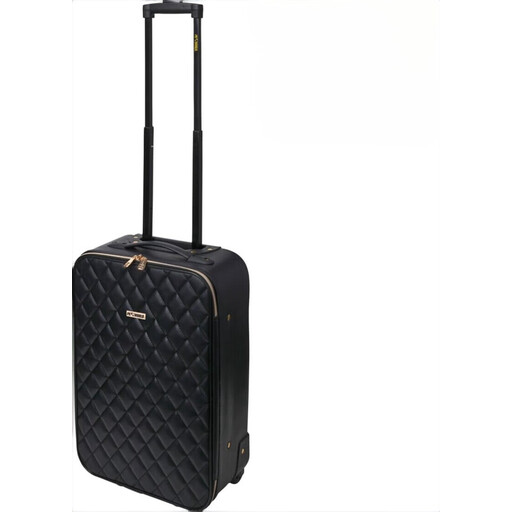
Why it suits this profile: This model is aimed at travellers who value a smart, business-like appearance and are looking for a simple trolley for short trips.
The product details list dimensions of 34 x 17.5 x 52 cm, a capacity of 28 litres and a weight of 2.26 kg. However, the description mentions two wheels; check this detail if you specifically want four spinner wheels.
28-litre capacity, telescopic handle, two wheels and a synthetic leather exterior with a quilted design.
We have put together a complete, up-to-date list of products that fully meet these strict selection criteria and the applicable European safety regulations.
A well-organised suitcase means you will not have to empty it completely at the security checkpoint. Pack liquids and electronics at the top, and use internal compartments for your passport, chargers and documents. Roll your clothes or use flat layers, depending on the shape of the main compartment.
Pack heavy shoes and compact accessories at the bottom, preferably close to the wheels. This keeps the centre of gravity lower when pulling the trolley behind you. A hard-shell suitcase protects its contents from external pressure, while a foldable model takes up less storage space after your trip.
This varies by airline, ticket type and route. There is no universal size for cabin baggage. Check the maximum height, width, depth and weight on your airline’s website. Compare these details with the suitcase’s full external dimensions, including the wheels and handles.
Often, yes, if you pack light. An 18-inch model with a capacity of around 30 litres can be suitable for a city break or a business trip lasting a few days. For thicker clothing, extra shoes or longer trips, 28 to 46 litres may be more practical, provided the external dimensions remain within the permitted limits.
Its lifespan depends on the material, usage, surfaces and maintenance. Clean the exterior with a damp cloth, keep dirt out of the zips, and check the wheels and handle regularly. For daily travel, the wheel construction, attachment points and fastening are more important than appearance alone. When sold to consumers in the EU, the products mentioned are covered by a minimum two-year statutory guarantee; additional rights may apply under the relevant national law.
