
Vandaag of morgen in huis

Kwaliteit gegarandeerd

Welkomstaanbiedingen ontgrendelen: GRATIS bezorging | Tot 80% korting | Gratis 30 dagen JoyPlus-proefperiode
Download de app
A cabin case for hand luggage might seem easy to choose at first. But problems often only arise at the airport. Your case may turn out to be too large for the permitted dimensions, its empty weight may take up a large share of your baggage allowance, or its wheels may be less practical than you expected.
For travellers from the Netherlands, these are the three main pitfalls to watch out for:
Don’t just measure the case body. The relevant measurement is usually the total external size of the cabin case, including wheels, handles and any protruding parts.
For example, a small Ryanair hand luggage case that goes under the seat needs to be considerably more compact than a trolley case you can put in the overhead locker with priority boarding. A bag measuring 40 × 20 × 25 cm is a different type of luggage from a 20-inch case that is around 55 cm high.
Keep these points in mind:
A lightweight cabin case is especially useful when your airline has a strict weight limit. A model weighing 1.46 to 1.7 kg, such as the soft-shell Kono, leaves more room for clothes on paper than a hard-shell case weighing 3.45 kg.
Capacity is often given in litres, but how practical the case is also depends on its layout:
Bear in mind that the stated capacity may only be a guide. The shape of the shell, the lining and the internal compartments all affect how much you can actually take.
A hard-shell cabin case made from ABS, ABS+PC or PC provides a sturdy outer shell around your belongings. PC is a commonly used material in the product descriptions for NINETYGO models. However, a hard shell isn’t automatically lighter or more practical.
A soft-shell cabin case, made from materials such as 600D polyester, can offer benefits such as:
Also consider the type of wheels. A case with spinner wheels has four swivel wheels and can be pushed in several directions. This is useful in a busy station or at Schiphol Airport. A two-wheeled hand luggage trolley often rolls steadily behind you and may weigh less, but you’ll need to tilt it more often when turning.
A case with a TSA lock can be opened with a special key during certain security checks. The lock won’t prevent someone from opening the case if they know the combination. So change the default code straight away and keep your new combination somewhere safe.
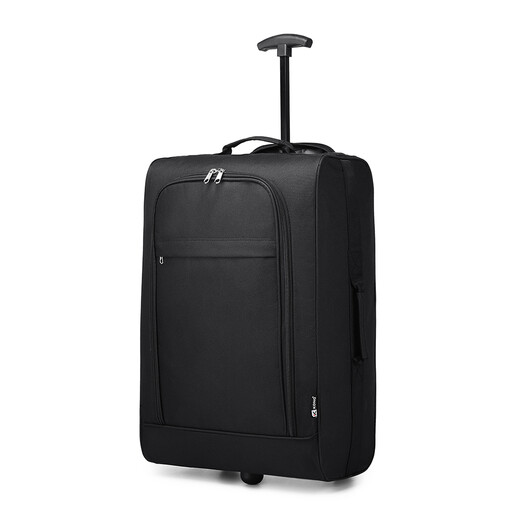
Why it suits this type of traveller: This model has a stated weight of 1.46–1.7 kg and a capacity of around 33 litres. Its size is designed for short trips and is compatible with various common hand luggage rules, but always check with your own airline.
The external dimensions, weight and capacity are clearly stated. That means you can compare this cabin case in advance, rather than relying on the word “lightweight”.
600D polyester, a fully opening front panel, a front pocket and two wheels. The handle can be tucked away.
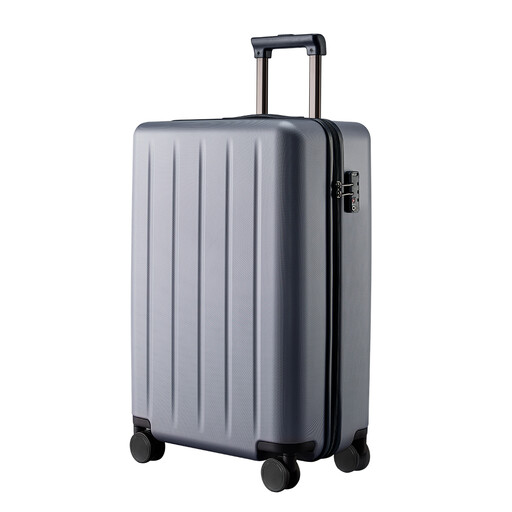
Why it suits this type of traveller: The product information lists a PC shell, a capacity of 38 litres, a weight of 3 kg, double spinner wheels and a TSA lock. It’s a good fit for travellers who value a structured interior and organised packing.
The relevant dimensions, approximately 56.5 × 37.5 × 23 cm, and the weight are both listed. So you won’t have to rely on the “20-inch” label as your only point of comparison.
PC hard shell, double spinner wheels, X-shaped packing straps, a zipped pocket and an integrated TSA combination lock.
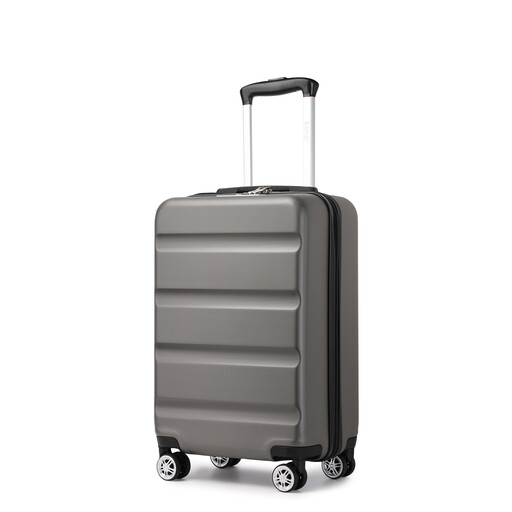
Why it suits this type of traveller: The stated cabin dimensions are 55 × 35 × 22 cm, with a capacity of around 37 litres and a weight of approximately 2.46–2.5 kg. This case is designed for short trips, business travel and flights with a range of possible airline requirements.
The dimensions, weight and capacity are all clearly stated. The product information also advises checking airline rules in advance, helping you avoid making assumptions about what “carry-on” means.
ABS+PC shell, four 360° spinner wheels, TSA combination lock, packing straps and a zipped divider with a mesh pocket.
We’ve put together a complete, up-to-date list of products that meet these strict selection criteria and comply with current European safety regulations.
No. A 20-inch case doesn’t have a fixed international external size. Check the height, width and depth of the model you’ve chosen and compare them with the conditions for your ticket. A bag that goes under the seat in front of you is often smaller than a trolley case intended for the overhead locker.
It depends on how you’ll use it. A hard-shell cabin case has a fixed shape and a structured interior. A soft-shell cabin case is often lighter and has front pockets that are easier to access. A front pocket can be useful for a laptop, documents and short business trips, while a hard shell may be preferable for fragile belongings.
Its lifespan depends on how heavily it’s used, the surfaces it’s rolled over, how much it’s packed with and how it’s handled in transit. Don’t overload the handle or wheels, avoid dragging the case over rough paving for long periods and clean the outside with a soft cloth. Before buying, also check the warranty conditions and the seller’s contact details.
