
Vandaag of morgen in huis

Kwaliteit gegarandeerd

Welkomstaanbiedingen ontgrendelen: GRATIS bezorging | Tot 80% korting | Gratis 30 dagen JoyPlus-proefperiode
Download de app
The wrong bag can make a cheap flight expensive after all. Ryanair and other budget airlines are particularly strict when checking cabin baggage size. A bag that looks roomy enough on paper may not fit under the seat at the gate. Weight, shape and how you carry it matter too.
Look out for these common pitfalls:
Rules vary by airline and ticket type, so check your airline’s current baggage policy before you travel. If you’re looking for Ryanair hand luggage, these sizes are particularly relevant:
Ideally, measure a soft bag after filling it with the things you’re actually taking. A flexible weekend bag may adapt slightly, but don’t overfill it to the point where it no longer fits in the baggage sizer.
Don’t just look at the number of litres. A 20-litre bag with a wide opening and straight sides may be more practical than a larger bag with lots of wasted space. Also check whether the stated dimensions include the handles and attachment strap.
A 14-litre bag, such as 35x20x20 cm cabin baggage, is best suited to documents, electronics, an extra shirt and toiletries. For a short trip, 20 litres can offer more flexibility.
Every gram the bag weighs reduces how much you can carry in clothes and other belongings. A model weighing 0.3 to 0.5 kg is a good choice if you want to travel light. A hard-shell trolley often offers more structure, but can weigh 2 to 3 kg before you’ve packed anything.
A weekend bag with a shoulder strap is practical on stairs, on the train and in busy airports. A rear strap that slides over a trolley’s telescopic handle means you won’t have to carry the bag by hand all the time.
Also look for:
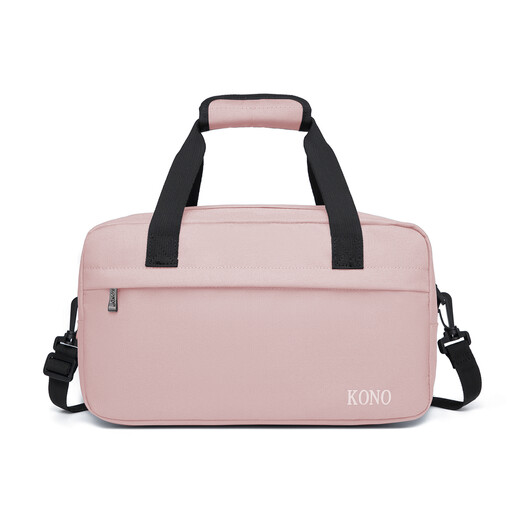
Why it suits this type of traveller: This compact bag is ideal for travellers who fly with minimal luggage and are looking for a small, affordable bag to stow under the seat. It has a capacity of around 14 litres and a stated weight of 0.3 kg.
Its fixed dimensions make it easier to check in advance whether it meets the under-seat size limit. Always check the current conditions of your ticket.
14-litre capacity, adjustable shoulder strap, front pocket and trolley attachment strap.
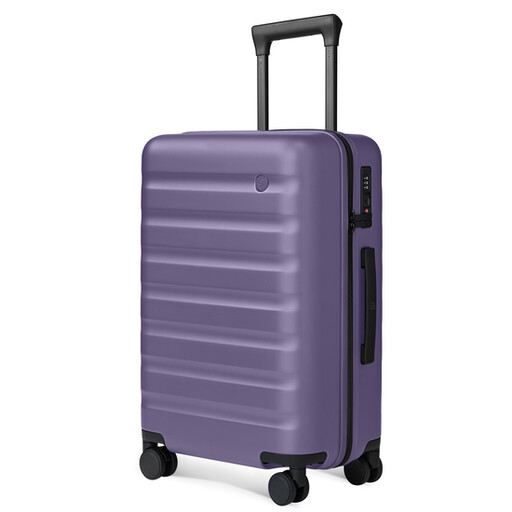
Why it suits this type of traveller: If you prefer a hard-shell cabin case, this one offers an organised interior with compression straps, a TSA lock and double wheels. It measures 56 x 38,5 x 23 cm, so check that it’s within your ticket’s allowance.
The hard shell and internal compression help stop the bag from bulging. Its size is not the same as Ryanair’s free under-seat allowance.
PC hard shell, TSA lock, 360° wheels and an interior with compression straps.
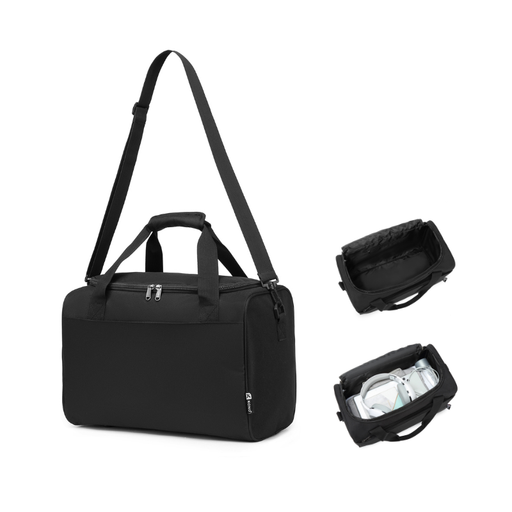
Why it suits this type of traveller: This 20-litre bag is well suited to short business trips, commuting and weekend breaks where you need to move quickly between the train, airport and hotel.
The bag has a front pocket, an internal pocket and a trolley attachment. According to the product information, the material is water-resistant, but it isn’t designed to provide waterproof protection.
20-litre capacity, stated weight of around 0.48 kg, three carrying options and protective feet.
We’ve put together a complete, up-to-date list of products that meet these strict selection criteria and the applicable European safety regulations.
It depends on the current ticket conditions. A bag measuring 40 x 20 x 25 cm is often offered as an option for free small hand luggage. A 35 x 20 x 20 cm model is more compact. Check Ryanair’s website or your booking information before you travel, as the rules and included baggage allowance can change.
A soft bag is usually lighter and easier to slide under a seat when it’s only partly full. A cabin trolley offers more structure and rolls easily over long distances, but it’s heavier and its wheels and handles can take up more space. Choose a soft bag for short trips and maximum flexibility; choose a trolley if easy rolling and protection matter more.
How long it lasts depends on how often you travel, how much you pack and how the bag is handled. Check the zips, stitching, handles and wheels. Clean fabric with a damp cloth and don’t use harsh cleaning products. Store the bag somewhere dry and avoid leaving it in direct sunlight for long periods. A bag with reinforced seams and a suitable load can remain practical for longer with everyday use than one that’s constantly overfilled.
