
Vandaag of morgen in huis

Kwaliteit gegarandeerd

Welkomstaanbiedingen ontgrendelen: GRATIS bezorging | Tot 80% korting | Gratis 30 dagen JoyPlus-proefperiode
Download de app
A cabin bag may seem easy to choose, but small details can make all the difference to how comfortable it is to use. Will it fit under the seat? Can you carry it comfortably? And will there still be room for documents, electronics and an extra layer after you’ve packed?
For travellers, students, commuters and business travellers, these three common pitfalls are particularly important:
First, check what size you need. If you’re looking for an underseat cabin bag or a Ryanair cabin bag, you’ll often come across 40x20x25 cm cabin bag searches. This compact size can fit under the seat on airlines that allow it. Always check your airline’s current rules, including the maximum permitted weight.
A bag measuring 55 x 35 x 25 cm offers considerably more capacity, but that doesn’t automatically make it suitable as a free underseat bag. This size may be allowed under certain cabin baggage rules, but requirements vary by airline and ticket type.
A lightweight travel bag is useful when your airline has a strict weight limit. Consider both the empty bag’s weight and how much you’ll pack. On paper, a bag weighing 0.5 kg leaves more of your allowance for your belongings than a heavier model.
Also think about how you’ll carry the bag:
Oxford fabric and polyester are commonly used for travel bags. The product descriptions for the Kono models state that the outer material is water-resistant. This can help protect against light rain, splashes and spilled drinks, but always check exactly what the manufacturer promises.
A practical layout usually includes:
For a cabin bag, also check the zips, seams and shoulder strap attachment points. These parts can come under considerable strain with frequent use.
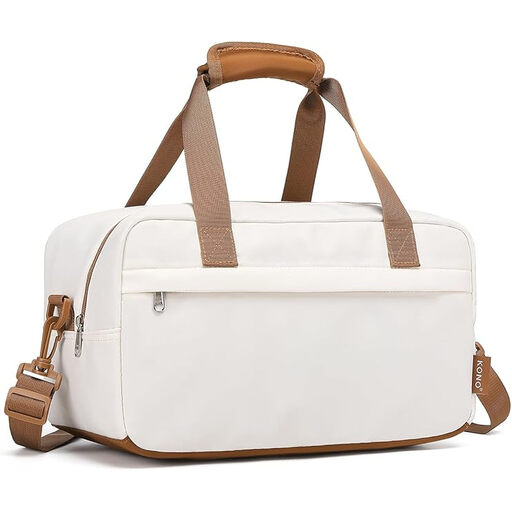
Why it suits this profile: This compact bag is designed for travellers looking for a small underseat cabin bag for short flights, weekends away or everyday use.
The stated dimensions of 40 x 20 x 25 cm make it easy to compare with underseat baggage rules. Always check your airline’s requirements.
Around 20 litres of capacity, a weight of 0.5 kg, a shoulder strap, a trolley sleeve and several pockets.
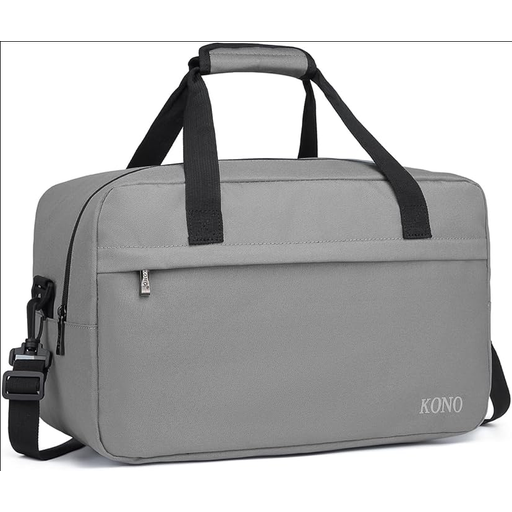
Why it suits this profile: A good fit for travellers who want to pack more clothing or equipment for a weekend away, business trip or overnight stay.
The stated dimensions and capacity are clearly listed, so you can compare them with your airline’s requirements before you travel.
Around 48 litres of capacity, Oxford outer fabric, a mesh pocket, a front pocket and a trolley sleeve. The empty bag weighs around 0.7 kg.
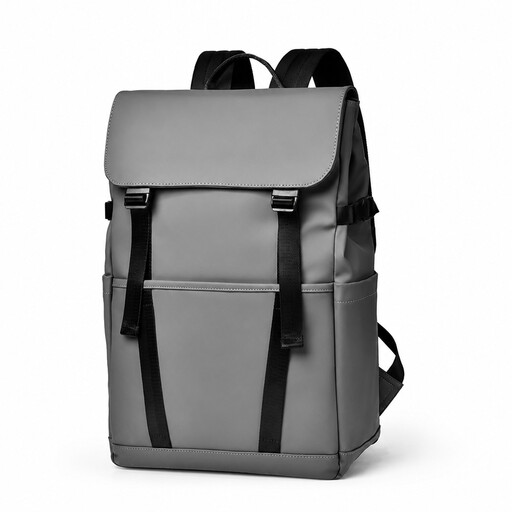
Why it suits this profile: A practical choice for students, commuters and business travellers who need a laptop backpack for school, the office and commuting.
The product title mentions several pockets, water-resistant material and a luggage strap. Before buying, check the exact laptop size and internal dimensions.
Designed for laptops up to 15.6 inches according to the product name, with several compartments and a strap for attaching it to your luggage.
We’ve put together a complete, up-to-date list of products that meet these strict selection criteria and the applicable European safety regulations.
It depends on the airline, ticket type and type of baggage. If you’re looking for a small bag to go under the seat, 40 x 20 x 25 cm is a common size, but always check the official baggage rules before you travel. Measure the outside of the bag, including any protruding parts and handles.
Pack heavier items at the bottom and use small pockets for documents, cables and keys. Make sure you carry liquids in line with airport security rules. A bag with a front pocket and trolley sleeve can save time when changing flights and going through security.
Its lifespan depends on how much you pack, how it’s transported and how well you look after it. Avoid overloading the zips, lift a heavy bag by its handles rather than its shoulder strap, and clean water-resistant fabric with a damp cloth. Don’t use harsh cleaning products, as they may damage the material.
