
Cooking one large batch of soup
You want to make as much of the soup for your community meal as possible in one go, so you’re comparing portions and usable capacity.


First, work out how much soup you want to serve at once, then compare the usable capacity and filling instructions—not just the number of litres on the box. A large slow cooker may suit one generous batch, while a multicooker could be a good option if you also want to brown ingredients or cook more quickly. For safe serving, don’t rely on the keep-warm setting alone: measure the soup if your situation requires it.
You want to make as much of the soup for your community meal as possible in one go, so you’re comparing portions and usable capacity.
You want to handle the soup responsibly between cooking and serving. A keep-warm button won’t tell you the soup’s actual temperature.
You’re comparing slow cooking with browning and pressure cooking because you don’t always have the same amount of preparation time for each gathering.
First, compare the amount of soup that will fit in one go according to the filling instructions. Then consider how you’ll serve it and which features suit your schedule. A stated number of portions doesn’t guarantee the yield for your recipe.
| What to consider | What should you check? | Who is this important for? |
|---|---|---|
| Quantity per batch | Compare the volume of your recipe with the model’s usable capacity and filling instructions. | If I want to make soup for a group in one go, I need to know how much will actually fit in the pot. Around 40% of consumers are primarily concerned with the quantity they can make per batch. |
| Temperature when serving | Check whether the model has a keep-warm function, and make sure you have a way to measure the soup itself. | If the soup needs to stand for a while before everyone has served themselves, I don’t want to rely on a setting alone. Around 30% of consumers are primarily concerned with serving food responsibly. |
| Cooking time and functions | Decide whether slow cooking is enough or whether browning or pressure cooking would also be useful. | If the time I have to prepare varies from one gathering to the next, I want to be able to choose between the available cooking methods. Around 20% of consumers prioritise flexibility in their schedule. |
| Controls and cleaning | Check whether it has a timer and compare the cleaning instructions for its parts. | If I want to plan the cooking easily and clean the pot quickly afterwards, the controls and maintenance are crucial. Around 10% of consumers put these points first. |
Tefal lists the CY505E as having a 6 L pot capacity and a usable capacity of 3.8 L. The usable capacity is therefore more relevant when planning a batch of soup.
Plan according to the volume of your recipe and the filling instructions for the exact model.
According to Russell Hobbs, the inner pot of the Russell Hobbs MaxiCook 22750-56 is suitable for hob use. Instant Pot Netherlands, on the other hand, states that the Superior’s inner pot must not be used on a hob or induction hob.
Check the instructions for the specific inner pot before browning ingredients.
A keep-warm function won’t tell you the temperature of the soup itself. The NVWA’s checklist for food businesses says hot food should be kept above 60 °C and that a working digital probe thermometer should be available.
Establish which rules apply to your activity, and measure the soup if necessary.
Checking the temperature takes time and may require a separate food thermometer.
Instant Pot Netherlands describes the Superior 4-in-1 as a 7.1 L model with slow-cook, steam, sauté and keep-warm functions.
Russell Hobbs presents the MaxiCook 22750-56 as a 6 L slow cooker with a digital timer and an inner pot that, according to the manufacturer, can be used on the hob.
Tristar describes the VS-3915 as a compact 3.5 L slow cooker for smaller batches.
Tefal describes the CY505E as a multicooker with slow-cook and pressure-cook functions.
These Joybuy products are suitable for slow cooking for a shared meal; some listings are for multicookers or pressure cookers. Check the features and filling instructions for each model to make sure they meet your needs.
 No image available
An option to compare if you want to make a larger batch and are looking for features beyond slow cooking.
The product title lists 7.1 L and 4-in-1. Check the filling instructions; according to Instant Pot Netherlands, the inner pot isn’t suitable for use on a hob or induction hob.
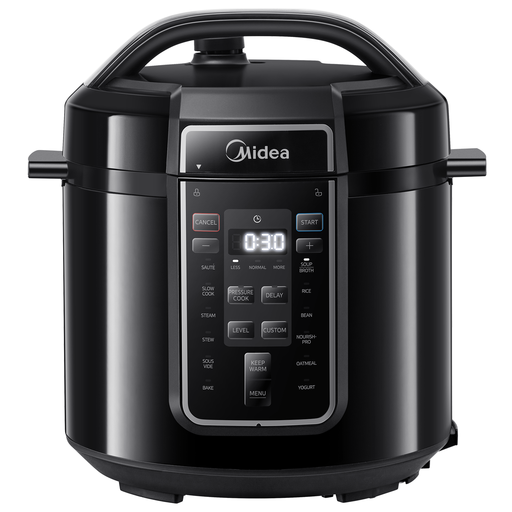 No image available
An option if you’re considering a pressure cooker but want to check first that it’s suitable for the soup you plan to make.
The product title lists 6 L, 1000 W and 14 cooking functions. Check the product information to see whether the specific slow-cook function and filling instructions suit your recipe.
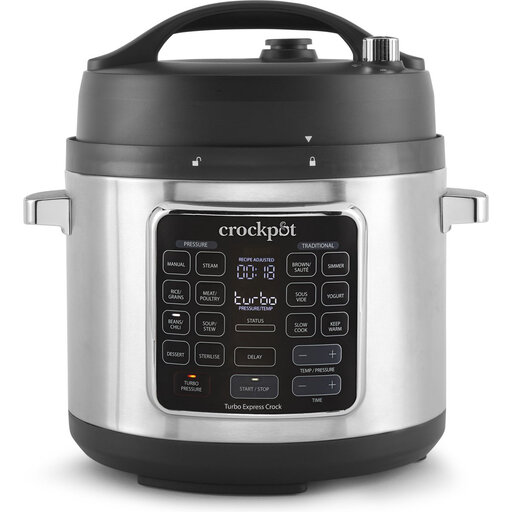 No image available
A slow cooker to compare if you’re looking for a larger pot with several settings.
The product title lists 5.6 L and three settings. Check the product information and manual for the exact features and filling limits of this variant.
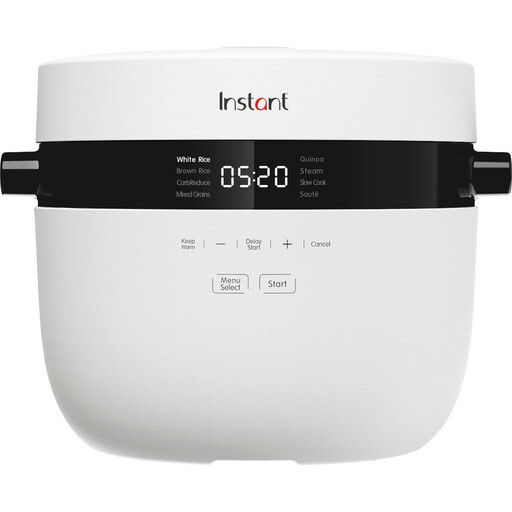 No image available
An option to compare if you’re looking for other cooking functions as well as slow cooking.
The product title lists 5 L and rice and grain cooking. Check the filling instructions and whether the listed functions suit the amount of soup you want to make.
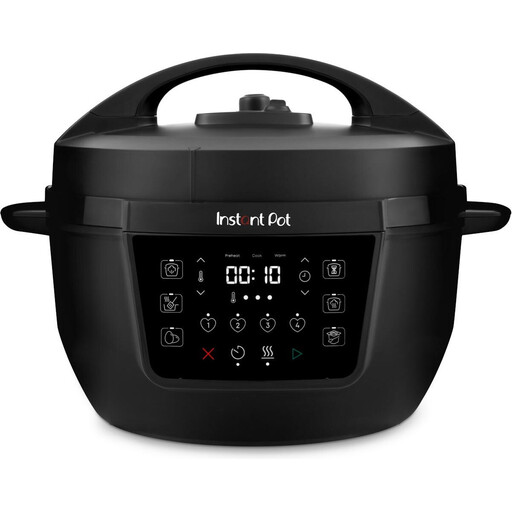 No image available
An option to compare if you’re looking for a larger pressure cooker and are also considering slow cooking.
The product title lists 7.1 L and a stainless steel inner pot. Check the slow-cook function and fill markings for your soup recipe.
No. Decide on your own portion size and check the model’s filling instructions. Tefal lists the CY505E as having a 6 L pot capacity and a usable capacity of 3.8 L.
Don’t rely on the setting alone: measure the soup if your activity requires it. The NVWA’s checklist for food businesses says hot food should be kept above 60 °C and that a digital probe thermometer should be available. These business requirements don’t automatically apply to every private situation.
The Netherlands Nutrition Centre advises keeping leftovers covered in the fridge at 4 °C for no more than two days, and not leaving perishable food out of the fridge for more than two hours. Divide a large quantity into smaller portions to help it cool; freeze the soup if you want to keep it for longer.
That depends on the activity. According to the NVWA, anyone who prepares and sells food several times a year must have a food safety plan. First establish whether your meal involves selling food and how often it takes place, then decide which rules apply.
According to the NVWA, anyone offering unwrapped food to consumers must provide information about the allergens it contains. Check the ingredients in the recipe you’re actually using, including stock and any additions, and make sure the information is available wherever the food is offered.