
Host making one large pot of soup
You want to make enough soup in one go, so you compare the usable capacity with the maximum fill limit for pressure cooking.


Start by checking how much soup fits within the fill limit for the specific model: the stated pot capacity isn’t automatically the amount of soup you can cook under pressure. Then compare the pressure-cooking function, how pressure is released and how easy the cooker is to clean. A larger pot or extra functions are only useful if they suit your portions and the way you plan to use it.
You want to make enough soup in one go, so you compare the usable capacity with the maximum fill limit for pressure cooking.
While preparing other dishes, you want to know how pressure is released and how to handle the settings, lid and hot inner pot. Always follow the manual for your chosen model.
You prefer to make soup in advance and want to know about reheating and cleaning. For leftovers, cooling them quickly and reheating them thoroughly are separate considerations, as advised by the Netherlands Nutrition Centre.
For a large pot of cabbage soup, usable capacity is the first thing to consider. Pressure release, cooking ahead and extra functions then help you decide whether the controls suit the way you cook.
| What to consider | What should you check? | Who should pay extra attention? |
|---|---|---|
| Usable amount of soup | Compare the amount you want to make with the usable capacity and the model-specific fill limit for the recipe. | If I’m cooking for everyone in one go, I want to know how much soup fits within the fill limit. Around 42% of consumers focus mainly on the usable amount per cooking cycle. |
| Pressure release and controls | Check whether pressure is released automatically or using a switch, and read the manual for safe operation. | When I’m preparing other dishes at the same time, I want clear controls and to know how the hot steam is released. Around 25% of consumers give this the highest priority. |
| Cooking ahead and cleaning | Check whether the model has a reheating function and which parts can be cleaned, according to the manual. | If I make the soup in advance, I want to know how to reheat it and how much effort cleaning will take. Around 17% of consumers focus mainly on preparing ahead, reheating and clearing up. |
| Pressure-cooking function and extra features | Check the product information for the exact model to confirm it can cook under pressure. Choose extra functions only if you’ll use them. | When I’m looking for a pressure cooker, I don’t want to rely on the word ‘multicooker’ alone. Around 16% of consumers give the pressure-cooking function and useful features the highest priority. |
Tefal states that the Tefal CY505E10 has a 6 l bowl capacity and a usable capacity of 3.8 l. Planning portions based on the stated capacity could therefore give you the wrong idea.
Work out how much you need, then compare it with the usable capacity and fill limit for the exact model.
A smaller usable capacity may mean cooking in two batches or choosing a larger cooker.
The name ‘multicooker’ doesn’t tell you by itself whether an appliance has a pressure-cooking function. Without this function, it isn’t suitable for the pressure-cooking method you need.
Check the product information for the exact model to confirm it has a pressure-cooking function.
An extended warranty is separate from your statutory rights if a product is faulty. The Netherlands government says that the retailer is your point of contact if there’s a problem with the product.
Check what an extended warranty covers, and report any fault to the retailer.
An extended warranty may cost extra without giving you any additional rights.
Philips lists electric multicookers with a pressure-cooking function in models with stated capacities of 6 l and 8 l.
The product information describes the Classic XL as a multicooker with a stated capacity of 7.1 l and a pressure-cooking function.
The All-in-One CY505E10 is an electric multicooker with a pressure-cooking function. Tefal lists a 6 l bowl capacity and a usable capacity of 3.8 l.
These electric pressure cookers are suitable for making soup under pressure, with models for larger portions and for smaller portions or cooking in batches.
 No image available
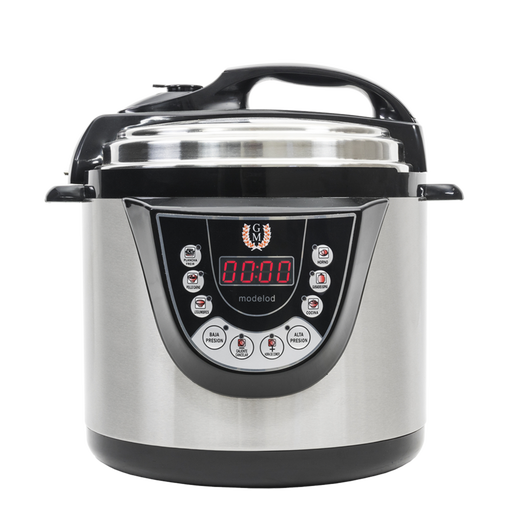
An option if you want to make a larger batch of soup under pressure.
The product information lists a 6 l bowl capacity, a usable capacity of 5 l and two pressure levels.
 No image available
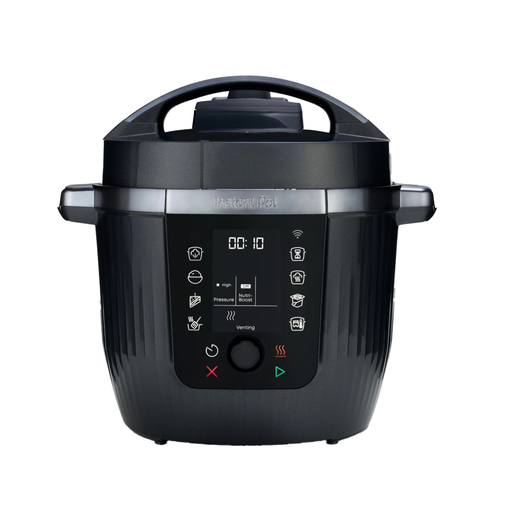
Ideal if you want to make soup under pressure and use a keep-warm function as well.
The product information lists a capacity of 5.7 l, app control and sous vide.
Don’t fill the inner pot above the MAX mark, and take care when releasing hot steam.
 No image available
An option if you’re looking for an electric pressure cooker with a keep-warm function.
The product information lists a 6 l capacity, 1000 W, a stainless-steel inner pot and 14 cooking functions.
Don’t fill the inner pot above the MAX mark, and take care when releasing hot steam.
 No image available
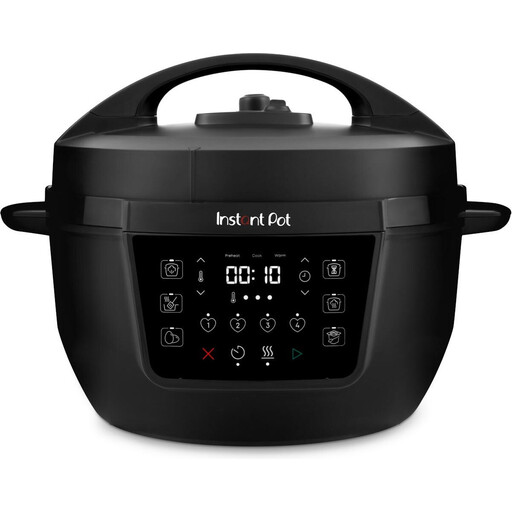
The stated capacity of 7.1 l may appeal if you’re looking for a larger pot to make soup for a group.
The product information lists a stainless-steel inner pot and a sauté function. Check the usable capacity and fill limit for your recipe.
 No image available
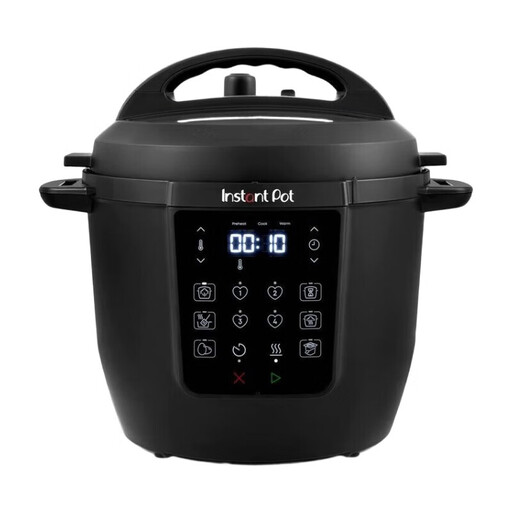
A 5.7 l electric pressure cooker for anyone considering a smaller batch or cooking in several rounds.
The product information lists features including steaming and keeping food warm. Don’t open the lid while the float valve is raised, and don’t fill above the MAX mark.
Don’t assume you can. Tefal lists the CY505E10 as having a 6 l bowl capacity and a usable capacity of 3.8 l. For other models, follow the fill marks and manual for that appliance; the permitted amount may also depend on the ingredients.
Follow the manual for your chosen model. The Instant Pot manual says to place the appliance on a stable, level surface and warns against using it on a hob; this advice applies to that appliance.
The Netherlands Nutrition Centre advises covering leftovers and putting them in the fridge or freezer within 2 hours of cooking. When reheating soup, heat it through until piping hot and stir it well as it warms.
No. The Netherlands government says there is no fixed statutory warranty period in the Netherlands; what you can expect depends on the product. If a product is faulty, the retailer is your point of contact for a solution.
If an appliance falls within the voltage range covered by Directive 2014/35/EU, the applicable EU safety requirements apply; CE marking is required where the relevant EU rules stipulate it. Your Europe explains that CE is not an independent quality mark and, by itself, does not confirm that a specific model on sale has been checked.