
Vandaag of morgen in huis

Kwaliteit gegarandeerd

Welkomstaanbiedingen ontgrendelen: GRATIS bezorging | Tot 80% korting | Gratis 30 dagen JoyPlus-proefperiode
Download de app
A bag of nuts and dried fruit may seem straightforward to choose. Yet products can differ significantly in ingredients, sugar content, salt, serving size and packaging. A large bag is not automatically better value if its contents quickly lose their freshness. Likewise, packaging that uses words such as “natural” or “healthy” does not always tell you how much sugar, oil or salt has been added.
If you are looking for dried fruit, a nut mix or international snacks, it is worth checking the label first. With these practical checkpoints, you can avoid a disappointing purchase and choose a snack for home, the office, on the go or to share.
Dried mango, strawberries, cranberries and plums naturally contain sugars. Some products also contain sugar, syrup or oil. For example, the ingredients list for MUSHAN BASE Dried Strawberry Slices consists of dried strawberries and sugar. The nutritional information lists 57.4 grams of sugar per 100 grams.
The g'woon Cashew Nut Cranberry Mix also consists of 50% cashews and 50% sweetened dried cranberries. Therefore, always check:
A mix shown in an appealing photograph may contain raisins, sweetened cranberries, banana chips or flavourings in addition to nuts. The composition of Cranberry mix unsalted is clearly divided: 30% cranberries, 25% cashews, 25% almonds and 20% walnuts. This makes comparison easier.
Also check the allergens. Cashews, pecans, almonds, walnuts and hazelnuts are among the allergens that must be declared under EU regulations. A product may also contain traces of peanuts or other nuts.
A 340-gram bag or a snack pack weighing more than one kilogram can be convenient for several people, but freshness declines after opening. Nuts may lose their crunch, while dried fruit can stick together.
Choose a large format if you regularly share snacks or use multiple servings. For snacks on the go, small bags or individually packaged portions are often easier to manage.
Within the EU, ingredients must be listed in descending order by weight. If sugar appears near the beginning, it makes up a significant proportion of the product. With international products, it is especially important to read the local product information and allergen warnings.
Origin may also be relevant to your choice. Some Chinese snacks, such as candied hawthorn or white plum, are based on traditional flavour combinations. Turkish snacks, for example, include salted sunflower or pumpkin seeds. This says nothing about nutritional value, but it does provide context about flavour and suitable occasions.
Always compare products per 100 grams, rather than looking only at the package. According to the product information, nuts often contain relatively high levels of fat and energy. This is characteristic of nuts, but it makes portion size important. Salted seeds may also contain considerably more salt than their unsalted counterparts.
Examples from the product information:
Check the current packaging, as recipes and labelling may change.
Resealable packaging helps protect against moisture, but it does not replace proper storage. Store nuts and dried fruit according to the label in a cool, dry and dark place. Close the package securely after every use. Products with multiple sachets, such as a snack box, are a practical choice if you want to divide portions in advance.
Also check whether the package contains a desiccant. The product information for ChaCha pecans, for example, states that the sachet containing the desiccant must not be eaten.
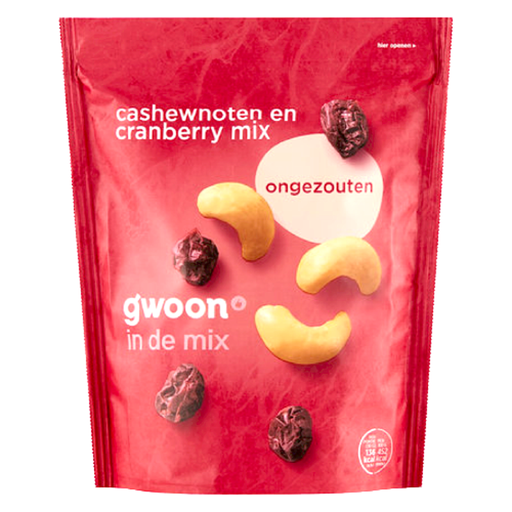
Why it fits: An accessible combination for anyone looking to try a mix of nuts and dried fruit, whether at the office or with a cup of coffee.
The ratio is clearly stated: 50% cashews and 50% sweetened cranberries. That way, you know exactly what you are buying.
200 grams, 0 grams of salt per 100 grams, and suitable as a snack or ingredient in recipes.
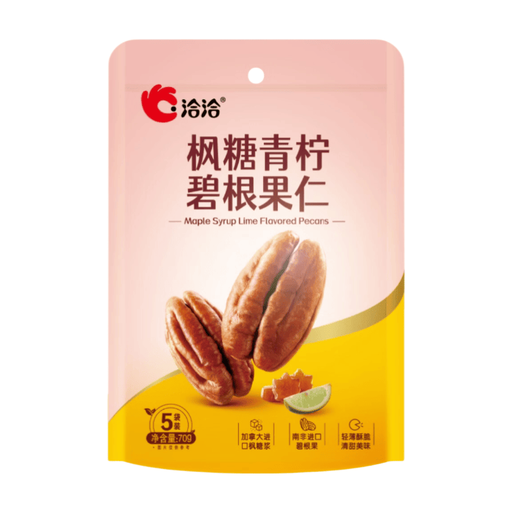
Why it fits: For anyone looking for a crunchy snack with a sweet-and-sour flavour instead of a neutral nut mix.
The pecan content is listed as 80%. The flavourings and allergens are also specified.
70 grams, roasted without frying according to the product description, and individually packaged.
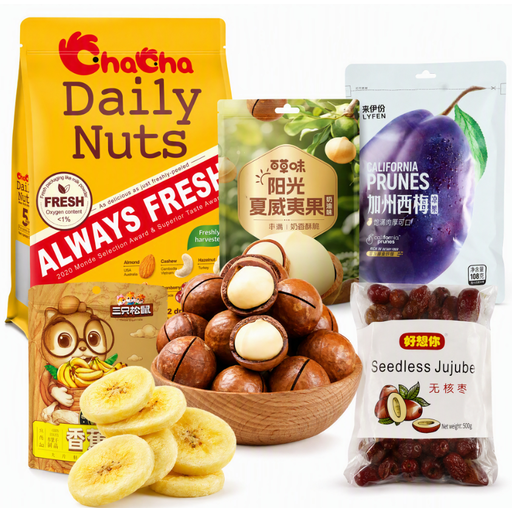
Why it fits: A generous selection for families, office spaces, entertaining or a snack assortment for multiple occasions.
The bundle lists its five components and the individual ingredients, including banana chips, walnuts, cashews and Californian plums.
Five different snacks with a total weight of 1.073 kg. Do pay attention to the allergens and storage guidance for each package.
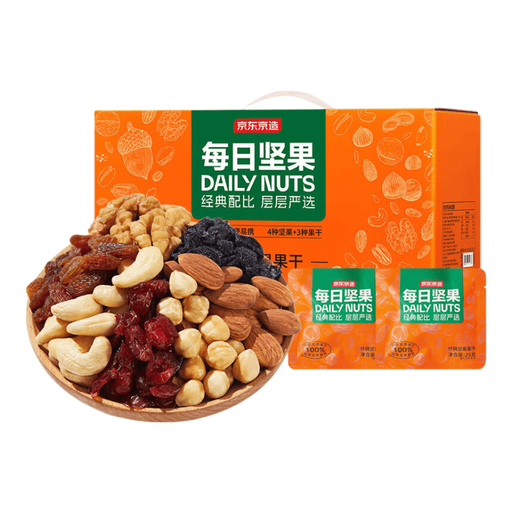
Why it fits: Convenient for workdays, travel and gym bags, thanks to 30 individual 25-gram portions.
The portion size is fixed, so you do not have to scoop from a large bag each time. The ingredients and allergens are listed separately.
30 × 25 grams, including walnuts, raisins, cranberries, almonds, cashews and hazelnuts.
Explore a current selection of nuts, seeds, dried fruit and international snacks, with information on ingredients, format and suitable occasions.
That depends on your individual diet and portion size. Pay particular attention to the nutritional information per 100 grams, as well as added sugar and salt. A measured portion makes comparison and planning easier. Products carrying a nutrition claim should be assessed against the complete ingredients list; a brand claim is not a guarantee of any particular effect.
Follow the storage instructions on the packaging. In most cases, this means sealing the package securely and storing it in a cool, dry place away from direct sunlight. Ideally, consume opened products promptly. With a large snack assortment, it may be practical to divide the contents into small, airtight containers.
Compare the price per 100 grams and consider how many of the different products you will actually use. A large assortment can offer good value for several people, while individual bags provide greater choice. For the office, travel or gifting, a snack box with fixed portions can be especially convenient. Always check the use-by dates and allergen information for each individual product.
