
Vandaag of morgen in huis

Kwaliteit gegarandeerd

Welkomstaanbiedingen ontgrendelen: GRATIS bezorging | Tot 80% korting | Gratis 30 dagen JoyPlus-proefperiode
Download de app
A food processor can mix batter, knead dough, chop ingredients or prepare smoothies. However, not every appliance is designed for the same tasks. A compact food processor is convenient for vegetables, while a stand mixer truly excels at baking and dough preparation. Focusing solely on wattage or the number of accessories can therefore easily lead to the wrong purchase.
This buying guide helps home bakers, keen cooks and families compare specifications in practical terms. You will learn which features matter, which marketing claims deserve closer scrutiny and which models suit different usage scenarios.
A high wattage may sound appealing, but it does not tell the whole story about performance. Some brands quote peak power, while the rated power is lower. For example, the Monsga SM100 lists 1000 watts of peak power, with a stated rated power of 600 watts. Always compare like-for-like power figures.
When choosing a food processor for dough, also consider:
According to AUCMA’s product description, the ASM1559 features a 450-watt copper motor, a maximum continuous operating time of six minutes and overheating protection. These are more concrete specifications than a marketing phrase such as “powerful motor”.
A 6-litre mixing bowl cannot always be filled to the rim. The Monsga SM100, for example, lists a maximum capacity of 6 litres but recommends a usable capacity of 5 litres. That difference matters when preparing bread dough, cake batter or large batches of cookie dough.
For a household with several people, 5 to 6 litres is often practical, but a larger bowl also takes up more space. Measure the available worktop area beforehand and check that the tilt head can open fully.
A food processor with numerous accessories may appear versatile, but check each component for:
The Kenwood MultiPro Go includes a chopping blade, reversible slicing and grating disc, and dishwasher-safe parts. This offers a different set of capabilities from a stand mixer with a whisk, beater and dough hook.
A stand mixer or kitchen mixer with a bowl is primarily designed for mixing, whisking and kneading. This type is ideal for anyone who regularly bakes cakes, bread, pizza or cookies. A hand mixer is smaller and generally more affordable, but you need to hold the appliance yourself.
A food processor is better suited to chopping, grating and slicing. A blender is intended for liquid preparations such as smoothies, sauces and soups. A multifunctional food processor may combine several functions, but it also requires more storage space and cleaning.
Multiple speed settings are useful when you want to mix gently before gradually whipping at a controlled speed. A pulse function is convenient for short, powerful bursts, such as chopping or briefly combining ingredients. Do not look only at the number of settings; also consider the lowest speed and how the controls are operated.
The Braun MultiMix 3 HM3105 offers speeds ranging from low to turbo and is designed for fingertip control. The Russell Hobbs Desire hand mixer provides 5 speeds and a pulse function. Both models are suitable for smaller preparations where a full-size food processor is unnecessary.
A stainless-steel bowl is durable, easy to wipe clean and suitable for everyday use. Also check that the machine remains firmly in place. Non-slip feet or suction cups help prevent movement, but always position the appliance on a flat, dry work surface.
For heavy mixtures, pay attention to the recommended quantity. When working with yeast dough, use a low to medium speed and follow the rest periods specified in the manual. This helps reduce strain on the motor.
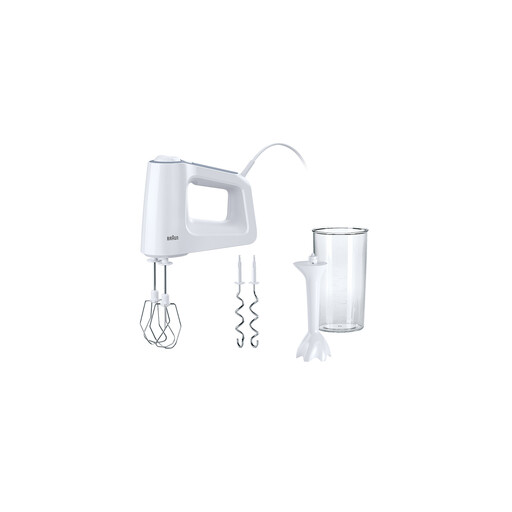
Why it suits this profile: A hand mixer takes up very little space and is well suited to small quantities of batter, whipped cream or mashed potatoes.
You are not paying for unused accessories or a large bowl. The product description highlights an ergonomic grip, multiple speeds and a cable outlet that stays out of the way.
Compact design, low to turbo settings and a ComfortClick connection for accessories.
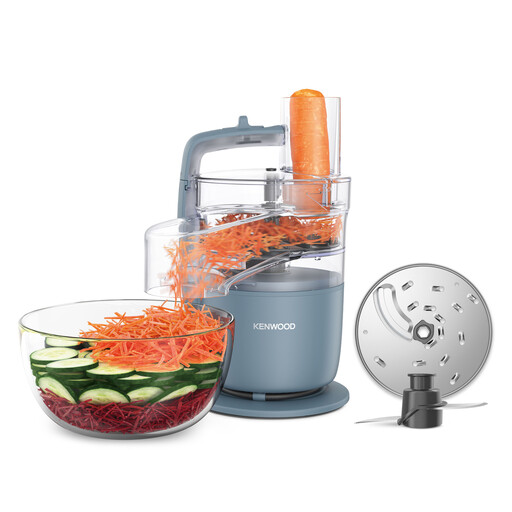
Why it suits this profile: Measuring 23.9 × 15.8 × 29.7 cm and featuring a 1.3-litre bowl, this model is well suited to limited worktop space.
Its functions are clearly defined: chopping, slicing, grating and mixing. This helps prevent buying a food processor when what you really need is an appliance for kneading bread dough.
650 watts, one speed with pulse function and parts that are dishwasher-safe according to the product description.

Why it suits this profile: The 6-litre stainless-steel bowl and three included accessories are designed for mixing batter, whisking and kneading.
The product information lists more than just the power rating: it also specifies six speeds, a pulse function, a maximum operating time and overheating protection.
Tilt head, splash guard, dough hook, whisk and beater; the stated noise level ranges from 68 to 72 dB.
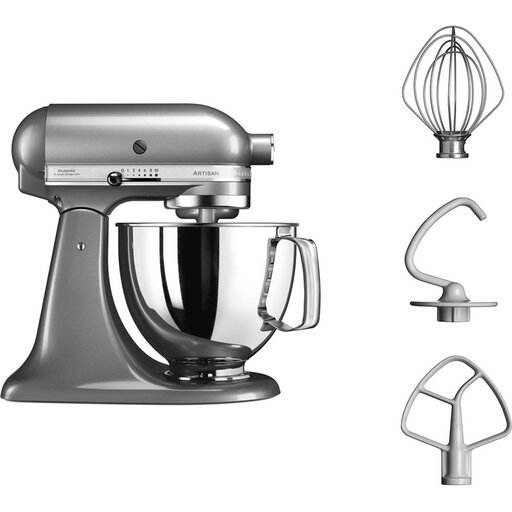
Why it suits this profile: A robust metal housing, 4.8-litre bowl and 10 speeds make it a strong choice for users who value an established product line with expandable accessories.
The product information clearly states that this 300-watt model is not intended for heavy dough. That makes it a more transparent choice for frequent bread bakers.
10 speeds, tilt head and included bowl, whisk, dough hook and flat beater.
Browse a current selection of multifunctional kitchen mixers and compare capacity, speeds, accessories and price to find the right fit for your needs.
Check the following points before completing your purchase:
That depends on the model, dough hook, bowl and permitted quantity. Use a low to medium speed and follow the maximum operating time stated in the manual. A hand mixer is generally less suitable for heavy or large batches of dough.
For smaller households, 3 to 4 litres may be sufficient. If you regularly make bread, cakes or multiple batches of cookies, consider a 5- or 6-litre bowl. Take usable capacity and the appliance’s footprint into account.
Consumption depends on the rated power and operating time. A 600-watt appliance running for ten minutes uses less energy than a 1,000-watt model operated for an extended period. Use the appropriate speed and observe rest periods to avoid placing unnecessary strain on the motor.
