
Vandaag of morgen in huis

Kwaliteit gegarandeerd

Welkomstaanbiedingen ontgrendelen: GRATIS bezorging | Tot 80% korting | Gratis 30 dagen JoyPlus-proefperiode
Download de app
Buying a vacuum cleaner seems simple, until you have to choose between a cordless stick vacuum, robot vacuum, wet and dry vacuum or a classic corded model. Marketing claims about high suction power, long battery life and smart features do not always make comparing models any clearer. The right choice mainly depends on your floors, home size, pets and how much maintenance you are prepared to accept.
A high wattage does not automatically indicate how much dirt an appliance can pick up. Cordless models often quote maximum suction power in Pa or kPa. This is a technical indication, but the actual experience also depends on the floor head, airflow, filter and selected suction setting.
So pay attention to:
According to Monsga’s own product information, the ME03 delivers up to 55 kPa in carpet mode, for example. This does not mean that this value remains constant in every usage situation.
A cordless vacuum cleaner may run for up to 45 or 55 minutes on a low setting, for example. Run time is usually shorter on the maximum setting. So check whether the battery is removable, how long it takes to charge and whether an additional battery is available.
One battery may be enough for a flat. In a multi-storey home or one with lots of carpet, a replaceable battery is more practical.
A vacuum cleaner with a mopping function is primarily designed for keeping on top of everyday dust and light stains. With robot models, you also need to consider water tanks, a dirty-water tank, drying time and mop maintenance. Do not use a wet and dry vacuum on surfaces for which the model is not suitable.
Always check the product manual. The JONR T5 Pro, for example, is intended for indoor use and requires sufficient space around the charging station. According to the product information, the water tanks must be positioned correctly to prevent leaks.
For a vacuum cleaner for carpets and hard floors, multiple settings are useful. A low setting may be sufficient for everyday dust on tiles or wood, while a higher setting may be more suitable for carpets and pet hair. Also look at the shape of the brush roll. A V-shaped or anti-tangle brush can help reduce hair wrapping, but you should still check the roll regularly.
A vacuum cleaner with a HEPA filter may be a suitable choice if you want to capture fine dust particles more effectively. Check the exact filter type, how often it needs replacing and whether it is washable. A filter must be completely dry before you put it back. A large dust container or dust bag means less frequent emptying, but it can also make the appliance heavier.
For bagged models, it is important to check which bags are compatible. The Philips 2000 Series uses S-bags and, according to the product information, has a 3-litre dust capacity. The stated HEPA system is a Philips product specification; you should not confuse its performance with a medical or health claim.
Measure the available space for a charging station or base in advance. A robot vacuum needs a clear route and may struggle with loose cables, thresholds or small objects. A stick vacuum should fit comfortably under furniture and be easy to store.
Also check:
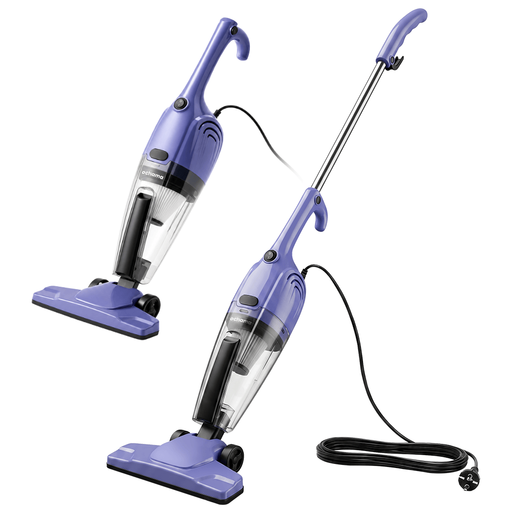
Why it suits this profile: This corded model is suitable for smaller homes and everyday cleaning without relying on a battery. The 4.5-metre cable and 2-in-1 design offer flexibility for floors, furniture and hard-to-reach areas.
The mains connection prevents the run time from decreasing on a higher setting. The product information also states that it has a washable filter.
550 W motor according to the product listing, a visible 0.5-litre dust container and multiple cleaning settings.
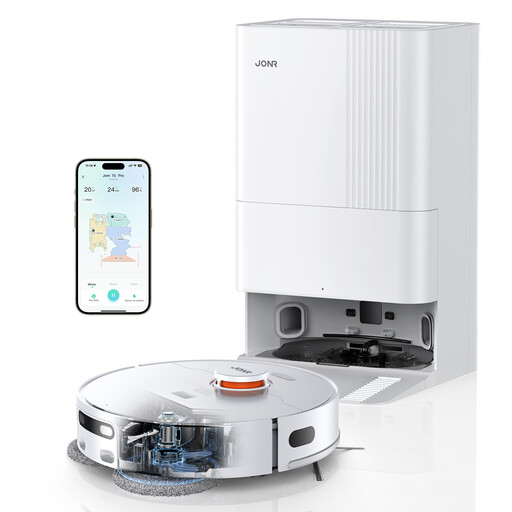
Why it suits this profile: If you want to automate everyday floor care, this robot offers LiDAR navigation, app control, a mopping function and an all-in-one dock.
The app supports virtual zones and schedules. However, bear in mind that you need to empty the dirty-water tank manually and replace the dust bag when prompted by the app.
Up to 8150 Pa suction power, LiDAR navigation and hot-air drying in the charging station, according to the product information.
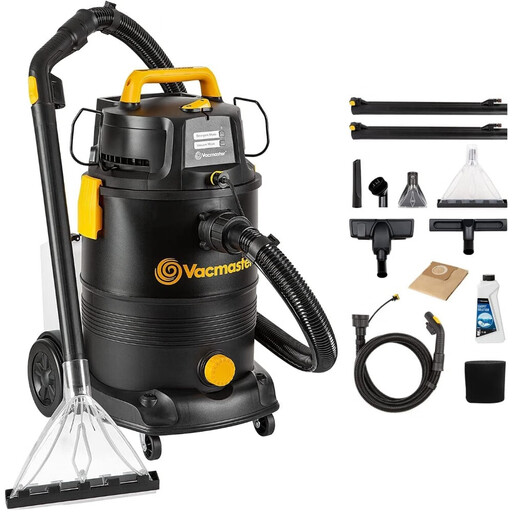
Why it suits this profile: This model is designed for intensive cleaning of carpets, car interiors and upholstery. It is larger and heavier than a handheld vacuum, but combines dry vacuuming, wet vacuuming and washing.
Separate filters for dry and wet use make it clear that you need to choose the correct configuration. After use, the tanks and filters must be emptied and maintained.
1300 W, a 30-litre collection tank and a HEPA exhaust filter according to the product information.
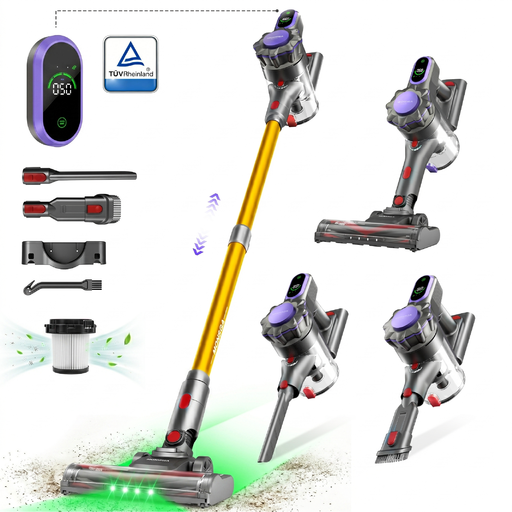
Why it suits this profile: The combination of an anti-tangle brush, handheld unit and accessories is practical for removing pet hair from sofas, carpets, hard floors and car interiors.
According to Monsga, the brush roll is designed to help limit hair wrapping. Even so, check the roll regularly, especially if pet owners use it every day.
Up to 55 minutes of use in floor mode, a 0.7-litre dust container and a five-stage filtration system according to the product listing.
We have put together a complete, up-to-date list of products that fully meet these strict selection criteria and the applicable European safety regulations.
It can be, but check the battery life for each suction setting and the charging time. A model with a removable battery offers greater flexibility. For a large house, an additional battery or a corded model may be more convenient than relying solely on the maximum run time.
Look for a motorised floor brush with an anti-tangle design, a handheld vacuum function and a filter that is easy to clean or replace. A green LED light can make dust and hair more visible on hard floors, but it does not replace a good brush and regular maintenance.
In addition to the purchase price, you may have to pay for electricity, dust bags, filters, batteries and parts. A robot vacuum may incur additional costs for side brushes, mops or dust bags for the station. A bagless model avoids the need for dust bags, while a bagged model is often easier and more hygienic to empty. Check these ongoing costs before ordering online.
