
Vandaag of morgen in huis

Kwaliteit gegarandeerd

Welkomstaanbiedingen ontgrendelen: GRATIS bezorging | Tot 80% korting | Gratis 30 dagen JoyPlus-proefperiode
Download de app
Buying a frying pan seems straightforward until you have to choose between stainless steel, ceramic, aluminium, 24 or 28 cm, and with or without a non-stick coating. Marketing terms do not always make the choice any clearer. A pan that appears suitable for all hobs may still not work on induction, for example. And although a dishwasher-safe frying pan is convenient, frequent cleaning can make it wear out faster than washing it by hand.
Use these practical checkpoints to compare pans based on the features that really matter in a British kitchen.
Always check that the product description explicitly mentions induction, gas, electric and ceramic hobs. Older or basic aluminium pans in particular may not have a magnetic base, making them unsuitable for induction.
The 28 cm Tefal Easy Cook & Clean is a clear example: according to the product information, this pan is suitable for gas, electric, ceramic and glass-ceramic cooking, but not for induction. If you have an induction hob, this option is therefore ruled out, even if its other features look appealing.
A non-stick frying pan still needs to be used with care. Metal utensils, heating an empty pan to a high temperature and sudden cooling can damage the coating. When using a ceramic frying pan, wooden, silicone or plastic utensils are preferable.
A stainless-steel frying pan does not have a traditional chemical non-stick coating. As a result, food may initially stick more easily. The product information for the Maxcook Tri-Ply therefore recommends using a well-preheated pan, cold oil and medium-low heat. This takes a little practice, but prevents you from choosing a coating when you actually prefer searing food at high temperatures.
A 24 cm frying pan is practical for one to three people, eggs, vegetables and a few burgers. A 28 cm frying pan provides more room for family-sized portions, stir-fries and meat. However, the pan must fit the cooking zone properly. An oversized pan on a small induction zone may heat less evenly.
Also consider the weight. A thick stainless-steel pan retains heat well, but may be heavier than an aluminium pan. You will notice this particularly if you regularly lift the pan with one hand.
Aluminium usually heats up quickly and is relatively lightweight. This is useful for everyday frying and for anyone who often needs to move a pan. An aluminium pan generally needs a coating if you want food to release easily.
Stainless steel is resistant to warping and can withstand contact with acidic ingredients. In a multi-layer pan, such as a tri-ply model, aluminium is sandwiched between layers of stainless steel. According to the product description, this is designed to provide faster and more even heat distribution.
A pan without a coating is not automatically maintenance-free. Heat stainless steel gradually, add oil at the right moment and allow the pan to cool before cleaning it.
If you are specifically looking for a PFAS-free frying pan, check the brand’s product information. The Brabantia Dusk, Nocta and Onyx are listed as having a PFAS-free ceramic coating. The product information for the WMF Durado also states that the pan is PFAS-free.
Pay attention to the difference between “ceramic”, “stone-effect” and “PFOA-free”. These descriptions do not automatically mean the same thing. Check the complete material and coating information rather than relying only on wording on the packaging.
An oven-safe frying pan is particularly useful for dishes that you sear on the hob first and then finish in the oven. Always check the maximum temperature and whether the handle is oven-safe. The Brabantia Dusk is listed as suitable for temperatures up to 200 °C, while the WMF Profi is described in the product information as oven-safe up to 250 °C.
A dishwasher-safe frying pan is convenient, but washing it by hand with a soft sponge can help preserve the life of a coating or the appearance of stainless steel. Allow a hot pan to cool first and avoid moving it abruptly from hot to cold water.
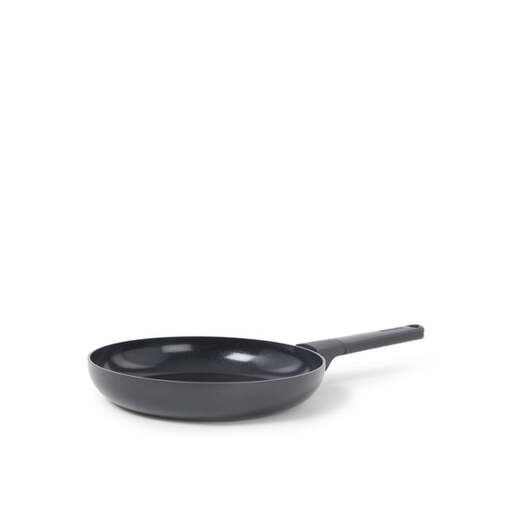
Why it suits this profile: This 24 cm pan is designed for everyday cooking in smaller households and, according to the product information, has a ceramic, PFAS-free non-stick coating.
The product information states that it is suitable for induction, gas, electric and ceramic cooking. This means you do not have to rely on a general marketing claim.
24 cm diameter, ceramic coating, PFAS-free according to the product description and dishwasher-safe.
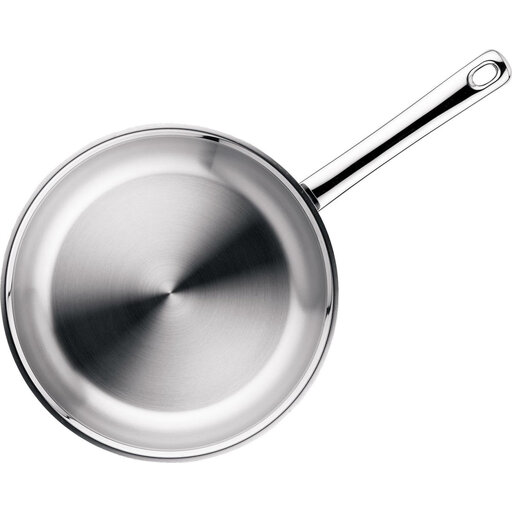
Why it suits this profile: The stainless-steel design is ideal for anyone looking for a durable pan without a traditional non-stick coating, suitable for searing and everyday use.
There is no coating that can be damaged by metal utensils. However, stainless steel requires the right temperature and oil technique to minimise sticking.
Cromargan 18/10 stainless steel, TransTherm base, suitable for induction and, according to the product information, oven-safe up to 250 °C.

Why it suits this profile: The 28 cm tri-ply pan with glass lid is designed for larger portions, stir-frying, searing and dishes that you want to simmer with the lid on.
According to the product description, the pan is suitable for gas, induction, electric, ceramic and halogen hobs. The included lid makes its intended use clearer than a standalone universal claim.
28 cm size, 304 stainless steel with an aluminium core, glass lid and dishwasher-safe design according to the product information.
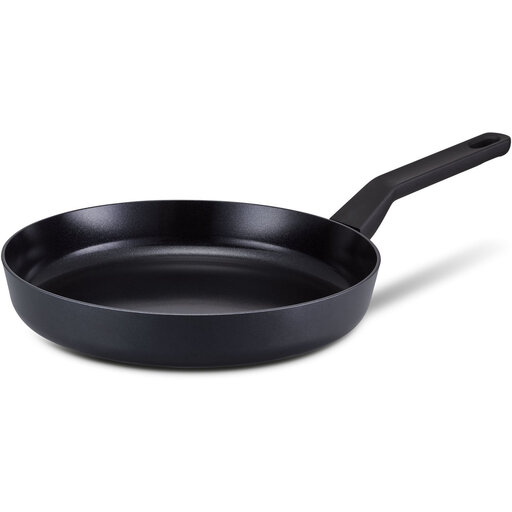
Why it suits this profile: This lightweight 24 cm pan combines aluminium with a ceramic coating and, according to the product information, is suitable for consumers who want to avoid PFAS.
The product description mentions both PFAS-free construction and suitability for induction. This clearly identifies two points that often remain unclear.
100% recycled aluminium according to the product information, ceramic double non-stick coating and dishwasher-safe design.
We have compiled a complete, up-to-date list of products that fully meet these strict selection criteria and the applicable European safety regulations.
For one or two people, a 24 cm frying pan is often practical. For a family or larger portions, 28 cm is more convenient. With induction, also check the diameter of the base, not just the diameter of the top rim.
Yes, provided you are prepared to adjust the temperature and amount of oil correctly. Stainless steel is suitable for searing and high-temperature cooking, but does not have a traditional non-stick coating. If you mainly cook eggs, pancakes or delicate fish, you may find a ceramic frying pan more convenient.
Its lifespan depends on the temperature, utensils and maintenance. Do not use metal utensils, do not heat the pan while empty and avoid sudden cooling. Once the coating is visibly damaged or starts to come away, replacing the pan is the sensible choice.
