
Vandaag of morgen in huis

Kwaliteit gegarandeerd

Welkomstaanbiedingen ontgrendelen: GRATIS bezorging | Tot 80% korting | Gratis 30 dagen JoyPlus-proefperiode
Download de app
A blender can be useful for smoothies, soup, sauces, baby food and chopping ingredients. However, not every blender is suitable for the same tasks. A compact smoothie blender works differently from a kitchen blender with a large jug, while a hand blender is particularly practical for puréeing food in a saucepan.
The product name does not always tell the whole story either. So pay attention to the technical specifications, rather than just terms such as “powerful”, “professional” or “multifunctional”. Below, you can find out which specifications matter, which common buying pitfalls to look out for and which models suit different households.
A blender rated at 800 watts or 1300 watts may sound powerful, but wattage does not automatically tell you how smooth or quickly something will be prepared. The shape of the jug, the number of blades, the speed settings and the recommended operating time also play a part.
A motor with a high stated maximum power is particularly useful if you regularly want to process hard ingredients, frozen fruit or ice. For soft vegetables, fruit and sauces, a lower power rating may be sufficient. Also check whether the product has a pulse function and which ingredients the product information says it is suitable for.
A 1.5-litre blender is practical for several portions, but the stated capacity is not always the same as the usable filling capacity. The jug must not be filled above the indicated maximum mark. Extra care is needed when blending hot liquids: follow the instructions and do not use an appliance that is not designed for hot preparations.
For one person, a 0.6-litre blender may be easier to handle. For a family, models with a capacity of 1.2 to 1.5 litres are often more practical.
A blender with a chopper, whisk and mixing cup may seem versatile, but check which parts are dishwasher-safe. The motor housing must not be submerged in water. Blades and connectors also need attention, as food residue can build up around them.
“Dishwasher-safe blender” usually means that only certain removable parts can go in the dishwasher. So check the instructions rather than relying only on the short product title.
For everyday use with fruit, vegetables and sauces, multiple speed settings are useful. A low speed helps with softer ingredients, while a higher setting may be suitable for thicker mixtures. A pulse setting provides short bursts of power and, according to the product description, can help with coarse mixing or crushing ice.
According to its product specifications, the Cecotec Power Black Titanium has a maximum power of 1300 watts, a 1.5-litre jug, four blades, two speeds and a pulse function. The manufacturer also states a speed of 20,000 revolutions per minute. These are product specifications; the final result also depends on the quantity, amount of liquid and preparation method.
A plastic jug is often lightweight and easy to move. Glass feels sturdy, but can be heavier. Pay attention to the dimensions, the lid closure and how stable the blender is on the worktop. Non-slip feet are useful if you regularly work at higher speeds.
For small preparations, a 0.6-litre mini blender is sufficient. A 1.5-litre blender makes more sense for family portions, soups or several smoothies. Do not fill the jug above the marked level, and cut large pieces into smaller ones beforehand if this is recommended in the instructions.
A hand blender, also known as an immersion blender, takes up little space and can purée soup directly in a suitable saucepan. This is useful if you do not want to wash an extra jug. A hand blender with a whisk is also useful for whipped cream, batter or egg whites, depending on the accessory supplied.
A kitchen blender usually has a fixed jug and is suitable for larger quantities, smoothies and cold drinks. If you want to crush ice or process hard ingredients, it is worth checking that this function is explicitly mentioned in the product information.

Why it suits this profile: With a capacity of 0.6 litres and a compact design, this model is suitable for small portions of smoothies and sauces.
The limited capacity makes it less tempting to overfill the jug when preparing a single portion.
350 watts, two speeds plus pulse function, ice crushing according to the product description and dishwasher-safe removable parts.

Why it suits this profile: The large jug and stated maximum power are well suited to households preparing several portions and tougher ingredients.
The product information specifies two speeds, a pulse function and a 1.5-litre capacity, rather than relying solely on general marketing terms.
1300 watts maximum power, four blades, 1.5-litre capacity and an explicitly stated ice-crushing function.

Why it suits this profile: This hand blender combines blending, chopping and whisking for users who want to prepare a range of dishes with one appliance.
The set separately lists a 700 ml mixing cup, 500 ml chopper and whisk. However, check the recommended one-minute operating time.
Up to 1200 watts, variable speed control, whisk, chopper and splash guard according to the product details.
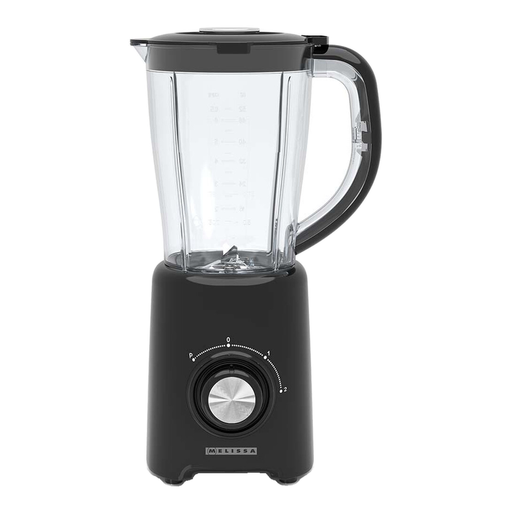
Why it suits this profile: The 1.5-litre jug provides enough space to prepare several smoothies, sauces or cold dishes at once.
The specifications state the jug capacity, two speeds, pulse function and a dishwasher-safe jug.
800 watts, 1.5-litre capacity, four stainless-steel blades, non-slip feet and automatic lid and jug shut-off.
We have put together a complete, up-to-date list of products that fully meet these strict selection criteria and the applicable European safety regulations.
A hand blender is useful for puréeing soup and sauce, but use a suitable saucepan or mixing cup to minimise splashing. With a kitchen blender, close the lid fully before starting.
For smoothies, soft vegetables, fruit and sauces, 800 watts may be suitable. For crushing ice, nuts or very thick mixtures, the blade design, pulse function, amount of liquid and operating time are also important. So consider the combination of specifications rather than looking at wattage alone.
A blender usually works with a fixed jug and is practical for larger portions. You move a hand blender or immersion blender through a bowl or saucepan, and it is often easier to store. A hand blender with a whisk and chopper offers extra functions, but also has more separate parts to clean.
Its lifespan depends on use, maintenance, workload and following the instructions. Do not run the motor for longer than specified, avoid overloading it and clean the blades immediately after use. Before buying, also check the statutory guarantee and the information about servicing and spare parts.
