
当日/次日达

品质保障

开启新人专享福利: 全场免邮 | 低至 2 折 | 免费试用 30 天 JoyPlus 会员
下载 Joybuy
Wet wipes are handy for baby care, personal hygiene, travel and cleaning surfaces. However, not every pack is intended for the same purpose. A wipe for the kitchen could be too rough for the skin, while a facial cleansing wipe may not be effective enough to remove grease or baked-on dirt.
The biggest mistakes usually come down to three pitfalls:
Start with where you plan to use the wipes. That stops you from relying solely on brand name, scent or eye-catching packaging.
For babies and people with sensitive skin, the ingredients and warnings matter more than a pleasant fragrance. Look for:
A label such as “natural”, “water-based” or “aloe vera wipes” does not, on its own, tell you enough about the full composition. According to WaterWipes’ own information, some variants contain mainly water and a plant extract. Always check the current packaging, as product formulas and claims can change.
Cleaning wipes are designed for surfaces and often contain ingredients that help remove dirt, grease or soap residue. Check whether the variant is suitable for:
A glass wipe is not automatically suitable for a wooden table. If in doubt, test on an inconspicuous area first and follow the instructions on the label. A scent like lemon also says nothing about its cleaning suitability.
For toilet use, fibre strength, packaging and disposal advice are relevant. Some products are described as “flushable”, but toilet paper and wet wipes can still cause blockages. The product information for g’woon Wet Toilet Paper, for example, explicitly states: do not flush, but dispose of in a waste bin.
Therefore, use moist toilet wipes as a supplement to dry toilet paper and never as a replacement for proper manual cleaning of the toilet. Preferably dispose of used wipes in a bin with a liner. This is also a practical choice in homes with older pipework.
The base of a wipe determines the feel, tear resistance and coverage. Plant fibres, cellulose and synthetic fibres all have different properties. A thicker wipe can be more pleasant for cleaning or baby care, but “extra thick” is no guarantee of a better choice.
Pay attention to the number of wipes per pack, the size and the closure. For a bag, small travel packs are practical; for daily use, a multipack can work out more cost-effective.
Claims such as biodegradable wipes or plastic-free should be verifiable through the product information and packaging. Do not flush even biodegradable wipes down the toilet unless the usage instructions explicitly allow it and your local drainage system supports it.
For baby wipes, facial cleansing wipes and hygienic wipes for hands or body, read the ingredients list. Look out for:
A product described by the brand as “mild” or “hydrating” should be treated as a manufacturer’s claim, not a guaranteed effect. Stop using it if you experience redness, a burning sensation or any other irritation. If symptoms persist, seek medical advice.
A plastic lid or sturdy resealable strip helps keep moisture in. Close the pack immediately after each use. Also check the expiry date and the period after opening. WaterWipes, for example, states a shorter usage period after opening for certain variants; always follow the label.
For cleaning wipes, also check the storage instructions. Keep them cool, dry and out of direct sunlight. Do not use them on surfaces for which the manufacturer has not declared them suitable.
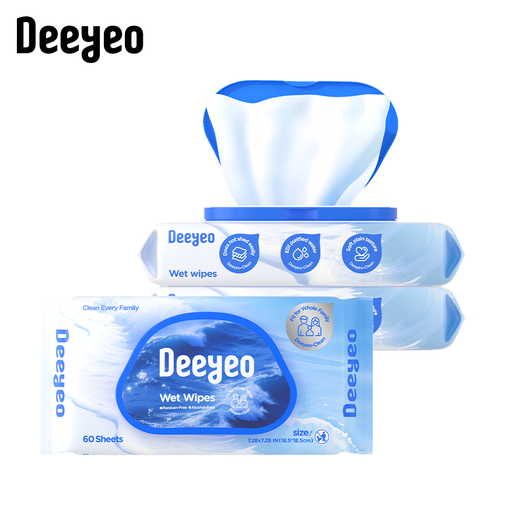
Why this fits the profile: The pack contains 180 wipes, split across 3 packs of 60. That’s practical for daily use, the office, travel and on the go.
The clear number of wipes and the split across three packs make the usage quantity clearer than a vague universal claim.
180 sheets; 3 separate packs; intended for daily hygiene and use on the go.
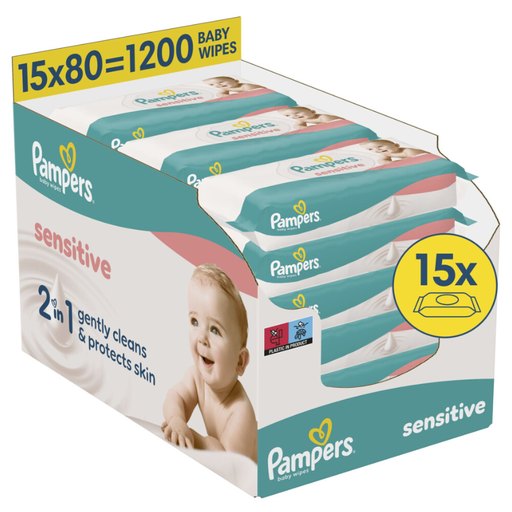
Why this fits the profile: Parents looking for a large stock of baby wipes get 15 packs with a total of 1,200 wipes.
The product information specifically states that the wipes are alcohol-free and perfume-free and have a resealable closure.
1,200 wipes; alcohol-free; perfume-free; suitable from birth according to the product information.
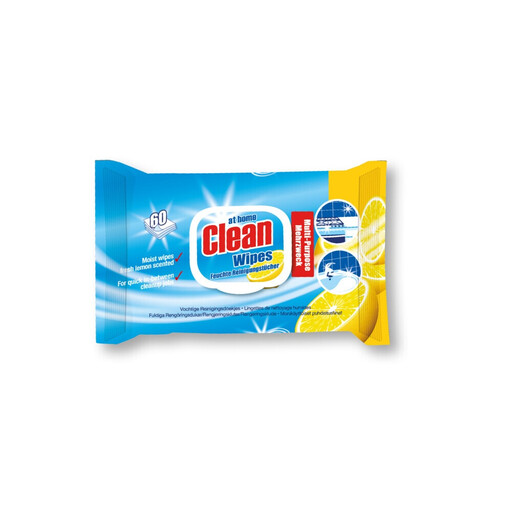
Why this fits the profile: For the kitchen, bathroom and other hard surfaces, a specific cleaning wipe makes more sense than a skin-friendly variant.
The variant is described as a cleaning wipe for multiple surfaces, making its area of use clearer than with wipes for personal care.
55 wipes; lemon scent; according to the product description, bleach-free; intended for dirt, grease and soap residue.
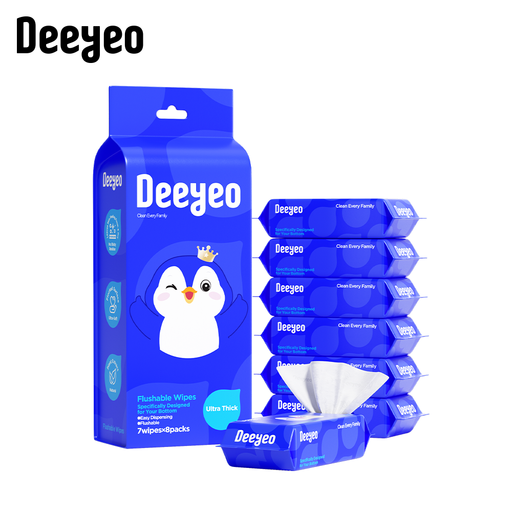
Why this fits the profile: The 7 packs of 8 wipes are compactly divided for handbag, car, office or holiday.
The small packs limit drying out after opening. Always check your local drainage rules and the packaging before flushing.
56 wipes; 7 travel packs; product name mentions “flushable” and “pure water”.
We’ve put together a full, up-to-date list of products that fully meet these strict selection criteria and current European safety regulations.
That varies by brand, composition and packaging. An unopened pack can have a longer shelf life than an opened one. Always close the lid or resealable strip properly and follow the shelf-life information on the packaging. If the wipes have dried out, discoloured or developed an unusual smell, do not use them.
Not automatically. Even when a product is marketed as flushable, pipes can still become blocked. The product information for some variants explicitly advises against flushing them. The safest general choice is to dispose of used wipes in a waste bin.
That depends on the ingredients and the individual’s skin. If you want to avoid perfume or alcohol, choose a variant without them, read the warnings and test carefully. A mention such as “mild”, “hypoallergenic” or “for sensitive skin” is the brand’s product information and not a guarantee that everyone will tolerate the product without issue.
