
Vandaag of morgen in huis

Kwaliteit gegarandeerd

Welkomstaanbiedingen ontgrendelen: GRATIS bezorging | Tot 80% korting | Gratis 30 dagen JoyPlus-proefperiode
Download de app
Buying a vacuum cleaner seems straightforward, until you have to choose between a robot vacuum, cordless stick vacuum, wireless vacuum or traditional corded model. Marketing often focuses on a high number of pascals, smart features or impressive battery life. Yet one figure alone does not tell you everything about everyday use.
The most important question is not which vacuum cleaner has the most features, but which model suits your floors, home and cleaning routine. A compact appliance for a flat, for example, needs different features from a wet and dry vacuum for a workshop or a vacuum cleaner for pet owners.
A high value in Pa or kPa sounds appealing, but real-world performance also depends on the floor head, airflow, filter and brush roll. A powerful vacuum cleaner may have impressive suction power on paper, but be less practical on a deep-pile carpet if the brush quickly becomes clogged with hair.
So don’t compare the stated suction power alone. Also check:
For a cordless vacuum cleaner, the maximum runtime is usually measured on the lowest setting. In turbo mode, the battery can run down considerably faster. So pay attention to the runtime at each setting, the charging time and whether the battery can be replaced.
A stick vacuum with a 60-minute runtime is not automatically suitable for a large house. If you clean lots of carpets, stairs and furniture, you are more likely to use a higher setting, which may give you less operating time.
A robot vacuum with an automatic emptying station, mopping function or self-cleaning base reduces manual work, but maintenance is still required. Dust bags, filters, brushes, mop pads and dirty-water tanks need to be checked according to the product instructions.
With a robot vacuum that includes a mopping function, you should also consider:
Pa and kPa indicate the stated suction pressure, but they are not a universal performance standard. Look at the system as a whole: motor, floor head, air channel and filter. For pet owners, an anti-tangle brush is useful because it stops hair becoming wrapped around the roller as quickly.
A model with several settings is useful if you clean both hard floors and carpets. Use a higher setting for stubborn dirt; for everyday vacuuming, a lower setting can conserve battery power and make less noise.
If you are sensitive to fine dust, consider a vacuum cleaner with a HEPA filter or a comparable multi-stage filtration system. Check whether the filter is washable, how often it needs replacing and whether the dust container or dust bag seals properly.
A larger dust container means less frequent emptying, but it can also make the appliance heavier. A bagged model may make hygienic emptying easier, while a bagless system avoids the recurring cost of dust bags. So consider both the purchase price and running costs.
A corded vacuum cleaner provides a constant power supply, but you depend on nearby sockets. A cordless model gives you greater freedom of movement, but has a limited runtime and needs to be recharged.
For a corded model, check the cable length and operating radius. With a robot vacuum, battery capacity, charging time and automatic resumption are more relevant. For cars, desks and small cleaning jobs, a handheld vacuum is often more practical than a full-sized floor model.
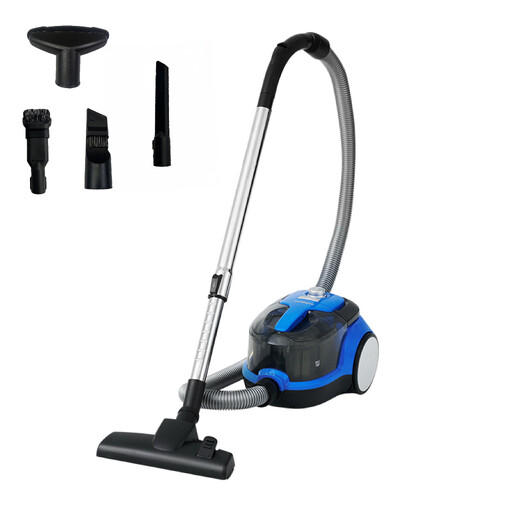
Why it suits this profile: A corded model provides a constant power supply and has a 1.1-litre dust container, automatic cable rewind and several attachments for floors, furniture and crevices.
You don’t need to assess maximum battery life. The manufacturer states 800 W of power, approximately 17.5 kPa of suction power and a washable filter.
800 W motor, bagless design, automatic cable rewind and interchangeable brushes.

Why it suits this profile: According to the product description, this robot vacuum combines 20,000 Pa, mopping, LiDAR-style mapping features and an OMNI station for households that want extensive automation.
The station automates emptying, mop washing and drying, but the tanks and components still require checking and maintenance.
75°C mop washing, 45°C drying, automatic dust emptying and carpet detection according to the product details.
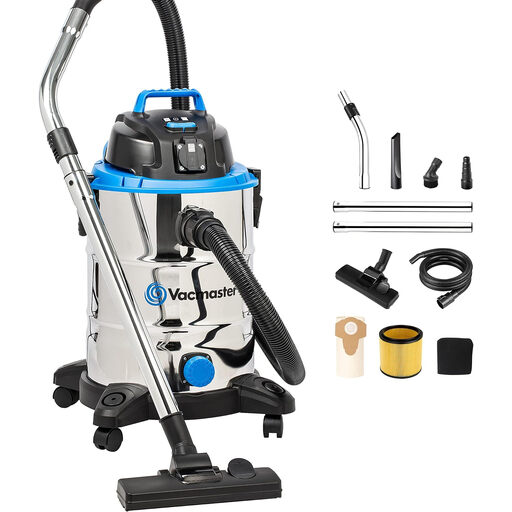
Why it suits this profile: For garages, workshops, cars and spilled liquids, a wet and dry vacuum is more practical than a standard household vacuum cleaner.
The choice is based on features for intensive work, not just motor power: wet and dry vacuuming, blowing and a connection for power tools.
1500 W motor, 30-litre stainless-steel tank, blow function and EU socket for tools.
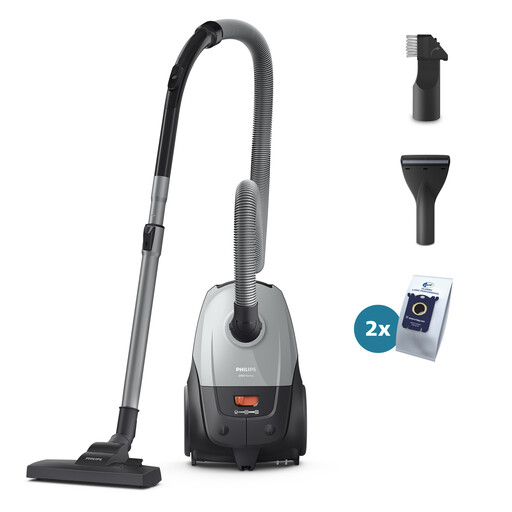
Why it suits this profile: The product details list a HEPA filtration system, a reach of up to 12 metres and a 3-litre dust-bag capacity for larger cleaning sessions.
The filter type and dust bag are clearly specified. However, bear in mind the recurring cost of suitable S-bags.
HEPA filter, 800 W motor, 3-litre dust bag and multifunctional floor head.
We’ve put together a complete, up-to-date list of products that fully meet these strict selection criteria and the applicable European safety regulations.
It can be, particularly if the model has an anti-tangle brush, carpet detection and generous dust capacity. Also check that hair does not quickly become caught around the side brush or main brush. A robot vacuum does not always replace a handheld vacuum for sofas, stairs and crevices.
Its lifespan depends on usage, filter maintenance, blockages and the availability of replacement parts. Clean the filters according to the manual, empty the dust container on time and check the brush roll. With a cordless vacuum cleaner, the battery is often an important consideration.
In addition to the purchase price, you may pay for electricity, dust bags, filters, brushes and batteries. Using a lower-power setting reduces electricity consumption on corded and cordless models. So compare maintenance costs and accessories before making your choice.
