
Vandaag of morgen in huis

Kwaliteit gegarandeerd

Welkomstaanbiedingen ontgrendelen: GRATIS bezorging | Tot 80% korting | Gratis 30 dagen JoyPlus-proefperiode
Download de app
Buying a new vacuum cleaner sounds straightforward, until you have to choose between a robot vacuum, cordless stick vacuum, bagged model or a wet-and-dry vacuum cleaner. Marketing copy often focuses on a high Pascal rating, long battery life or smart features. This information is useful, but it does not tell you everything about everyday use.
Pay particular attention to these three common pitfalls:
A cordless vacuum cleaner is convenient for quick cleaning jobs and multi-storey homes. You do not need a power socket, and many models convert into a handheld vacuum for furniture, stairs or the car. However, check the battery life at each power setting, the charging time and whether the battery can be replaced.
A traditional bagged vacuum cleaner provides a consistent power supply and a generous operating range. This type is suitable for households that want to clean for longer periods at a time. A HEPA filter or comparable fine-particle filter can help reduce dust emissions. Check which filter is included and how often it needs to be replaced or washed.
A robot vacuum is particularly suitable for everyday maintenance on hard floors. Look at the navigation system, obstacle detection, threshold height, mopping capability and the space around the charging station. A mopping function is designed for damp cleaning; a robot vacuum is not a replacement for a machine that can vacuum up water.
For spilled liquids, carpet cleaning or intensive jobs, a wet-and-dry vacuum cleaner is more practical. These appliances are often larger and heavier. Look at the capacity of the clean- and dirty-water tanks, the weight and the filters available.
Manufacturers often state suction power in Pa or kPa. This is a technical indication, but only compare figures within a similar product category. A robot vacuum and a stick vacuum have different designs and different brushes.
For a powerful vacuum cleaner, these features are at least as important:
A high wattage mainly describes the motor's power consumption. It is not the same as cleaning performance. For a corded model, the cable length and operating range are therefore practical points of comparison.
A self-cleaning vacuum cleaner may clean its brushes or base station automatically, but check exactly what is cleaned automatically. With a robot that has a mopping function, for example, you will often still need to empty the dirty-water tank, check the mop components and replace the dust bags.
For a stick vacuum, a removable battery, washable filter and easy-to-open dust container are useful features. Allow a washed filter to dry completely before putting it back. Do not use an appliance without a correctly fitted filter or dust container.
A claim such as “99.99% filtration” should be read as a product specification under specific test conditions. According to the brand's own research, results may vary depending on the measurement method and the situation in which the product is used. It should therefore not be regarded as a medical or health claim.

Why it suits this profile: A straightforward bagged model for households looking for a simple vacuum cleaner for hard floors and carpets, without a battery or app.
The vacuum runs on mains power, so cleaning time is not limited by a battery. The bag and HEPA filtration system make the maintenance routine clear.
800 W motor, 3-litre dust bag, HEPA filtration and, according to the product specifications, a range of up to 9 metres.

Why it suits this profile: For anyone who values daily automation, mopping and app control in a home with multiple floor types.
The product specifications list TrueMapping 2.0, carpet detection and obstacle recognition. This allows you to assess features that go beyond the Pa rating alone.
20,000 Pa according to the product information, rotating mops, automatic emptying and mop washing with water at 75 °C.
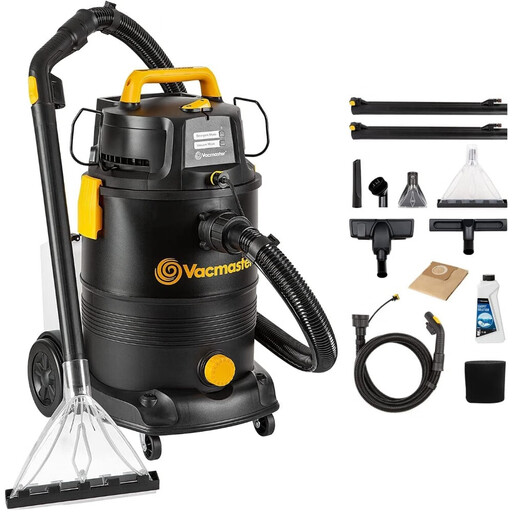
Why it suits this profile: For major cleaning jobs, carpets, upholstery and situations where you want both dry and wet cleaning in one appliance.
The wet-and-dry function is clearly separated through the appropriate filters. Empty and clean the tanks after use; the appliance is not intended for hazardous or flammable materials.
1300 W motor, 30-litre collection tank, 6-litre detergent tank and HEPA exhaust filter according to the product information.
We have put together a complete, up-to-date list of products that fully meet these strict selection criteria and the applicable European safety regulations.
That depends on the pile height, brush and carpet detection. Check whether the robot has a dedicated carpet mode and whether the mop is lifted automatically or can avoid carpeted areas. For deep cleaning, a powerful stick vacuum or traditional vacuum cleaner is often still more practical.
The lifespan depends on usage, charging habits, filter maintenance and the quality of the battery. Do not use the highest setting continuously if it is not necessary. A model with a removable battery can be more practical if you want to replace the battery later.
In addition to the purchase price, you may need to pay for dust bags, filters, mop cloths, cleaning solution and electricity. A bagged model has recurring bag costs, while a robot with a station may require dust bags and maintenance parts. So do not compare only the price of the appliance, but also the parts that need to be replaced periodically according to the instructions.
