
Vandaag of morgen in huis

Kwaliteit gegarandeerd

Welkomstaanbiedingen ontgrendelen: GRATIS bezorging | Tot 80% korting | Gratis 30 dagen JoyPlus-proefperiode
Download de app
Buying Turkish sweets may seem straightforward, but the range varies widely. Are you looking for soft lokum, sour Turkish gummies, fruity sweet sticks or a gift box? If so, the flavour name alone is not enough. Pack size, ingredients and allergens can differ between variants.
Terms such as “traditional”, “fruity” and “halal sweets from Turkey” do not always tell the full story either. So check the product information before ordering. The following points will help you compare Turkish treats more practically and avoid buying something that is not right for your needs.
Turkish gummies and confectionery are often sold in bags weighing 180 to 300 grams. That is useful for a party or sharing, but less practical if you only want a small portion occasionally. Once opened, a pack may also lose its quality more quickly if it is not sealed properly.
So do not just look at the price. Also consider the price per 100 grams, the number of portions and how you plan to store the sweets.
Many sweets are made mainly from sugar, glucose syrup, starch and flavourings. A product may contain apple concentrate or fruit and vegetable concentrates, but that does not mean it consists mainly of fruit. For example, Bebeto Wacky Stick Crazy Raspberry lists apple concentrate alongside sugar, glucose syrup, wheat flour and colouring.
If you are looking for a particular flavour, it is wise to check the full ingredients list rather than relying solely on the front of the packaging.
Sweets from Turkey may contain wheat, milk, nuts or gelatine. According to the product information, Bebeto Wacky Stick Cool Raspberry does not list any of the 14 main EU allergens, while the Crazy Raspberry variant contains wheat. This difference is important for families and people with food allergies.
You should not assume that a product is “halal” without checking either. If gelatine appears on the label, as it does in some gummies, check whether the packaging clearly states that the product is halal or displays certification. A mention of beef gelatine alone is not proof of halal certification.
Turkish confectionery is not one uniform product category:
The texture you want is at least as important as the flavour. Lokum, for example, is not the same as a gummy and offers a different eating experience.
Always check the current packaging. Pay particular attention to:
Product information may vary by flavour and pack size. So do not rely solely on the general brand name, whether Bebeto, Koska or Ülker.
Compare the net weight with the portion size. Bebeto Wacky Stick Crazy Raspberry comes in a 180-gram pack and lists 389 kcal and 57 grams of sugars per 100 grams. Bebeto O Worms is available in a 300-gram pack, which may be more suitable for a birthday party or sharing between several people.
Store most products according to the packaging instructions in a cool, dry place, away from direct sunlight and moisture. Seal opened bags properly. Storage instructions for lokum may vary by variant, so always check the label.
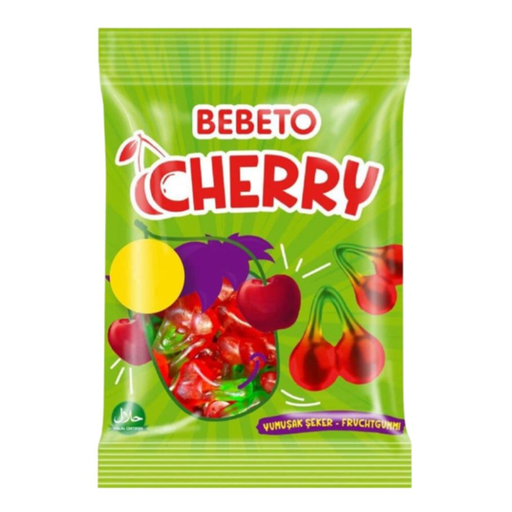
Why it suits this profile: The compact size is ideal for trying a flavour first or taking along as a small treat.
At 80 grams, there is less risk of ending up with a large opened pack that sits around for a long time. Do check the current ingredients list and best-before date on the packaging.
Cherry flavour, 80-gram contents and, according to the product information, none of the 14 main EU allergens.
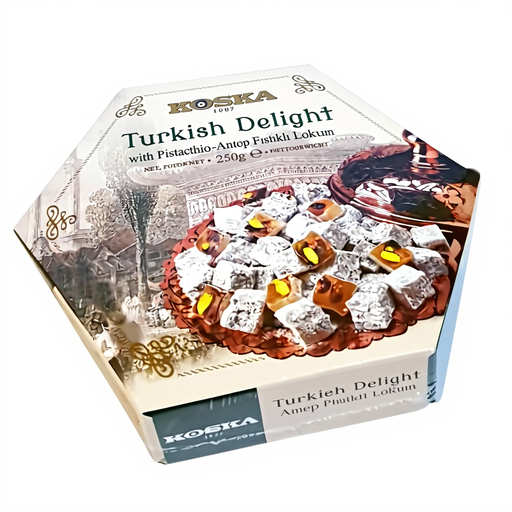
Why it suits this profile: This lokum variant is a good choice for anyone looking for traditional Turkish treats with nuts to enjoy with coffee or tea, or to include in a gift box.
The product information clearly lists the main ingredients: sugar, glucose syrup, corn starch and pistachio. This makes comparison easier, but anyone with a nut allergy should take extra care.
Traditional Turkish delight with pistachio in a 250-gram pack.
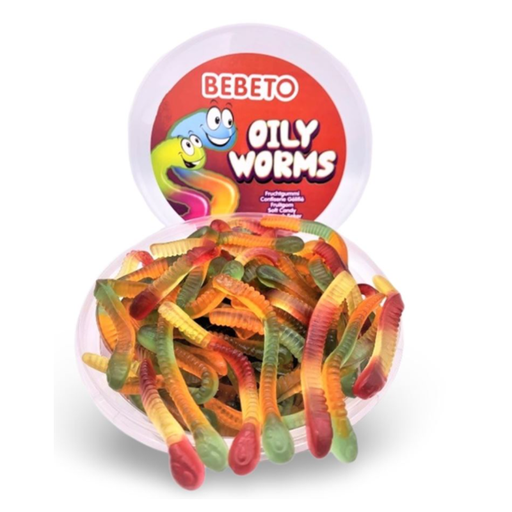
Why it suits this profile: The 300-gram bag is practical for parties, film nights and families who want to share Turkish sweets.
The larger size means you do not need several small bags when sharing. Seal the packaging securely after opening and check the current allergen information.
300 grams of gummy sweets in distinctive worm shapes; according to the product information, they contain none of the 14 main EU allergens.
We have put together a complete, up-to-date list of products that fully meet these strict selection criteria and the applicable European safety regulations.
You can buy Turkish sweets online through product pages that list the ingredients, allergens, weight and storage advice. Always check the current packaging, especially when you are looking for Turkish gummies, nut-filled lokum or halal sweets from Turkey.
Lokum is the Turkish name for Turkish delight. It usually consists of soft cubes made with sugar and starch, sometimes with pistachio, almond, coconut or other flavourings. Its texture differs from jelly sweets and gummies, which are generally chewier.
Store the product according to the instructions on the packaging, usually in a cool, dry place away from direct sunlight. Keep the bag or box tightly closed to limit moisture and contamination. With lokum, always check whether the packaging specifies different storage instructions.
