
Vandaag of morgen in huis

Kwaliteit gegarandeerd

Welkomstaanbiedingen ontgrendelen: GRATIS bezorging | Tot 80% korting | Gratis 30 dagen JoyPlus-proefperiode
Download de app
When you’re looking to buy a tropical fruit drink online, you’ll quickly spot plenty of colourful packaging and promises of exotic flavours. But a picture tells you little about the fruit juice content, the sugar level or how practical a multipack really is. A guava drink, for example, can taste very different from a mango drink, even though both are sold as tropical fruit juice.
With these checks, you can compare fruit drinks in a level-headed way and avoid paying for a pack that doesn’t suit your needs.
Always check the ingredients list. It usually states the percentage of fruit juice, purée or concentrate. For instance, the MAAZA Guava Drink 6x1000ml contains 17% guava juice from concentrate. The MAAZA Mango Drink 6 x 1 L contains 17% mango purée and 1% lemon juice from concentrate.
So a product with a pronounced fruit flavour doesn’t have to be mostly fruit. Water, sugar, flavourings and stabilisers can also make up a significant part of the recipe.
A fruit drink with no added sugar can still contain naturally occurring sugars from the fruit. Sweeteners may also be used. According to the product information, the Iam Superjuice range states no added sugar. The passion fruit variant has 17 kcal per 100 ml, while the mango variant is sweetened with steviol glycosides according to the product description.
Always compare the nutritional values per 100 ml. Don’t just look at words like “light”, “natural” or “no added sugar”.
A 1-litre fruit drink or 1.5-litre bottle works well for a family, breakfast or dinner party, but once opened, the pack usually needs to be kept refrigerated and used within the stated time. Small fruit drink cans are more convenient for on the go, but can work out more expensive per litre.
When buying multipacks, work out the total volume. A tray of 12 cans of 330 ml gives you 3.96 litres. That’s a different purchase to six 1-litre bottles, even if the price looks similar at first glance.
For a clear flavour comparison, three details matter:
A pure guava flavour, for instance, can be found in products where guava is the clear main ingredient. A multivitamin drink, on the other hand, combines several types of fruit. Surango Multivitamin Juice states a blend of 11 fruit concentrates, including orange, apple, lemon, peach, banana, pineapple, grape, pear, passion fruit, apricot and mango.
Use the nutrition table to compare different drinks fairly. The MAAZA Guava Drink 6x1000ml states 46 kcal and 11 g of sugars per 100 ml. The single MAAZA Guava Fruit Drink 330 ml states 29 kcal and 6.9 g of sugars per 100 ml. Always check the actual packaging, as recipes and labelling can vary between variants.
For a product with no added sugar, you should also check the ingredients for sweeteners. “No added sugar” describes whether sugar has been added, but doesn’t automatically tell you the total sugar content.
A tropical drink may contain milk ingredients. TAKSI Tropical Fruit, for example, states it contains milk and, according to the product information, includes milk permeate. This is important when you’re looking for an Asian fruit drink, fruit juice for children or a drink for a household with allergies.
Also check:
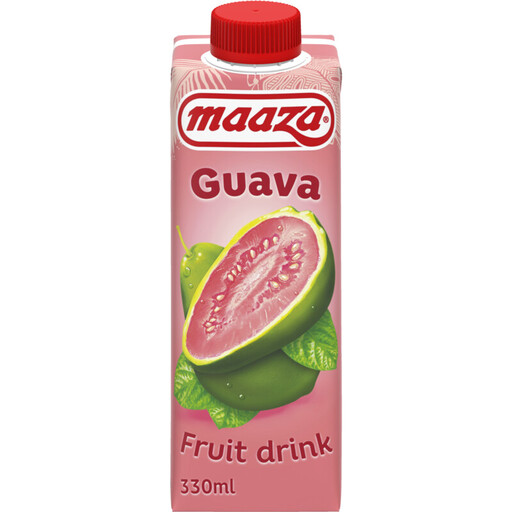
Why this fits the profile: A single bottle is a practical way to try guava flavour without committing to a large multipack straight away. According to the product information, this variant contains 16% guava juice from concentrate.
The volume and nutritional values are clearly stated, so you don’t buy a large stock without knowing the flavour first.
330 ml per bottle, guava flavour and 29 kcal per 100 ml according to the product information.

Why this fits the profile: Ideal for anyone who wants a distinctive passion fruit drink and a steady supply. The tray contains 12 cans of 330 ml.
The format makes the total volume clear. The “no added sugar” claim sits alongside concrete information about 30% passion fruit juice and 17 kcal per 100 ml.
30% natural passion fruit juice according to the product information, 12 handy cans and suitable for serving chilled.

Why this fits the profile: A 3.96-litre tray suits families, gatherings or households that regularly want to serve small portions.
The cans reduce waste after opening a large bottle. Do check the sweetener and nutritional values on the actual label yourself.
30% mango juice according to the product description, 12 × 330 ml and 17 kcal per 100 ml.
We’ve put together a full, up-to-date list of products that fully meet these strict selection criteria and comply with current European safety regulations.
A 1-litre or 1.5-litre bottle is practical for breakfast and serving several glasses. Choose a multipack when each family member wants their own portion or when you want to limit waste after opening. Compare the total volume and the shelf life after opening.
Check three things: the nutritional value per 100 ml, the ingredients list and the sweetener used. “No added sugar” doesn’t automatically mean there are no sugars present. Fruit itself can contain sugars.
Always follow the instructions on the pack. Many fruit drinks need to be kept refrigerated after opening and used within the stated time. Shake the drink if the label says to, and check the seal and best-before information before consuming.
