
Vandaag of morgen in huis

Kwaliteit gegarandeerd

Welkomstaanbiedingen ontgrendelen: GRATIS bezorging | Tot 80% korting | Gratis 30 dagen JoyPlus-proefperiode
Download de app
When you want to buy trainers online, you will quickly come across a wide range of models, brands and technical terms. Casual trainers for the city have different requirements from a pair of running shoes or trail shoes. An attractive price tag also says little about fit, grip or care requirements.
So pay particular attention to these common pitfalls:
First decide what you need the shoes for. Casual trainers such as Vans Old Skool or Nike Dunk Low are mainly designed for everyday wear and style. They may be suitable for commuting or a walk around town, but they are not automatically designed for running training.
For running, look for a cushioning midsole, a close-fitting upper and an outsole suited to tarmac. According to the product description, the adidas Galaxy 7 uses a Cloudfoam midsole and a TPU outsole. These are verifiable features that are relevant to recreational running and everyday movement.
For woodland paths and wet or uneven ground, trail shoes or sturdy walking shoes are the more logical choice. In these conditions, grip, stability and protection are more important than a low price or fashionable shape.
Measure both feet at the end of the day. Wear the socks you would normally use with the shoes. Note the length of your larger foot and compare it with the product’s size chart.
As well as length, pay attention to:
Some models list foot length in millimetres. For example, the adidas Galaxy 7 in size 42 lists a foot length of 270 mm. The PUMA Speedcat OG also provides a detailed conversion between EU, UK and US sizes. Always check the specific product page, even if you usually wear size 37 or size 42 trainers.
For children, an easy fastening and room for growth are important. According to the product information, the Skechers Meteor-Lights in size 33 has a standard fit, a hook-and-loop fastening and a rubber sole. This makes the model practical for school and everyday wear, but check regularly that the size is still correct as your child grows.
A rubber outsole can provide grip, but its composition and tread determine how the shoe performs on smooth tiles, tarmac or mud. A flat sole is often suitable for casual wear, while a deeper tread is more practical on unsurfaced paths.
Also look at the upper:
According to PUMA’s own information, the brand supports responsible leather use through the Leather Working Group. Treat this as information about the brand’s approach to sourcing, rather than as a general guarantee of every shoe’s lifespan.
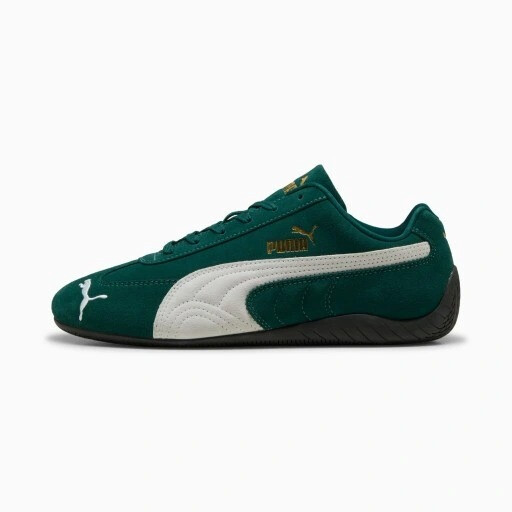
Why it suits this profile: A low-profile model for anyone mainly looking for a lightweight everyday trainer with a distinctive shape that works well with casual outfits.
The product information specifies a standard fit, an IMEVA midsole and a rubber outsole. This makes the materials and construction clearer than relying on the claim “comfortable” alone.
Leather upper, textile lining, flat heel and rubber sole with lace fastening.
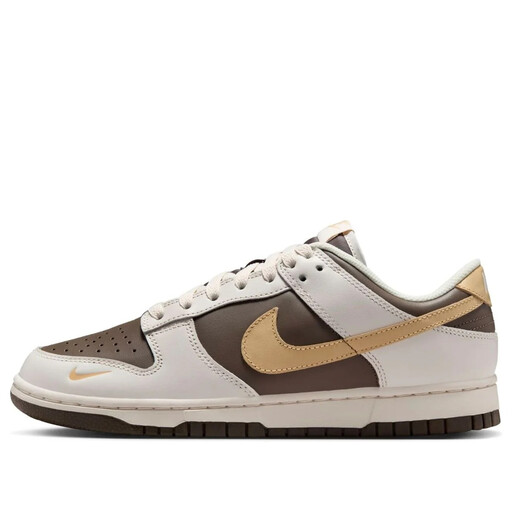
Why it suits this profile: Suitable for anyone looking for a leather women’s trainer with a low silhouette and a style that is easy to pair with everyday clothing.
The description clearly lists a leather upper, padded collar, lined insole and rubber sole. This helps you compare products based on specifications rather than appearance alone.
Leather construction, textile lining and pivot point in the rubber outsole according to the product details.

Why it suits this profile: For trail running, walking and outdoor use on changing terrain, particularly when grip and protection from rain matter.
Rather than making a general claim about grip, the product lists a GORE-TEX membrane, 3D Advanced Chassis, Contagrip outsole and Quicklace fastening. However, check that the fit suits your foot.
Waterproof membrane according to the product description, lugged outsole for different surfaces and adjustable Quicklace fastening.
We have put together a complete, up-to-date list of products that fully meet these strict selection criteria and the applicable European safety regulations.
Measure your foot in millimetres and compare the length with the size chart for your chosen model. Also consider the width and the amount of room around your toes. A size 37 from one brand may fit differently from a size 37 from another.
Trainers are often intended for everyday wear and have a simple sole construction. Running shoes are generally designed with specific cushioning, support and an outsole suited to the surface on which you run. So do not automatically use casual trainers for regular running training.
Their lifespan depends on usage, body weight, surface, care and materials. Replace your shoes when the sole shows visibly uneven wear, the cushioning has noticeably deteriorated or the upper no longer provides adequate support. Allow wet shoes to air-dry and do not use a direct heat source. This helps keep the materials and fit usable for longer.
